"Romanchakam" Delivers Laughs, Hits a Few Stumbles: A Deep Dive into the Buddy Comedy Phenomenon

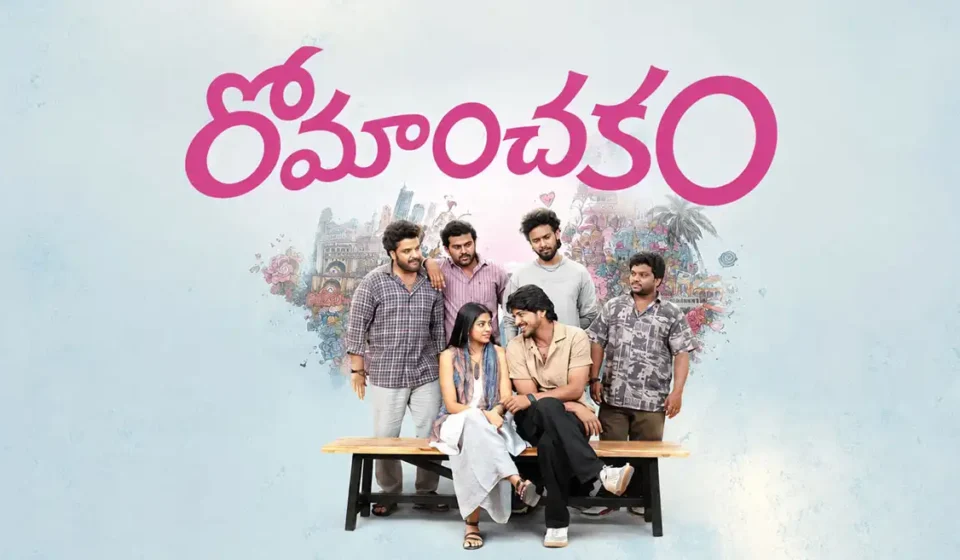
HYDERABAD, India – September 3, 2026 – The much-anticipated Telugu comedy-drama, "Romanchakam," presented by the influential Sandeep Reddy Vanga and starring the promising Sumanth Prabhas, has officially hit cinemas, aiming to inject a dose of lighthearted humor into the cinematic landscape. Directed and edited by Venu Gopal Reddy, the film endeavors to navigate the chaotic world of friendship, budding romance, and unexpected predicaments. While garnering a modest 3/5 rating from 123telugu.com, the film is being heralded as a "watchable fare" that primarily thrives on its situational comedy and the undeniable chemistry of its lead ensemble.
"Romanchakam" positions itself firmly within the burgeoning sub-genre of buddy comedies, a space where films like "Jathi Rathnalu" have previously found immense success by prioritizing unadulterated fun over intricate plotlines. The narrative, centered around a startup owner Anvesh (Sumanth Prabhas) and the pandemonium that ensues when his love interest Mythili (Ananthika Sanilkumar) visits Hyderabad, largely delivers on its promise of laughter. However, critical reception points to an uneven pace, particularly in the initial half, and a missed opportunity to fully explore deeper emotional undertones. Despite these minor missteps, the film’s second half, culminating in a brilliantly executed climax steeped in confusion comedy, is praised for its ability to keep audiences thoroughly entertained.
The production, spearheaded by Pranay Reddy Vanga and featuring a unique technical setup with Vasuki Vaibhav handling both music and cinematography, and Venu Gopal Reddy juggling directorial and editing duties, showcases a compact and collaborative creative effort. The ensemble cast, including Venkatesh Kakumanu, Narendra Ravi, Mani Aegurla, and Sai Sohan as Anvesh’s friends, alongside the comedic timing of Upendra Limaye, forms the backbone of the film’s comedic success. "Romanchakam" ultimately emerges as a film that knows its strengths, leaning heavily on the camaraderie and chaotic energy of its characters to provide a diverting cinematic experience for those seeking pure, unpretentious entertainment.
The Genesis of Laughter: "Romanchakam’s" Journey to the Big Screen
The journey of "Romanchakam" from concept to theatrical release is a testament to both emerging talent and established industry backing. The film first piqued interest when it was announced under the prestigious banner of Sandeep Reddy Vanga, known for his gritty, intense dramas like "Arjun Reddy" and "Kabir Singh." His association, albeit as a presenter, instantly elevated the project’s profile, signaling a potential shift or diversification in the kind of cinema he chooses to support. This endorsement provided a significant platform for debutant director Venu Gopal Reddy and lead actor Sumanth Prabhas.
Conceptualization and Pre-Production Buzz
The initial whispers about "Romanchakam" suggested a departure from the high-octane action and drama often associated with its presenter. Instead, the focus was reportedly on a fresh, youthful narrative centered around friendship and everyday comedic situations. This genre choice itself generated considerable buzz, as audiences were keen to see how a film supported by Vanga’s brand would interpret a lighter, more humorous storyline. The casting of Sumanth Prabhas, an actor known for his earnest performances and relatable persona, was a strategic move to anchor the film with a fresh, youthful face. Ananthika Sanilkumar’s inclusion as the female lead further solidified the film’s youthful appeal, promising a contemporary love story amidst the comedic chaos.
The Collaborative Creative Process
Filming for "Romanchakam" reportedly commenced in late 2025, primarily across various vibrant locales in Hyderabad, which served as a dynamic backdrop for the characters’ misadventures. Sources close to the production indicate a highly collaborative environment on set, driven by director Venu Gopal Reddy’s clear vision for the film’s comedic tone. His decision to also take on the editing responsibilities underscored a desire for absolute control over the film’s pacing and narrative flow, a common trait among auteur directors aiming for a specific rhythm.
A particularly noteworthy aspect of the film’s technical team was Vasuki Vaibhav’s dual role as both music director and cinematographer. This unconventional combination is rare in mainstream cinema and speaks volumes about the film’s lean production philosophy and the trust placed in multi-talented individuals. Vaibhav’s dual expertise likely fostered a seamless integration of visual and auditory elements, ensuring that the film’s breezy aesthetic was perfectly complemented by its musical score. This unique creative synergy was often highlighted in early promotional materials, positioning it as a distinct characteristic of "Romanchakam."
Promotional Strategy and Anticipation
The promotional campaign for "Romanchakam" strategically leveraged Sandeep Reddy Vanga’s association to generate curiosity, while simultaneously showcasing the film’s inherent comedic strengths. The release of the trailer, titled "Romanchakam Glimpse," offered a sneak peek into the quirky characters, their bond, and the central conflict sparked by Mythili’s arrival. The trailer emphasized the film’s "Jathi Rathnalu zone" vibe, openly inviting comparisons to the commercially successful comedy and setting audience expectations for a similar brand of humor. Social media engagement around the film’s cast, particularly Sumanth Prabhas and the dynamic friends’ gang, further amplified anticipation, especially among younger demographics. The consistent messaging revolved around "time-pass entertainment," preparing audiences for a fun, albeit not overly profound, cinematic experience.
Dissecting the Humor: An In-depth Analysis of "Romanchakam"
"Romanchakam" is, at its core, a celebration of the buddy comedy genre, a style that thrives on the chaotic interplay between well-defined characters and their often-self-inflicted predicaments. The film consciously embraces a lighthearted approach, prioritizing laughter and situational gags over intricate plot developments or profound emotional arcs.
The Narrative Framework: A Simple Premise, Complex Consequences
The story introduces Anvesh (Sumanth Prabhas), a typical urban youngster navigating the challenges of a startup while juggling his personal life. His world takes an unexpected turn when he falls for Mythili (Ananthika Sanilkumar), a girl from Chennai. The central conflict arises when Mythili decides to visit Hyderabad, inadvertently plunging Anvesh and his tight-knit group of friends into a series of comedic crises. The beauty of "Romanchakam’s" narrative lies in its simplicity; it doesn’t aim to reinvent the wheel but rather to explore the humorous ramifications of everyday situations spiraling out of control. The "huge mess" that Mythili’s visit creates becomes the fertile ground for the film’s brand of confusion comedy, allowing the characters’ individual quirks and collective dynamic to shine.
The "Jathi Rathnalu Zone": A Benchmark for Unpretentious Comedy
The repeated comparison to "Jathi Rathnalu" is a crucial lens through which to understand "Romanchakam." Both films share a DNA rooted in unpretentious, situational, and often silly humor. They thrive on creating scenarios where ordinary characters find themselves in extraordinary, often absurd, situations, extracting comedy from their reactions and attempts to extricate themselves. "Romanchakam" excels in its second half in particular, where the comedic episodes are tightly woven, building momentum towards a genuinely funny climax. The film’s strength lies in its ability to orchestrate moments of escalating confusion, where misunderstandings and quick-witted dialogue converge to create genuine laugh-out-loud moments. This is where director Venu Gopal Reddy’s vision for a pure comedy truly comes to fruition, demonstrating his adeptness at handling ensemble comedic timing.
Performances: The Heartbeat of the Comedy
The success of any buddy comedy hinges significantly on the chemistry and individual performances of its cast, and "Romanchakam" largely delivers on this front.
-
Sumanth Prabhas as Anvesh: Sumanth Prabhas carries the film with an amiable charm. His portrayal of a carefree youngster who suddenly finds himself in over his head is both convincing and endearing. He brings a natural ease to the comedic segments, demonstrating good timing and a relatable vulnerability. His chemistry with Ananthika Sanilkumar is palpable, making their burgeoning romance believable, even if the film doesn’t delve deep into its emotional complexities. This role could mark a significant step for Prabhas, showcasing his versatility in lighter roles.
-
Ananthika Sanilkumar as Mythili: Ananthika Sanilkumar, despite her role being the catalyst for the chaos, plays her part effectively. She possesses a good screen presence, bringing a blend of innocence and understated strength to Mythili. Her reactions to the escalating madness around her often serve as a grounded counterpoint to the friends’ outlandish antics, further enhancing the comedic effect.
-
The Friends Gang – The Unsung Heroes: The quartet of Venkatesh Kakumanu, Narendra Ravi, Mani Aegurla, and Sai Sohan as Anvesh’s friends are arguably the film’s greatest asset. They embody the spirit of camaraderie and collective mischief that defines the genre.
- Narendra Ravi stands out with his exceptional comedic timing, delivering witty punches and hilarious expressions that often steal the scene. His character becomes a reliable source of consistent laughter, proving to be a fan favorite.
- Venkatesh Kakumanu, Mani Aegurla, and Sai Sohan complement him perfectly, each bringing distinct personalities to the group, from the cautious one to the overly enthusiastic. Their collective energy and believable friendship make the "sequences featuring the friends gang" the absolute highlight of the movie, driving its momentum and ensuring a constant flow of entertainment.
-
Upendra Limaye: Upendra Limaye, in his supporting role, adds another layer of comedic relief. His presence alone evokes laughs, and his interactions with the main group contribute significantly to the film’s lighthearted tone.
Technical Contributions: Underpinning the Entertainment
The technical aspects of "Romanchakam," though executed on a presumably modest budget, contribute effectively to the film’s overall appeal.
-
Music by Vasuki Vaibhav: Vasuki Vaibhav’s musical score is lauded for its pleasantness and its crucial role in maintaining the film’s energy. In moments where the narrative might falter, the music steps in to "do the heavy lifting," injecting life and rhythm into the proceedings. The songs are described as "well-picturised," suggesting a harmonious blend of visual and auditory aesthetics, further emphasizing Vaibhav’s dual role.
-
Cinematography by Vasuki Vaibhav: Vaibhav’s cinematography brings a "breezy vibe" to the film, capturing the essence of youth and urban life without being overtly flashy. The visual treatment complements the lighthearted nature of the story, particularly in the picturization of songs, which often serve as visual interludes that enhance the film’s emotional (or rather, entertaining) landscape. The fact that the same individual handled both music and camera work is a testament to the integrated vision of the creative team.
-
Editing by Venu Gopal Reddy: Director Venu Gopal Reddy’s dual role as editor presents a mixed bag. While his editing in the second half, especially during the climax, is praised for its precision in handling confusion comedy, the first half suffers from pacing issues. The film takes "considerable time to find its footing," which could be attributed to editorial choices that allowed certain scenes to linger longer than necessary or the inclusion of elements that didn’t fully serve the comedic thrust. For instance, the suggestion that "the song involving the friends could have been totally omitted for better impact" points to instances where editorial discretion could have tightened the narrative.
-
Direction by Venu Gopal Reddy: As a director, Venu Gopal Reddy demonstrates a clear aptitude for handling buddy comedy. The film’s success in this genre is largely a credit to his vision and execution. However, the review highlights that while the film "works when the focus is on buddy comedy," "a few other portions could have been handled better." This refers specifically to the film’s attempts to "explore themes like self-realization and the emotions in the love track," which "don’t click as intended." This suggests a directorial inclination towards comedy that perhaps overshadowed or diluted any attempts at deeper thematic exploration, leading to a film that is strong in one area but less impactful in others.
Points of Improvement: Bridging the Gaps
The primary criticisms leveled against "Romanchakam" revolve around its inconsistent pacing in the first half and its inability to effectively integrate emotional depth. The film’s reliance on "fun dominating the proceedings" meant that any attempts at exploring "self-realization and the emotions in the love track" felt underdeveloped or out of place. This indicates a potential struggle in balancing the core comedic premise with broader character development. A more refined screenplay and tighter editing in the initial stages could have mitigated these issues, allowing the film to establish its rhythm more quickly and consistently.
Echoes from the Industry: Responses and Receptions
The release of "Romanchakam" has generated varied responses from within the film industry and among critical circles, reflecting both the film’s strengths and its perceived shortcomings.
Filmmakers’ Intent and Vision
Producer Pranay Reddy Vanga, in earlier interviews, expressed his excitement about backing a project that offered a fresh take on youth-centric comedy, emphasizing the importance of nurturing new talent like director Venu Gopal Reddy and lead actor Sumanth Prabhas. Sandeep Reddy Vanga’s "presentation" credit, while not indicating direct creative control, signified his endorsement of the project’s potential to resonate with a wide audience, particularly the youth. It is understood that the Vanga brothers saw "Romanchakam" as a lighthearted counterpoint to their usual darker, more intense cinematic offerings, showcasing a breadth of interest in diverse storytelling. Director Venu Gopal Reddy, on his part, likely aimed to create an unpretentious, laugh-out-loud entertainer, prioritizing genuine comedic moments over intricate plot mechanics or profound social commentary. His dual role as director and editor underscored a desire for singular creative control over the film’s rhythm and comedic timing, intending to deliver a seamless flow of gags and situational humor.
Initial Audience and Critical Reactions
Initial audience reactions, as observed on social media and early word-of-mouth, largely align with the critical assessment. Viewers appreciate the film’s comedic sequences, particularly those involving the friends’ gang, and praise Narendra Ravi’s standout performance. The "time-pass entertainment" promise seems to have been met for many, especially those looking for a light escape. However, some audience members have also echoed the sentiment regarding the slow first half and the superficial handling of emotional elements, suggesting that while the laughs are plentiful, the film doesn’t leave a lasting emotional imprint.
Industry analysts, while commending the film for its successful comedic execution, note that "Romanchakam" operates within a familiar template. Its comparison to "Jathi Rathnalu" serves as both a compliment to its entertainment quotient and a marker of its conventional approach. Trade pundits are keenly watching its box office performance, especially in a crowded market, to gauge whether pure, unadulterated comedy can still draw significant crowds without the added layers of star power or groundbreaking narrative. The film’s success, they argue, will be a testament to the power of strong ensemble chemistry and effective comedic writing, even with a relatively modest production scale.
Beyond the Laughter: Implications and Future Trajectories
"Romanchakam" may be a film primarily concerned with eliciting laughs, but its release and reception carry several implications for its cast, crew, and the broader Telugu film industry.
Career Trajectories for Emerging Talent
For Sumanth Prabhas, "Romanchakam" offers a significant platform to showcase his comedic chops and leading man potential. A successful run could cement his position as a bankable actor in youth-centric and comedy genres, opening doors for more diverse roles in the future. Similarly, Ananthika Sanilkumar‘s impressive screen presence and effective portrayal could lead to more prominent roles, solidifying her presence in the industry. The breakout performance of Narendra Ravi is particularly noteworthy; his ability to steal scenes with witty punches and expressive reactions could see him become a sought-after comedian and character actor in the coming years, much like many successful supporting comedians in Telugu cinema history.
For Director Venu Gopal Reddy, "Romanchakam" serves as a solid debut, demonstrating his clear strength in handling comedic narratives and extracting strong performances from his ensemble cast. While the critique regarding the emotional depth suggests areas for growth, his ability to craft a "watchable fare" with genuine laughs bodes well for his future. He might initially be typecast in the comedy genre, but a successful track record could eventually allow him to explore different storytelling styles, perhaps with a more refined balance between humor and emotional resonance.
The Influence of Sandeep Reddy Vanga’s Presentation
Sandeep Reddy Vanga’s decision to present "Romanchakam" subtly reinforces his growing influence beyond directorial duties. It positions him as a tastemaker and a patron of new talent, lending credibility and visibility to projects that might otherwise struggle to gain traction. This trend of established filmmakers backing smaller, content-driven films is a healthy sign for the industry, potentially fostering a more diverse cinematic output. However, it also places an unspoken expectation on such films to deliver a certain quality, given the association with a prominent name.
The Enduring Appeal of Buddy Comedies
"Romanchakam"’s moderate success reaffirms the enduring appeal of the buddy comedy genre in Telugu cinema. In an era often dominated by high-octane action, intense dramas, or grand spectacles, films that offer pure, unpretentious laughter serve as a vital counterpoint. They cater to an audience seeking escapism and lighthearted entertainment, proving that well-executed situational comedy, strong ensemble performances, and relatable characters can still draw audiences to theaters. This could encourage more filmmakers to explore this genre, potentially leading to a resurgence or continued flourishing of such films.
Broader Thematic Undercurrents (Despite Limitations)
While the film was critiqued for its superficial handling of themes like "self-realization" and "love track emotions," "Romanchakam" nonetheless touches upon universal aspects of youth: the struggles of a startup, the complexities of new romance, and the unwavering support of friends in times of crisis. Even if not deeply explored, these elements resonate with contemporary audiences, making the film’s chaotic journey relatable on a fundamental level. The implication is that even a primarily comedic film can subtly convey messages about navigating adulthood and the importance of human connections, even if it prioritizes entertainment over profound introspection.
In conclusion, "Romanchakam" carves out its niche as a thoroughly watchable, fun-filled buddy comedy. It stands as a testament to the power of ensemble performances and effective situational humor, offering a delightful cinematic diversion. While it may not break new ground or delve into profound emotional depths, its strengths in delivering consistent laughs and showcasing promising new talent solidify its place as a notable entry in the Telugu film landscape of 2026, affirming that sometimes, all an audience truly wants is a good, hearty laugh.