The Assassin Among the Petals: Analyzing Saban Films’ Latest Genre Entry, The Florist

By Editorial Staff
September 1, 2026
The landscape of modern action cinema is currently defined by a bifurcation: the gargantuan, multi-hundred-million-dollar superhero tentpoles that dominate the global box office, and the high-frequency, direct-to-VOD market that caters to a specific, nostalgic appetite for “meat-and-potatoes” thriller fare. Saban Films has long been a titan in the latter, and their latest announcement—the official trailer for Babak Najafi’s The Florist—is a quintessential example of this strategy. Starring heavyweights Dennis Quaid and Jean Reno, the film attempts to inject prestige-level acting talent into the "retired assassin" subgenre, a trope that has seen a massive resurgence in recent years.
However, as the trailer drops, the industry is left to wonder: in an era of hyper-saturated action content, does The Florist offer a fresh bouquet, or is it merely another wilting entry in a crowded field?
Main Facts: The Premise and the Players
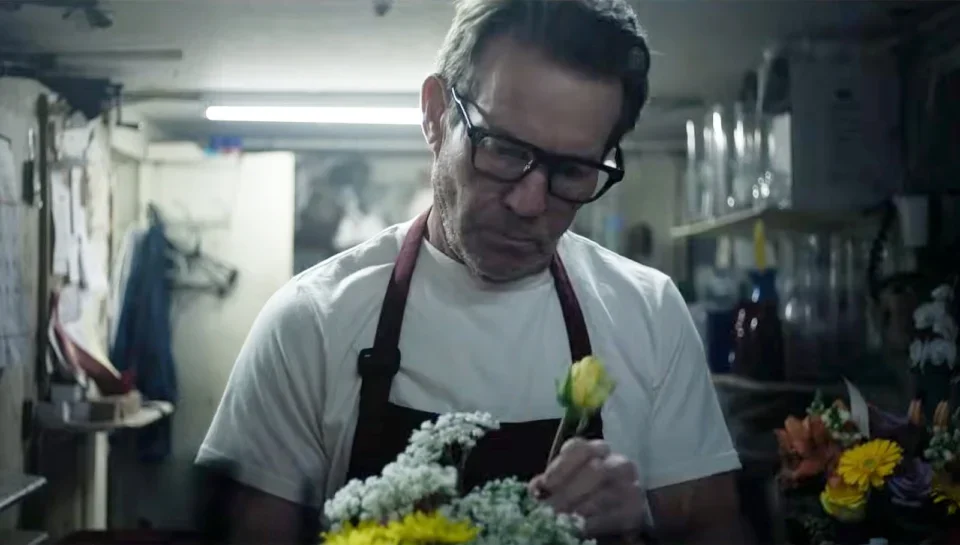
At its core, The Florist leans into the classic “dual-identity” narrative structure. Dennis Quaid stars as Carl Rikker, a man who spends his daylight hours meticulously tending to flowers, projecting the image of a soft-spoken, introverted horticulturalist. Beneath this veneer, however, lies the cold efficiency of a career assassin. His lethal partner-in-crime is played by the legendary Jean Reno, known for his iconic work in films like Léon: The Professional and Ronin.

The narrative catalyst occurs when a routine contract goes sideways, exposing deep-seated police corruption. When a young witness—portrayed by Sky Katz—becomes entangled in the fallout, the two aging killers must weigh their own survival against the moral imperative to protect the innocent. The film also features performances by Leonidas Gulaptis and Anna Schafer.
Directed by Babak Najafi, the project marks a return to the high-octane, tactical filmmaking the director has cultivated throughout his career. With a screenplay penned by the trio of Scott Windhauser, Eran Creevy, and Ethan Suess, the film is designed to deliver a rapid-fire progression of suspense and explosive set pieces, aiming to recapture the raw, unfiltered energy of 1990s action cinema.
Chronology of Production
The road to The Florist began long before its October 9, 2026, release date. The project was conceived during a period of shifting production priorities, where mid-budget action films were increasingly finding their most profitable home on Video-on-Demand (VOD) platforms rather than the traditional theatrical circuit.
- Development Phase: In late 2024 and early 2025, script development began under the guidance of Scott Windhauser. The concept, while familiar to genre aficionados, was pitched as a character-driven thriller that prioritized the chemistry between the two leads.
- Casting and Pre-Production: By mid-2025, the attachment of Dennis Quaid and Jean Reno elevated the project’s profile significantly. Their participation signaled a deliberate push to add gravitas to a script that otherwise risked feeling derivative.
- Principal Photography: Filming took place throughout early 2026, utilizing various urban locations to simulate the gritty, high-stakes atmosphere required for the film’s narrative arc.
- Post-Production and Distribution Acquisition: Following the conclusion of shooting, Saban Films moved quickly to acquire distribution rights, recognizing the potential for the film to perform well in the VOD ecosystem during the competitive fall season.
- The Trailer Drop: On September 1, 2026, the official trailer was released via YouTube, providing the first concrete look at the film’s tone, which blends domestic tranquility with sudden, jarring bursts of tactical violence.
Supporting Data: The "Retired Assassin" Market
To understand why The Florist exists, one must look at the data surrounding the "Grizzled Killer" subgenre. Since the success of the John Wick franchise, audiences have shown a persistent, almost insatiable appetite for films where an older, weary protagonist is forced back into a life of violence.

Competitive Landscape
The market is currently flooded with similar titles. For instance, Jean-Claude Van Damme’s The Gardener (2025) explored a strikingly similar premise—an assassin finding solace in the beauty of plants, only to be dragged back into the fray. The proximity of these two films in the cultural zeitgeist creates a "premise fatigue" that The Florist must overcome.
Economic Viability
The VOD model is built on high turnover. Unlike a theatrical release that relies on weeks of sustained interest and word-of-mouth, The Florist is designed for a "sprint" release. By stacking the cast with recognizable faces like Quaid and Reno, Saban Films lowers the barrier to entry for the casual viewer who may be scrolling through streaming catalogs. The production budget, while not disclosed, is structured to ensure that even moderate performance on VOD platforms results in a net positive, largely due to the global nature of digital distribution rights.
Official Responses and Creative Direction
Babak Najafi, an Iranian-Swedish filmmaker with a diverse resume—ranging from the gritty Swedish drama Sebbe to the Hollywood blockbuster London Has Fallen—has framed The Florist as a return to his roots in tension-based storytelling.
In discussions regarding the film’s tone, the production team has emphasized the "redemption arc." The narrative is not just about the mechanics of the kill, but about the transition from a life of extraction to a life of protection. Dennis Quaid, who also serves as a producer on the film, has reportedly been deeply involved in the characterization of Carl Rikker, pushing for a performance that feels grounded in the weariness of a man who has lived a life of violence and is desperately seeking a quiet end.

Critics, however, remain divided. The early reception of the trailer has highlighted a sense of "been there, done that." The film’s aesthetic—a dark, blue-tinted color palette, rapid-fire editing, and the classic "lone wolf" dynamic—suggests a film that is not looking to redefine the genre, but rather to provide a reliable, if predictable, experience for fans of the genre.
Implications: The Future of Mid-Budget Action
The release of The Florist serves as a case study for the current state of independent action cinema. There are several implications to consider regarding the film’s release strategy and its place in modern media:
1. The Decline of Theatrical Exclusivity
The Florist is a clear indicator that the "middle-class" action movie—once the staple of multiplexes—has permanently migrated to the home. This shift allows for more content to be produced but creates a competitive environment where visibility is the primary challenge. Without the "event" status of a theater release, films like The Florist must rely heavily on star power to cut through the digital noise.
2. The Star-Power Safety Net
By casting actors of the caliber of Dennis Quaid and Jean Reno, the production is utilizing a tried-and-true method of risk mitigation. When the script is a variation of a well-worn theme, the audience’s trust in the actors becomes the deciding factor in the purchase or rental decision. This trend suggests that we will continue to see veteran actors appearing in more VOD-exclusive action films, as the demand for "prestige-lite" content increases.

3. Cultural Homogenization of Action
The similarity between The Florist and films like The Gardener points to a phenomenon of creative convergence. Studios, looking for reliable ROI, are greenlighting projects that share identical DNA. While this ensures a certain level of quality for the viewer—who knows exactly what they are getting—it also risks a stagnation of the genre. If the industry continues to churn out these "instantly forgettable" action movies, the audience may eventually reach a breaking point of disinterest.
Conclusion: A Garden of Familiar Tropes
As we approach the October 9, 2026, release date for The Florist, the film stands as a testament to the endurance of the action thriller. It does not promise to reinvent the wheel, nor does it claim to be the next great piece of cinema history. Instead, it offers a two-hour window into a world of tactical maneuvers, moral dilemmas, and the unlikely bond between an aging assassin and his ward.
Whether the film succeeds will ultimately depend on its execution. If Najafi can elevate the material through superior craft and if Quaid and Reno can provide the necessary emotional depth to make their characters resonate, The Florist could very well become a sleeper hit in the VOD space. If, however, it leans too heavily on the tropes of its predecessors, it risks being lost in the digital archives of streaming platforms.
For the dedicated action fan, The Florist offers a familiar, comforting, and fast-paced experience. It is the cinematic equivalent of a reliable paperback—a story that feels known before it has even been finished, yet one that still commands our attention for the duration of the ride. As the leaves begin to turn this fall, Saban Films is betting that audiences are still looking for an assassin who knows his way around a bouquet. We will soon find out if that bet pays off.