Bridging the Dynamic Range Gap: Beeble’s SwitchHDR Redefines AI-Driven Reconstruction for Professional Pipelines

In the high-stakes world of modern post-production, the shift toward HDR (High Dynamic Range) finishing has created a profound technical challenge. While contemporary productions are natively captured in formats with massive latitude, a vast ocean of legacy content—archival footage, stock media, and older commercial masters—remains trapped in the limited, clipped confines of Standard Dynamic Range (SDR).
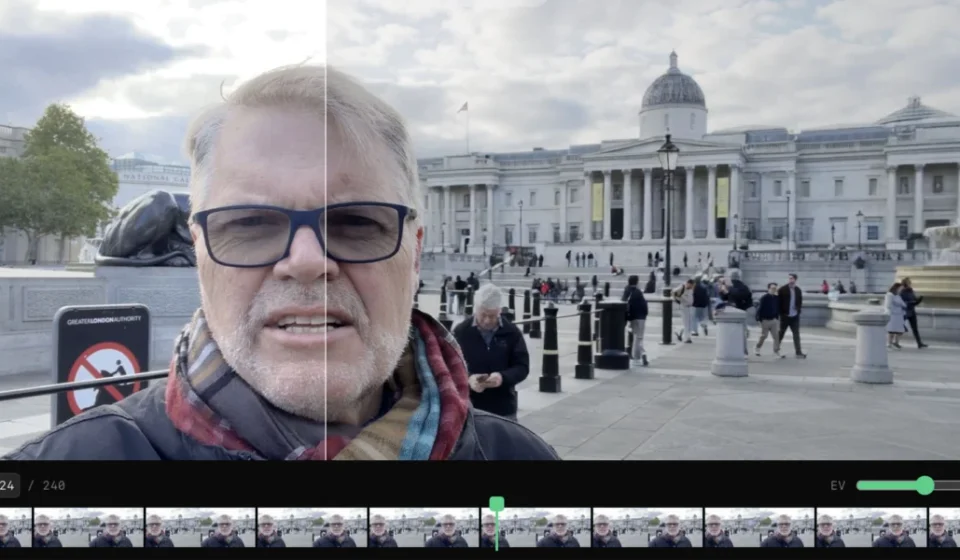
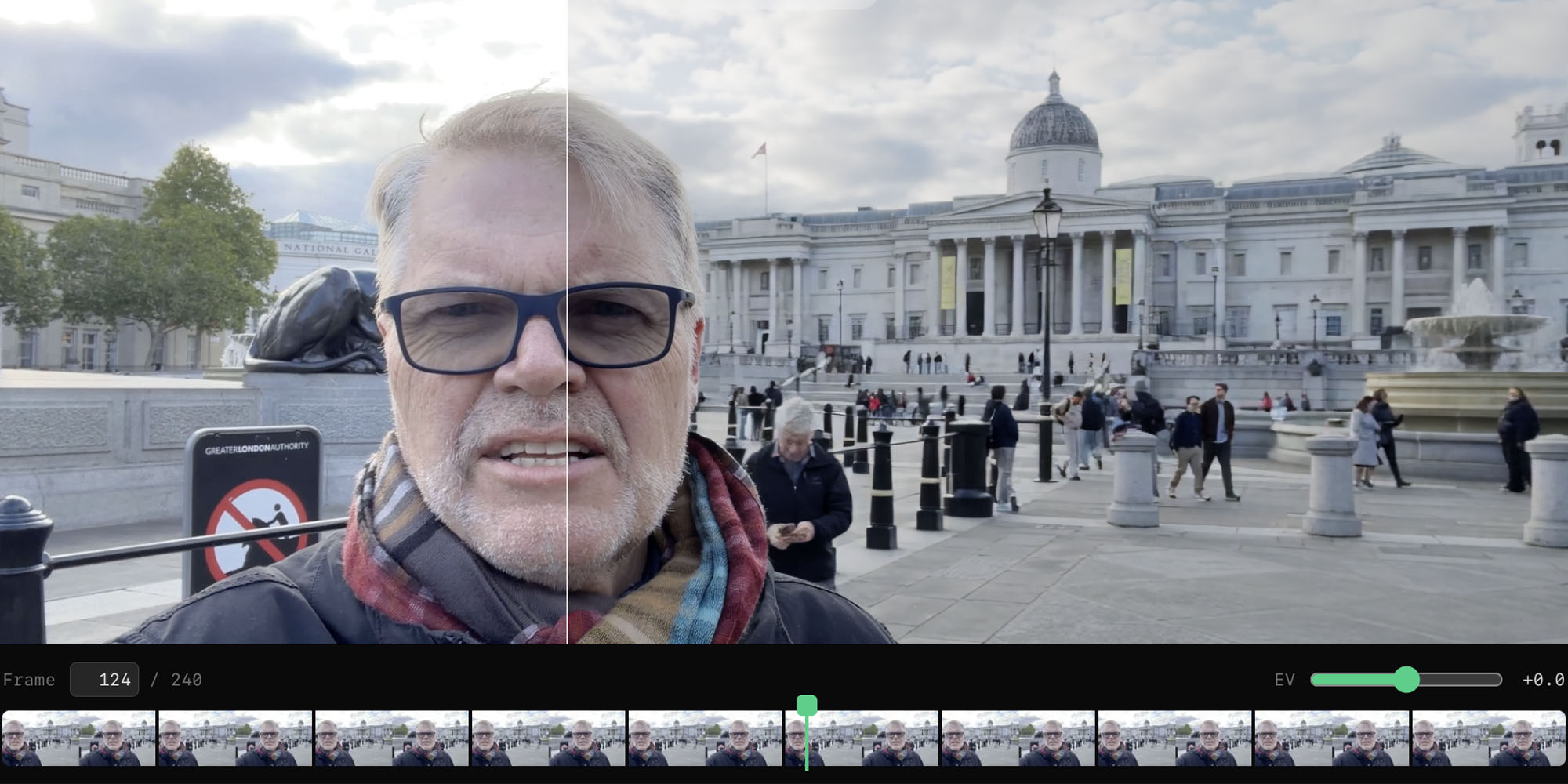
Beeble, the Seoul-based AI research house, has officially unveiled SwitchHDR, a transformative machine-learning model designed to bridge this divide. Unlike conventional remapping tools that simply "stretch" existing signals, SwitchHDR employs an intelligent reconstruction approach. It outputs scene-linear 16-bit EXR sequences, positioning itself as a vital tool for colorists, VFX supervisors, and digital restoration artists seeking to integrate legacy assets into contemporary HDR workflows.
The Technical Imperative: Beyond Signal Stretching
To understand the significance of SwitchHDR, one must first understand the limitations of traditional SDR-to-HDR conversion. For years, the industry has relied on "tone mapping" or "inverse tone mapping" operators. These tools mathematically redistribute the brightness levels of an image to fit a larger container. However, they suffer from a fundamental mathematical constraint: once a highlight is clipped in an SDR source, the original radiance data is physically gone.
Most existing AI tools attempting to fix this result in what colorists call "plasticky" artifacts—highlight roll-offs that look unnatural, banding in gradients, or amplified noise in shadow regions.
Beeble’s innovation lies in its training data. Rather than training on the ubiquitous pool of SDR content, the company utilized authentic HDR footage. By teaching the model how real-world scenes behave when captured with high-dynamic-range sensors, SwitchHDR performs an "informed reconstruction." It does not simply redistribute pixels; it infers what the radiance should have looked like, providing a more convincing, organic result that holds up under the scrutiny of modern professional color grading.
Chronology: From Relighting to Holistic AI Pipelines
The trajectory of Beeble since its founding in 2022 by CEO Hoon Kim has been one of rapid, focused evolution. The company’s journey reflects the broader maturation of AI in the visual effects industry.
- June 2023: Beeble first garnered industry attention with the debut of SwitchLight, an AI-driven relighting model that allowed artists to change lighting conditions in video post-production. At the time, it was viewed as a breakthrough in AI-assisted compositing.
- 2024–2025: The company expanded its R&D focus, moving beyond relighting into the broader realm of video-to-PBR (Physically Based Rendering) and mask-guided video-to-video manipulation.
- August 2026 (Present): The launch of SwitchHDR marks a pivotal moment, as the company shifts from creative effects (relighting) to technical reconstruction (dynamic range recovery).
- Future Outlook: The introduction of Canvas, a node-based interface debuted at ACM SIGGRAPH, signals Beeble’s ultimate goal: creating a unified ecosystem where AI models act as modular components within a traditional, pipeline-agnostic workflow.
Supporting Data: Why 16-Bit EXR Matters
For the average consumer, an "HDR-ready" file is often simply an 8-bit or 10-bit HEVC stream. For a professional VFX pipeline, that format is useless. Professional workflows demand precision, which is why SwitchHDR outputs in 16-bit EXR using the ACES2065-1 color space.
By adopting the Academy Color Encoding System (ACES), Beeble ensures that the reconstructed data behaves predictably when it reaches the grading suite. In a typical workflow, the SwitchHDR output allows a compositor to:
- Maintain consistent temporal stability across a shot.
- Use standard color management tools (like OpenColorIO) to integrate the material with plates shot on ARRI or RED cameras.
- Retain the ability to perform secondary corrections without the image falling apart, a common failure point in simpler SDR-to-HDR upscalers.
Official Responses and Creative Control
We spoke with Hoon Kim, Founder and CEO of Beeble, regarding the philosophy behind the model’s development. He emphasized that, in his view, the "black box" approach is the enemy of the professional artist.
"From day one, we built SwitchHDR around what post-production actually requires, not what makes a good demo," Kim stated. "We recognize that an AI model shouldn’t decide the creative intent of a shot. Where real detail survives in the footage, we recover it. Where it’s fully clipped, the artist decides how it gets rebuilt, guided by masks and prompts. That distinction—giving artists explicit control—is what makes it production-grade."
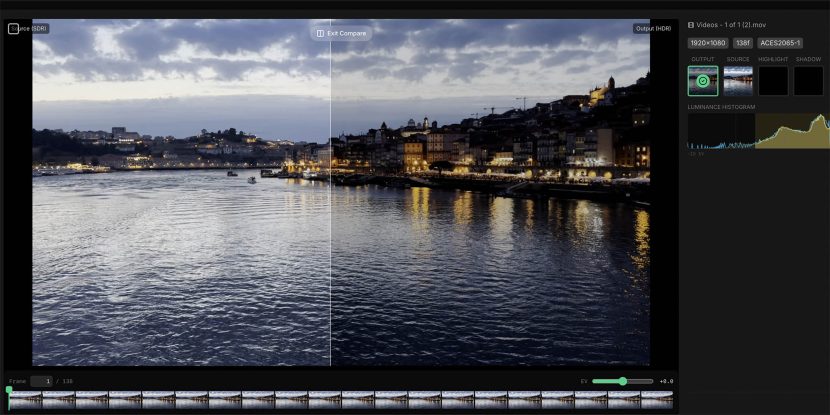
This "human-in-the-loop" design allows for granular control. Users can target specific areas—such as a bright window or a deep, underexposed corner—and dictate how the AI should reconstruct the radiance in those specific zones. This prevents the "over-processed" look that plagues automated software, allowing a director to maintain the specific aesthetic of an archival film while benefiting from the expanded canvas of HDR.
Implications for the Industry
The release of SwitchHDR has significant implications for three major sectors of the entertainment industry:
1. Archival Restoration and Catalog Monetization
Studios and streaming platforms are under constant pressure to re-release their back catalogs in 4K HDR. Previously, this required meticulous, frame-by-frame manual grading or expensive, slow manual restoration. SwitchHDR offers a middle ground, providing a high-quality foundation that allows restoration houses to accelerate their workflows significantly.
2. VFX and Stock Footage Integration
VFX supervisors frequently struggle to integrate older stock footage into new 4K HDR shots. The mismatch in dynamic range often makes the stock footage appear flat or "cheap" compared to the high-latitude foreground elements. SwitchHDR allows these assets to be brought into a scene-linear pipeline, matching the radiance and highlight roll-off of modern digital cinema cameras.
3. The Democratization of Professional Pipelines
By shipping these tools as web-based applications that feed into professional formats (EXR), Beeble is lowering the barrier to entry for smaller studios. High-end HDR finishing was once the exclusive domain of major post-houses with proprietary hardware. Now, that same capability is becoming a plug-and-play reality for smaller teams working on documentaries, indie features, and high-end commercials.
Technical Hurdles and Future Development
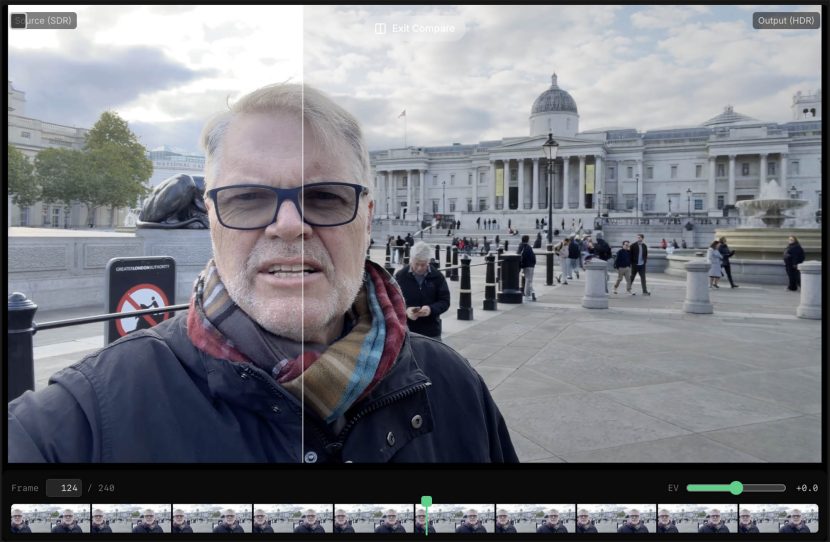
Despite the praise for its current iteration, Beeble is transparent about the challenges ahead. As noted in early testing, while SwitchHDR is a top-tier performer, it is not immune to the challenges of temporal consistency. Complex, high-frequency textures in motion can occasionally cause the model to struggle, resulting in minor flickering or "shimmering" in the reconstructed highlight areas.
Beeble has acknowledged these limitations, noting that they are already iterating on the temporal stability modules. The company’s focus on the Canvas node-based editor suggests that future versions of SwitchHDR will likely be even more tightly integrated with other AI tools, allowing for cross-model feedback loops that stabilize the image more effectively.
Conclusion: A New Standard for AI in Post
Beeble’s trajectory over the last three years—moving from the niche application of SwitchLight to the robust, industry-standard focused SwitchHDR—proves that AI in film is moving beyond the "gimmick" phase.
The industry is no longer asking whether AI can manipulate video, but whether it can do so in a way that respects the mathematical and aesthetic rigor of a professional pipeline. By prioritizing EXR output, ACES compliance, and artist-driven control, Beeble is setting a new benchmark for how machine learning should be implemented in professional visual effects. For those tasked with the thankless job of matching legacy SDR content to the demands of a modern HDR world, SwitchHDR is not just a new tool; it is a vital evolution in the filmmaker’s toolkit.