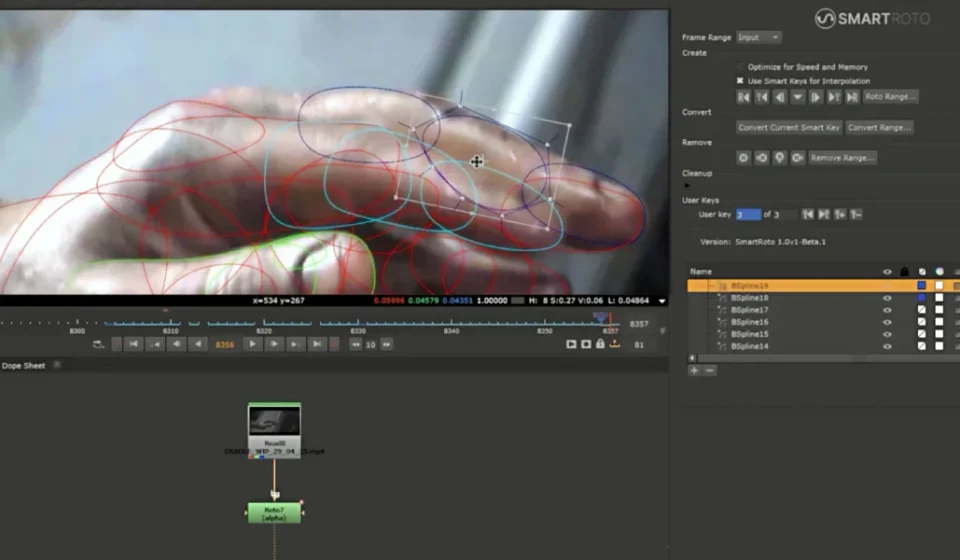

In the high-stakes world of visual effects, rotoscoping—the painstaking process of manually tracing elements frame-by-frame to create mattes—has long been considered the "grunt work" of the industry. It is a necessary evil, essential for compositing, yet notoriously time-consuming and prone to human error. Today, Foundry has officially disrupted this workflow with the release of SmartRoto, an AI-powered plugin designed specifically for the Nuke ecosystem, including Nuke, NukeX, Nuke Studio, and Nuke Indie.
Rather than attempting to automate the entire creative process, SmartRoto positions itself as a sophisticated assistant. It is not a "magic button" that generates a final matte; instead, it is an acceleration engine that handles the most repetitive aspects of spline animation, allowing artists to retain full creative control over the final output.
The Core Philosophy: Augmentation, Not Replacement
To understand SmartRoto, one must understand what it avoids. Many modern AI tools in the VFX space rely on segmentation models—essentially, telling a computer to "find the person" and draw a mask around them. Foundry’s Director of Product for AI Research, Adam Cherbetji, argues that this approach is fundamentally flawed for professional production.
"This isn’t a magic bullet; it doesn’t do the full spline creation for you," Cherbetji explains. "There is so much artist intuition that goes into the breakdown of a subject into smaller, logical shapes. The machine doesn’t know why you chose to split an arm into three separate splines for articulation. However, the truly time-consuming part—the manual keyframing and point-tracking across hundreds of frames—is where we focused our efforts."
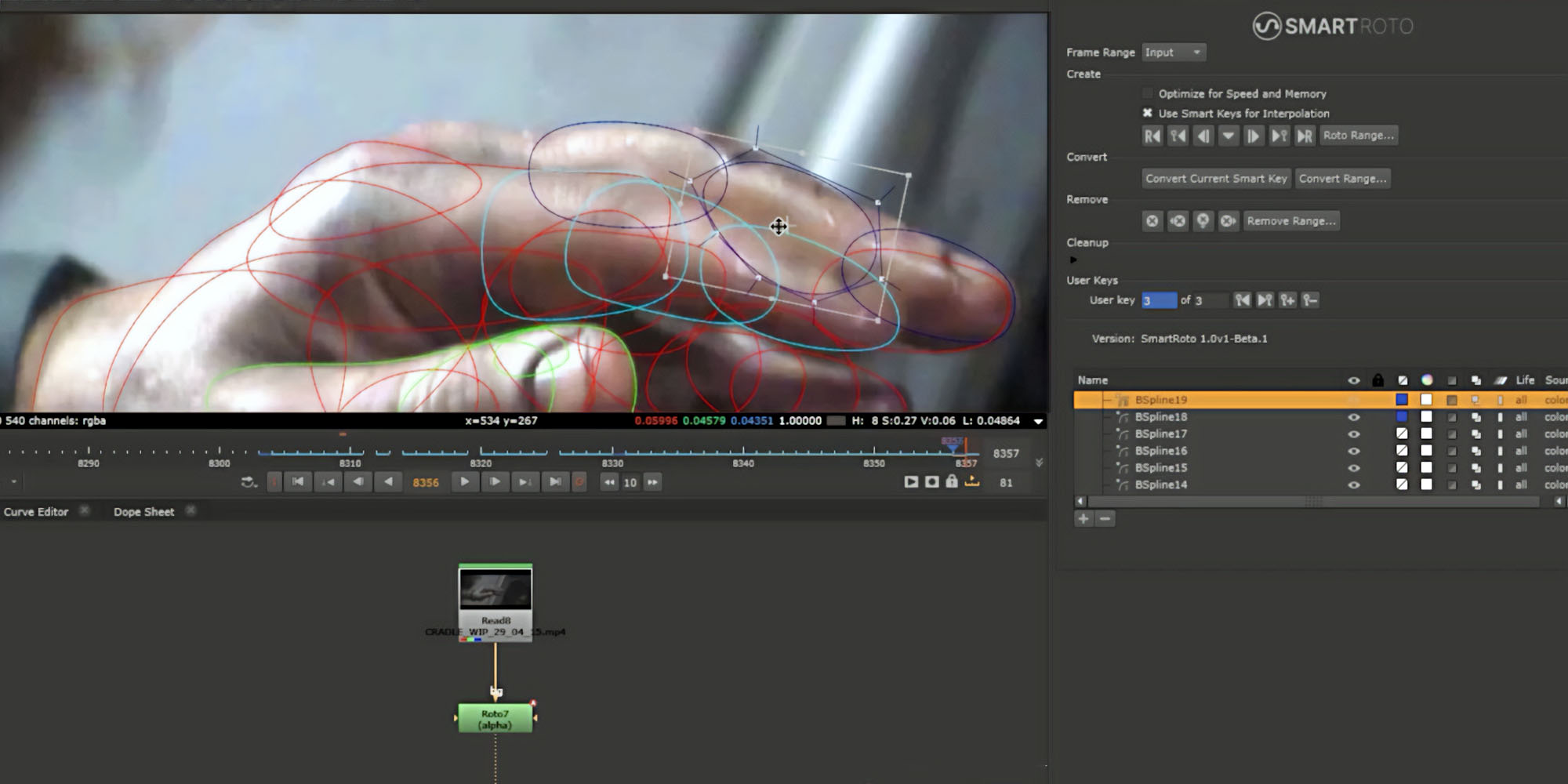
In the SmartRoto workflow, the artist performs the "intelligent" work: identifying the subject, breaking it down into anatomical or logical shapes, and defining the primary keyframes. Once the artist has set the "truth" on a clean frame, SmartRoto takes over the heavy lifting, propagating those splines across the timeline with remarkable temporal consistency.
A Four-Year Journey: From Academic Theory to Production Tool
The path to SmartRoto was far from a quick development cycle. Foundry’s interest in AI-assisted rotoscoping dates back nearly seven years, starting with early explorations in collaboration with DNEG and the University of Bath. While those initial forays provided valuable insight, they failed to produce a tool that met the rigorous demands of production.
Four years ago, the company decided to pivot, moving the research entirely in-house. The team began building a custom model from the ground up, utilizing a proprietary dataset of high-quality rotoscoping—much of which was derived from actual filmmaking footage produced by the research team themselves, ensuring that the training data was both diverse and commercially safe.
Unlike many AI tools that rely on massive, cloud-based foundation models, SmartRoto is designed to operate locally. This is a critical distinction for the VFX industry, where data security and intellectual property protection are paramount. No frame data is sent to the cloud; the model runs entirely on the artist’s workstation, requiring approximately 8GB of VRAM for most standard tasks.
The Two-Tier Keyframe System: User Keys vs. Smart Keys
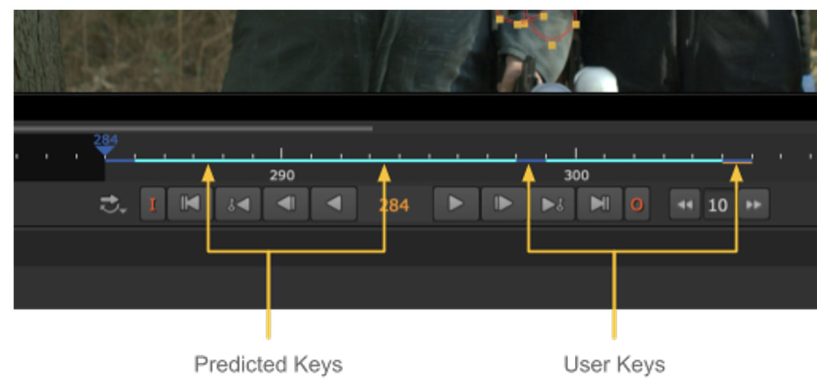
The brilliance of SmartRoto lies in its "two-tier" keyframe management. The system distinguishes between two types of keys:
- User Keys: These are the anchor points placed or adjusted by the artist. In the system’s logic, these are treated as "gospel." The AI will never override a user-placed key. If an artist fixes an edge or adjusts a spline, that frame becomes a permanent, locked user key.
- Smart Keys: These are the predicted frames generated by the model. These keys fill the gaps between user keys.
This hierarchy ensures that the artist is never "fighting" the AI. If the model produces a result that is slightly off, the artist simply makes an adjustment; that adjustment promotes the frame to a User Key, and the model then recalculates the surrounding sequence based on the new, more accurate information. It is a cyclical process of refinement that prevents the frustration of "all-or-nothing" automated tools.
Why Optical Flow and Segmentation Failed
During the development phase, Foundry tested several industry-standard approaches, including optical flow and segmentation-based matting. Both were eventually discarded.
"Optical flow was the first thing we tried," says Cherbetji. "It breaks down at the edges of an object, which is exactly where you need the most precision in rotoscoping."
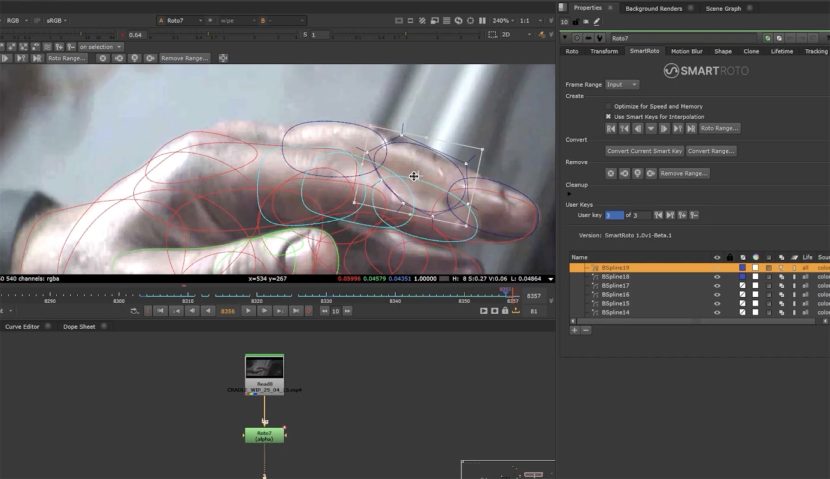
Similarly, segmentation models—which generate pixel-based masks—were deemed "not fit for purpose." The reason is simple: compositors require subpixel-accurate vectors (splines). Converting a jagged, pixelated mask into a vector shape is a lossy process. SmartRoto skips the rasterization stage entirely, manipulating the splines directly based on image features. This keeps the output in a format that compositors can easily tweak, blur, or warp to match the requirements of the final shot.
Performance Metrics and Industry Validation
In the lead-up to the launch, Foundry invited a cohort of professional roto artists to test the tool in a controlled environment. The results were striking. Comparing manual roto against SmartRoto, the professional testers saw speed increases of up to 400% in certain scenarios.
While Foundry remains conservative, suggesting a "consistent" two-times speed increase for standard production shots, the qualitative feedback from the beta group was arguably more significant. Artists reported a dramatic reduction in "rotoscoping fatigue," a condition often associated with the repetitive strain of frame-by-frame manual adjustments.
Benjamin Bratt, a veteran compositor and author of Rotoscoping: Techniques and Tools for the Aspiring Artist, praised the tool’s integration into existing pipelines. "I’m shocked at how good it is," Bratt noted. "It meshes perfectly with manual practices. It’s easy to fix auto-generated keys without needing to start from scratch."
Implications for the VFX Pipeline
The release of SmartRoto comes at a time when the VFX industry is increasingly looking toward AI to solve the problem of ever-tightening production schedules. However, it arrives amidst a broader debate about the role of automation.
Foundry’s approach—prioritizing the "spline" as the fundamental unit of work—stands in contrast to other emerging technologies like OTOY’s RotoShop. While RotoShop works backwards by fitting vectors to existing segmentation masks, SmartRoto works forward by propagating user-defined vectors. Both paths share a singular, industry-wide goal: creating production-ready mattes that are editable, high-fidelity, and temporally coherent.
For the individual artist, the arrival of SmartRoto marks a potential shift in the job description. The "roto artist" of the future may spend less time performing the repetitive labor of point-shifting and more time acting as a "supervisor" of the AI, providing the guidance and intuition that no machine can currently replicate.
As studios continue to integrate these tools, the industry will likely see a shift toward faster turnaround times for complex sequences, potentially allowing for more creative iterations in the compositing phase. For now, with an annual subscription price of $499, SmartRoto is positioned to become a standard utility in the Nuke artist’s toolkit, turning one of the most dreaded tasks in post-production into a streamlined, highly efficient process.