The Resilience of the Crystal Globe: Reflecting on 80 Years of the Karlovy Vary International Film Festival

The Karlovy Vary International Film Festival (KVIFF) has long occupied a singular position in the global cinematic landscape. It is a festival defined not merely by its programming, but by the improbable, often jagged path it has navigated through the 20th and 21st centuries. From its inception in 1946—the year following the restoration of Czechoslovakia from Nazi occupation—to its status today as a beacon of European cultural synthesis, KVIFF has survived political upheaval, state-mandated agendas, and the collapse of the Eastern Bloc.
This year’s "Vary Special" edition serves as a landmark moment: a celebration of sixty editions spanning eight decades. It is a festival that has successfully reconciled the ghosts of its Communist-era inheritance with a forward-looking, progressive identity, proving that a film festival can act as both a repository of history and an engine for contemporary discovery.
A Chronology of Survival: From Post-War Hope to Modern Eclecticism
The history of KVIFF is inextricably linked to the geopolitical shifts of Central Europe. Founded just weeks before the inaugural Cannes Film Festival, it quickly established itself as a premier destination for filmmakers. By 1958, the International Federation of Film Producers Associations (FIAPF) awarded it the prestigious "Category-A" status, placing it in the highest tier of international festivals.

However, this prestige came with strings attached. For decades, the festival operated under the shadow of the Soviet Union. From 1959 until 1994, KVIFF was forced into an alternating schedule with the Moscow International Film Festival. This period was defined by the strict ideological boundaries of the state. Yet, even within these constraints, the festival nurtured a unique aesthetic and intellectual tradition. Today, the festival’s headquarters—the Hotel Thermal—stands as a brutalist monument to that era, its architecture providing a sanatorium-like atmosphere that feels both nostalgic and hauntingly grounded.
Since the establishment of the independent Czech Republic, KVIFF has discarded the ideological baggage of the past while preserving the rigorous, high-quality curation that earned its reputation. Its current programming philosophy is one of unapologetic eclecticism: balancing regional debuts of hits from Sundance, Berlin, and Cannes with deep-dive retrospectives into the history of Eastern European cinema.
The Rituals of KVIFF: Celebrity, Satire, and Continuity
For the frequent attendee, KVIFF is defined by its deep-seated traditions. Foremost among these are the festival trailers directed by Ivan Zachariáš. These eccentric, black-and-white shorts, which precede every screening, feature past winners of the festival’s Crystal Globe award in scenarios that lean heavily into absurdity. Whether it is Mel Gibson fending off robbers with a blowgun or Stellan Skarsgård using his statuette as a fishing lure, these trailers capture the festival’s unique ability to avoid taking itself too seriously, even as it celebrates the highest forms of artistic achievement.

Furthermore, the curatorial vision of artistic director Karel Och has cemented the festival’s intellectual reputation. His multi-year "master class" approach—such as the annual dedication to a single John Cassavetes film—provides a sense of continuity that grounds the festival’s otherwise fluid and expansive programming.
Looking Backward: The "Out of the Past" Retrospective
This year, the festival organizers made a deliberate choice to pivot toward the historical. By sacrificing the comfort of familiar contemporary titles, attendees were invited to engage with Out of the Past – KVIFF 60/80, a retrospective that served as a thematic backbone for the anniversary.
The selection was a masterclass in historical contextualization. It featured Powell and Pressburger’s 1946 masterpiece A Matter of Life and Death, a film that spoke directly to the post-war recovery of the Czechoslovak spirit. It revisited Crystal Globe winners like Ján Kadár and Elmar Klos’s The Defendant (1964) and Ken Loach’s Kes (1970), documenting how the festival remained a vital platform for social realism even during the turbulent years of the Prague Spring.

Perhaps most importantly, the retrospective highlighted works that were once suppressed or censored, such as Juraj Jakubisko’s Birds, Orphans and Fools (1969). By showcasing these films alongside international gems like Glauber Rocha’s Barravento (1962), KVIFF demonstrated its long-standing commitment to global solidarity, proving that its intellectual reach extended far beyond the constraints of the Iron Curtain. The inclusion of high-definition digital restorations of Jonathan Glazer’s Sexy Beast and Věra Chytilová’s psychosexual tragicomedy Tainted Horseplay (1988) offered a bridge between legacy cinema and modern preservation standards.
Contemporary Voices and Global Competition
The festival’s competition sections, Proxima and the main Crystal Globe competition, offered a stark contrast to the historical retrospectives. Proxima, which replaced the "East of the West" section five years ago, has shed its regional focus to become a truly global incubator for emerging talent. The Grand Prix winner, Lover, Not a Fighter by Slovak director Martina Buchelová, was a revelation. By utilizing a fragmented, vertical-video aesthetic to tell a deeply intimate, scrappy story of modern romance and impending existential dread, Buchelová showcased the innovative language of the next generation.
In the Crystal Globe competition, the scope was grander and more seasoned. While Aung Phyoe’s Fruit Gathering took the top prize, the film that dominated the discourse was undoubtedly the Bulgarian drama Black Money for White Nights. Directed by the formidable duo Kristina Grozeva and Petar Valchanov, the film is a searing, witty, and ultimately devastating look at how individuals attempt to shield themselves from political reality.

Set against the backdrop of the invasion of Ukraine, the film follows an elderly couple whose life-long dream of visiting St. Petersburg becomes a catalyst for their moral undoing. It is a film that refuses to offer easy answers, utilizing a high-key, artificial aesthetic to mirror the couple’s self-imposed ignorance. Its failure to win a major prize was perhaps a reflection of its uncomfortable proximity to the very political realities the festival is currently navigating.
Thematic Implications: Cinema as a Mirror to History
The festival also highlighted two Cannes-bound features that shared a common preoccupation with time: Emmanuel Marre’s A Man of His Time and Sandra Wollner’s Everytime.
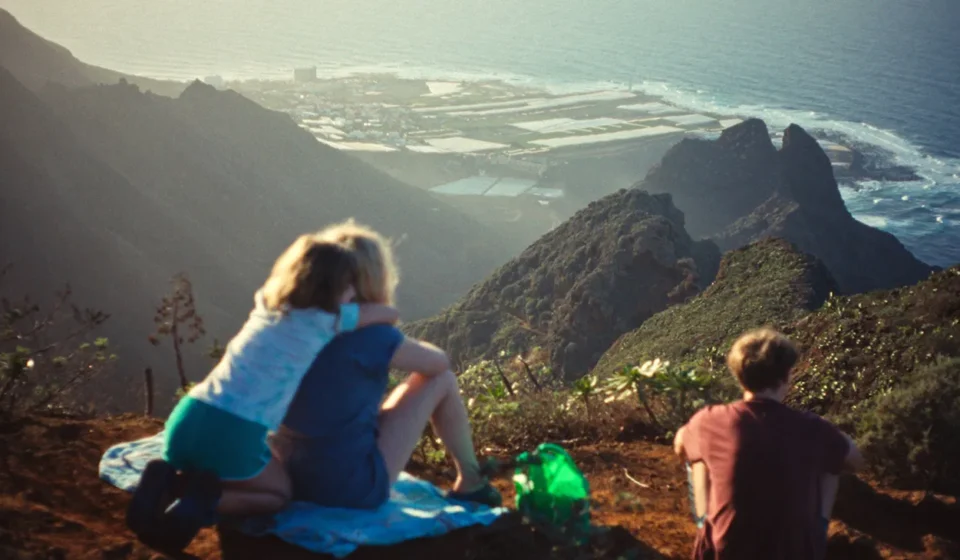
A Man of His Time serves as a sobering, 155-minute meditation on the banality of evil. By focusing on a protagonist who navigates the Vichy regime with a mixture of ambition and mediocrity, Marre uses the camera as a silent, stationary witness to the erosion of morality. Conversely, Sandra Wollner’s Everytime is a quiet, miraculous work of memory and grief. By contrasting urban realism with hallucinogenic memory, Wollner manages to explore the profound impact of childhood loss, proving that fiction remains one of our most potent tools for processing the brutal realities of life.

Conclusion: A Festival Reclaimed
The 60th edition of the Karlovy Vary International Film Festival is more than a milestone; it is a declaration of intent. By reclaiming its history—both the glory and the trauma—KVIFF has managed to cultivate an environment where cinema is not merely consumed, but interrogated.
The festival succeeds because it is willing to be uncomfortable. Whether it is through the brutalist aesthetic of the Hotel Thermal or the screening of films that challenge our notions of complicity and distance, KVIFF remains a space for profound reflection. As the festival looks toward its next eighty years, it stands as a testament to the idea that culture, when allowed to breathe outside the constraints of ideology, is the most resilient force of all. The Crystal Globe continues to spin, reflecting not just the light of the screen, but the complex, ever-evolving history of the world that surrounds it.