
By Editorial Staff
August 28, 2026
In the annals of Hollywood history, few films have traversed a path as treacherous, meta, and ultimately triumphant as Coyote vs. Acme. What began as a standard studio production spiraled into a cautionary tale of corporate austerity, sparking a grassroots rebellion that eventually forced the hand of one of the industry’s largest conglomerates. Today, as the film finally graces theaters worldwide, it serves as more than just a piece of entertainment; it is a monument to the resilience of creative vision in an era of tax write-offs and algorithmic content management.
The Main Facts: A Legal Battle Brought to Life
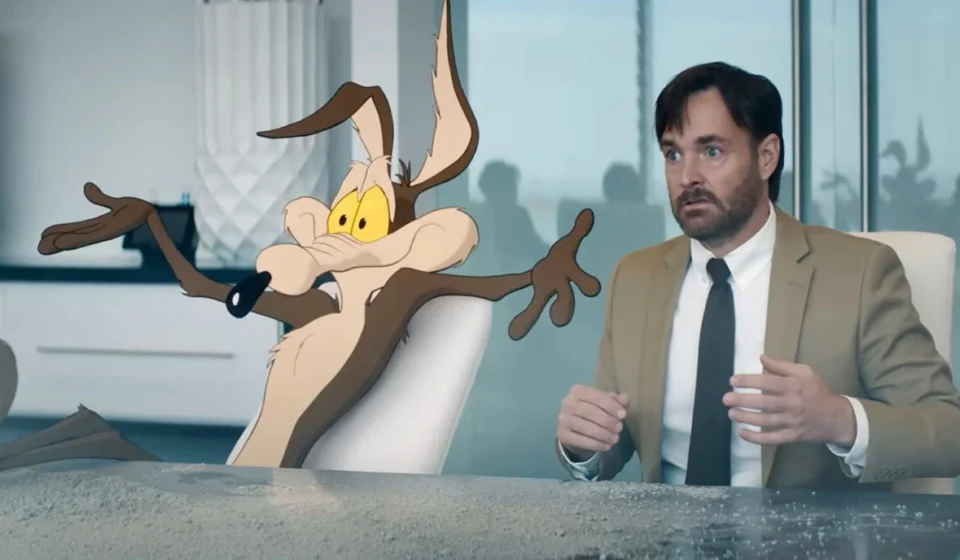
Directed by Dave Green, Coyote vs. Acme is a live-action/CGI hybrid—a spiritual successor to classics like Who Framed Roger Rabbit and Space Jam. The premise is as simple as it is brilliant: Wile E. Coyote, having grown weary of the persistent failure of Acme Corporation’s products, decides to take the conglomerate to court. He enlists the help of a down-on-his-luck, small-town billboard lawyer, Kevin Avery (played by Will Forte), to challenge the manufacturing giant.
The film is a zany, heart-filled, and technically ambitious project that attempts to ground the physics-defying chaos of the Looney Tunes universe in the cold, hard reality of the American legal system. While it aims to delight children, it is underscored by a satirical edge aimed at the very corporate structures that once sought to bury it.
A Chronological Odyssey: From Development to Resurrection
The journey of Coyote vs. Acme is a timeline of institutional drama that arguably eclipses the plot of the film itself.
- 2022: Production concludes under the Warner Bros. banner. The film is completed and reportedly tests extremely well with audiences, receiving some of the highest internal scores for a Warner Bros. feature in recent years.
- November 2023: In a move that shocked the entertainment industry, Warner Bros. Discovery announces it will shelve the film indefinitely as a tax write-off, essentially burying a finished, high-quality product to save on taxes.
- Late 2023: A massive public outcry erupts. Filmmakers, critics, and audiences protest the "erasure" of art. The #SaveCoyoteVsAcme movement gains momentum, highlighting the dangers of studios treating art as disposable accounting entries.
- March 2025: Following sustained pressure and a shift in market perception, Warner Bros. agrees to sell the distribution rights. Ketchup Entertainment secures the deal, signaling a new chapter for the beleaguered project.
- 2025–2026: The film undergoes a year of final post-production polish and aggressive marketing campaigns, setting the stage for its wide release.
- August 28, 2026: The film finally premieres in theaters worldwide, completing a four-year odyssey of legal and creative turmoil.
Supporting Data: Behind the Curtain
The financial and critical performance of the film is now being scrutinized with a magnifying glass. Initial box office tracking suggests a strong opening weekend, bolstered by the "curiosity factor." Fans who followed the #SaveCoyoteVsAcme movement are turning out in droves, effectively turning the movie’s release into a political statement.
Technically, the film boasts a unique visual blend. The interaction between Will Forte’s live-action performance and the CGI-rendered Coyote requires a level of choreography that mirrors the frantic energy of the original Looney Tunes shorts. Comedian John Cena, who plays a high-powered corporate attorney, provides a sharp, charismatic foil to Forte’s underdog persona. The synergy between these two leads has been cited by early reviewers as the "emotional anchor" of the film, providing a human heartbeat to what could have been a purely gimmick-driven narrative.

Official Responses and Corporate Sentiment
The silence from the upper echelons of Warner Bros. Discovery has been deafening since the sale to Ketchup Entertainment. However, insiders suggest that the decision to reverse course was driven by a combination of public relations damage control and the realization that the film possessed inherent commercial value that a tax write-off could not replicate.
Dave Green, the film’s director, has remained remarkably diplomatic throughout the process. In recent press junkets, he has emphasized the "labor of love" aspect of the production, noting that the cast and crew spent additional months—well after the film was initially "cancelled"—polishing the final cut to ensure it met the high standards set by the original animation legacy.
"The movie is a testament to the fact that you cannot simply delete creativity," Green noted in a recent interview. "When you stand up to the big guy—whether it’s Wile E. Coyote against Acme or artists against a studio—there is a profound catharsis in that struggle."
Implications: A New Precedent for Hollywood
The case of Coyote vs. Acme has profound implications for the future of the film industry. For decades, studios have operated under the assumption that they possess the unilateral right to destroy the work they commission. By successfully fighting back, the Coyote vs. Acme team has set a dangerous—or perhaps, vital—precedent for creative labor.
The "Write-Off" Debate
The industry is currently grappling with the ethics of "shelving" completed films for tax benefits. The success of Coyote vs. Acme suggests that there is a significant, untapped audience for films that are caught in corporate limbo. It forces studios to consider that an "archived" film may actually be a "stolen" asset—one that belongs to the creators and the public as much as it does the balance sheet.
The Power of the Fandom
This release is also a victory for modern digital advocacy. The ability of the internet to coalesce around a cause has shifted from simple social media chatter to a force that can influence multi-million dollar corporate decisions. Studios are now aware that "erasing" a film is no longer a silent operation; it is an invitation for public scrutiny and potential brand damage.
A Critical Look: Is It Worth the Wait?
Now that the film is finally playing in cinemas, does it live up to the hype? The consensus is mixed but leans heavily toward the positive.

The film is undoubtedly a "blast"—it carries the frenetic, slapstick energy that defined the Looney Tunes legacy. However, it is not without its flaws. The narrative structure, particularly in the second act, tends to meander as the legal courtroom drama clashes with the surreal nature of cartoon physics. Some critics have pointed out that the revelation regarding the "true" nature of the Coyote’s relationship with Acme, while narratively sound, somewhat dampens the momentum of the finale.
Yet, there is a brutal honesty in the conclusion. Eschewing the typical Hollywood "slam-dunk" victory, the film opts for a more grounded, realistic resolution that respects the audience’s intelligence. It isn’t a perfect masterpiece, but it is an honest one. It is a film that reflects the very struggle of its own existence.
Conclusion: A Celebration of Persistence
Whether Coyote vs. Acme becomes a permanent staple in the pantheon of great animation hybrids is secondary to what it represents. It is a movie that refused to stay dead. In the final scene, as the dust settles on the courtroom, one cannot help but see the reflection of the thousands of artists, fans, and activists who refused to let this story fade into a corporate server’s "delete" folder.
As we move forward, the legacy of Coyote vs. Acme will likely be measured less by its box office gross and more by the shift it initiated in the relationship between creators and studios. It is a win for the underdog, a win for the fans, and, most importantly, a win for the art of cinema itself.
What do you think? Did the wait make the final product sweeter, or does the weight of the baggage make it impossible to judge fairly? Does the film’s message about standing up to corporate giants ring true in your own experience, or is it just another layer of meta-commentary? The theater is open, the seats are filled, and the verdict is finally yours to decide. Join the conversation below and let us know your thoughts on the most controversial film of the decade.