The Multiverse of Mediocrity: Why ‘Dark Matter’ Season 2 Represents a Breaking Point for Apple TV+

When Apple TV+ announced a second season for Dark Matter, the sci-fi adaptation of Blake Crouch’s celebrated novel, the news was met with a mixture of surprise and skepticism. The first season, which arrived with significant pedigree and the backing of author-turned-showrunner Crouch, had struggled to penetrate the cultural zeitgeist. Despite its high-concept premise—a physics professor abducted into a parallel reality where he became a celebrated scientist instead of a family man—the show failed to ignite the awards circuit or register on major Nielsen streaming charts.
In the landscape of modern streaming, where Apple is notoriously guarded with its viewership data, the renewal felt like a gamble on prestige rather than a response to proven demand. Now, with the second season poised for release on August 28, it has become clear that the series is not only failing to evolve but is actively succumbing to the structural fatigue that often plagues high-budget, VFX-heavy science fiction.
The Narrative Dead End
At its heart, the first season of Dark Matter felt like a closed loop. It was a self-contained exploration of the "road not taken," following Jason Dessen (Joel Edgerton) as he navigated the multiverse to reclaim the family he had been stripped of. By the time the credits rolled on the finale, the story had reached a definitive, emotionally resonant conclusion.
The struggle to find a compelling "Season 2" is evident in every frame of the new episodes. Rather than breaking new ground, the series feels like it is running in circles, revisiting personal dilemmas that were already resolved. It attempts to pivot toward the "moral responsibility of scientific discovery"—a trope well-worn by Oppenheimer and countless other genre staples—but does so with a heaviness that obscures the show’s potential. Where the first season was a tight, albeit somber, thriller, Season 2 plays like a bloated sequel, bigger in scope but significantly thinner in substance.

Structural Chaos: A Lesson in Mismanagement
Perhaps the most egregious flaw in the new season is its structural pacing. In a baffling creative choice, the season opts for a disjointed narrative that ignores the basic tenets of television storytelling.
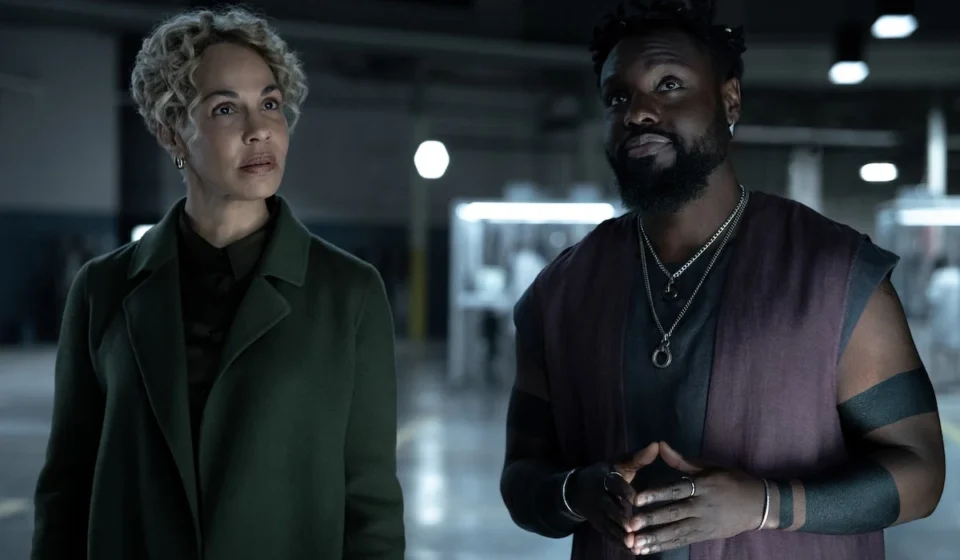
Consider Episode 3, titled "Everything Beautiful, Everything Terrible." This installment features a pivotal scene where Jason engages a group of fellow scientists in a philosophical debate regarding the ethics of his dimensional "box." They discuss the inevitability of human advancement, citing the atom bomb and the internet as harbingers of progress that bring both beauty and destruction. It is, by all accounts, the show’s thesis statement. Yet, this vital context—which serves to ground the high-stakes science in human consequence—does not appear until the third hour.
By padding the first two episodes with expendable plot threads and "table-setting" sequences that never truly pay off, the show alienates the viewer. Characters like Daniela (Jennifer Connelly) are relegated to "supportive wife" roles that feel regressive, while other supporting players like Ryan (Jimmi Simpson) and Amanda (Alice Braga) are trapped in monotonous loops of action that lack real narrative agency. Even the inclusion of the multidimensional cop, played by the charismatic Chris Diamantopoulos, feels like a missed opportunity; he is treated as a plot device to nudge characters from point A to point B rather than a fully realized antagonist.
The "Prestige" Problem: Why Viewers Are Checking Out
The fundamental issue with Dark Matter is not just its writing, but its release cadence. It has been over two years since the first season concluded. In that interim, Apple TV+ has released roughly 29 new series. For a casual viewer, the mental real estate required to recall the dense, complex rules of the "box," the specific histories of multiple Jasons, and the motivations of a sprawling cast is simply too high.

This is a recurring theme for the streaming giant. Shows like Severance have faced similar criticism, with production gaps spanning years that threaten to kill the momentum of even the most acclaimed projects. When a show is as narratively complex as Dark Matter, these long absences act as a barrier to entry. The stakes are already fuzzy when the season begins, and because the show fails to provide a clear, accessible entry point, the audience is left to navigate a labyrinth without a map.
Science-Fiction Obsession vs. Market Reality
Apple’s commitment to high-minded, high-budget science fiction is well-documented. From Foundation to Silo and Invasion, the streamer has positioned itself as the home for "prestige" genre television. While this fits the brand identity of a sleek, forward-thinking tech giant, it ignores the shifting tides of the industry.
Current market trends suggest a pivot back toward traditional, reliable storytelling. Shows like The Pitt are finding massive success by adhering to a more classic, predictable format—15-episode seasons, consistent yearly releases, and character-driven narratives that don’t require a Ph.D. in theoretical physics to follow. As studios tighten their budgets, the trend is moving away from "blockbuster" mystery boxes and toward "engrossing" procedural television.
Apple, however, remains stubbornly attached to the "big swing" model. The reliance on VFX-heavy production cycles—which typically demand seven months of filming and another seven in post-production—creates a "bottleneck" that makes consistent release schedules nearly impossible for their current sci-fi roster. Only For All Mankind has managed a semi-consistent rhythm, and even that series has recently slipped into the two-year-per-season trap.

Implications for the Future
What does this mean for the future of Apple TV+? If the platform continues to prioritize concept-heavy, disorganized narratives over consistent character development, it risks losing the very audience it seeks to capture. Obsessive fans are the backbone of long-term series success, but those obsessions must be fed with regularity and clarity.
Dark Matter may be an outlier, or it may be the canary in the coal mine. If a show with the backing of a major author and a high-profile cast can descend into such a state of narrative confusion, it serves as a stark warning to the industry: ideas alone cannot sustain a television series.
In the third episode of this sophomore season, the scientists tell Jason: "To understand the future, we only need to look to the past. We know what will happen because we’ve done all this before." If Apple is looking to predict the success of its future slate, it should take that advice to heart. History shows that great television is built on the connection between characters and the consistency of the world they inhabit. Dark Matter is built on ideas, but it lacks the structural integrity to keep them from collapsing under their own weight.
As the industry moves toward a model of efficiency and accessibility, Dark Matter Season 2 feels like a relic of a bygone streaming era—one where limitless coffers allowed for creative indulgence at the expense of the viewer’s experience. Whether this is a fatal flaw or a minor stumble remains to be seen, but for now, it is a clear indication that for the audience, the return trip through the multiverse is simply not worth the effort.

‘Dark Matter’ Season 2 premieres Friday, August 28, on Apple TV+.