
The Taiwan International Documentary Festival (TIDF) has long served as a crucial barometer for Asian political nonfiction. Since its inception in 1998—a mere decade after the lifting of martial law in Taiwan—the festival has carved out a unique space for independent video activism and community-focused media. As it celebrated its 15th edition this past May, the TIDF underscored its foundational commitment to "Asian Visions" and local Taiwanese histories, proving that the documentary form remains an essential tool for dissecting the complexities of identity, colonial legacy, and state-sanctioned narratives.
A Legacy of Resistance: The Archival Turn
One of the most profound revelations of this year’s program was the screening of Archive: Li Guang-hui (1979/2024). Compiled from raw newsreel outtakes by the legendary photographer Chang Chao-tang, the 30-minute film serves as a sobering critique of how the state constructs national heroes.
The subject, Suniuo—an Indigenous Amis Taiwanese soldier drafted into the Imperial Japanese Army—was discovered in 1974 living in isolation on the Indonesian island of Morotai, entirely unaware that World War II had concluded three decades prior. Upon his return to Taiwan, the Kuomintang (KMT) government quickly instrumentalized his homecoming, recasting him as a heroic symbol of the Republic of China’s triumph over Japanese imperialism.
Chang’s archival work deconstructs this myth. By deliberately excluding his own narration and focusing on the highly mediated public appearances of Suniuo, Chang highlights the tragedy of a man trapped in a historical narrative he never authored. In one harrowing sequence, a folk singer serenades Suniuo with a Mandarin ballad—a language and tradition entirely foreign to him. Chang’s camera lingers on Suniuo’s face, capturing not the expected gratitude of a returning hero, but a profound, hollow incomprehension. The film acts as a powerful reminder that history is often a performance, and that archival materials, when recontextualized, can expose the fissures in state-sponsored myth-making.
Chronology of an Island: From Colonialism to Modernity
The TIDF program was anchored by two significant archival strands: "Reel Taiwan," which examined the social movements of the 1980s, and "War Memories, Shifting Identities," which interrogated the lives of conscripted soldiers during the Japanese colonial era.
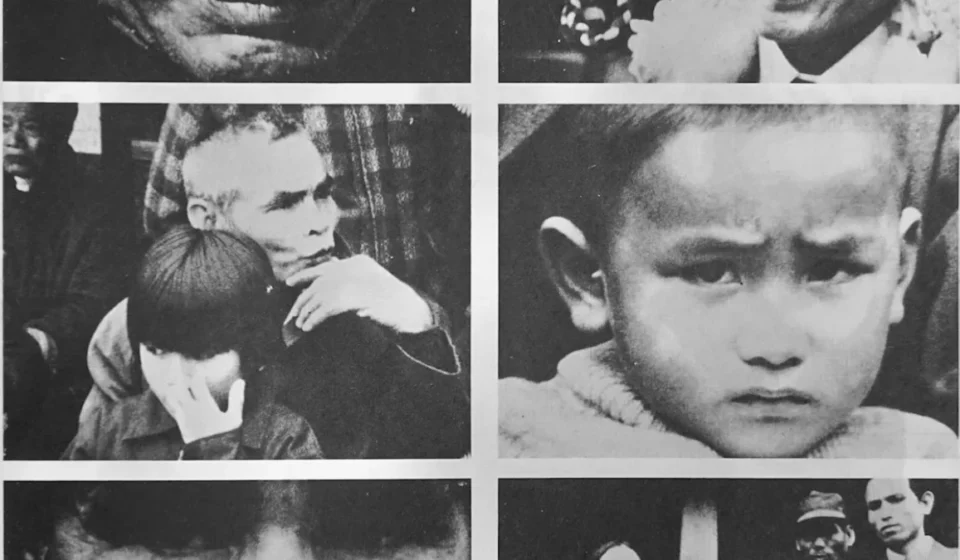
These programs collectively challenge the long-held, reductive narrative that Taiwanese documentary cinema only emerged post-1987. By looking back at works like the 1973 collective film Asia Is One, the festival provided a nuanced view of the island’s hybrid identity. Asia Is One stitches together the testimonies of Taiwanese fishermen in Okinawa and Tayal villagers, revealing a complex web of loyalty, nostalgia, and trauma related to Japanese colonialism.
This archival focus is not merely academic; it is a defensive, prismatic response to Taiwan’s current precarious geopolitical status. As the island is frequently reduced to a pawn in the competing imperial interests of the United States and China, the TIDF’s insistence on the local, the Indigenous, and the marginalized provides a necessary counter-narrative—one that emphasizes the heterogeneity of East Asia.
Challenging the Bulldozer: Urban Development and Human Scale
Beyond the archives, the festival turned its gaze toward the contemporary struggle between individuals and predatory urban expansion. A standout in this category was Hu Sanshou’s Xiangzidian Village: The Stage (2026), a six-year project that observes the slow erasure of a village by modern infrastructure.
Unlike conventional activist documentaries that rely on rapid-fire interviews and moral outrage, Hu adopts a patient, observational tone. He frames the villagers not as victims, but as central figures in a vast, vanishing universe. By using wide shots that dwarf the inhabitants against massive mounds of rock and encroaching bulldozers, Hu emphasizes the Sisyphean nature of their struggle. The film’s emotional resonance is derived from the filmmaker’s personal relationship with his subjects; he is not an outsider parachuting in to document "the marginalized," but a neighbor recording the slow fading of a community he has known his entire life.
The Architecture of Trauma: Narrative and Memory
The festival also interrogated the ethics of representation in political cinema. Anocha Suwichakornpong’s Narrative (2026) offers a biting critique of how trauma is commodified by legal and therapeutic frameworks.
In Narrative, Suwichakornpong stages a theatrical workshop for the families of Red Shirt activists killed during the 2010 Bangkok massacre. By structuring the film as a three-act play, she exposes the artificiality of the "resolution" usually demanded by audiences and state investigators. The film’s most poignant moment arrives in the final act, where a musical score by Eiko Ishibashi drowns out the participants’ voices, rendering their words of "gratitude" inaudible. This act of silencing serves as a meta-commentary on the impossibility of individual healing without meaningful, systemic collective restitution. The military state, as the film suggests, prefers to treat mass violence as a series of isolated, manageable incidents, effectively preventing a comprehensive reckoning with state power.
Implications: The Aesthetics of Exhaustion
The closing note of the festival was perhaps best represented by Luo Li’s Air Base (2025). Set in post-pandemic Wuhan, the film abandons traditional narrative propulsion for a series of staged, absurd, and repetitive public performances.
Whether it is a man attempting to "straighten" the curtains on a public bus or a woman collecting recordings of sighs, these scenes capture the collective fatigue of a society trying to navigate a "new normal" characterized by apathy and state surveillance. In Air Base, the reality is not just tired; it is fundamentally exhausted. Yet, in this exhaustion, there is a glimmer of resilience. The film suggests that even in a world where interpersonal responsibility has dissolved, there remain small, prickly forms of human connection—a shared, unprompted sigh or a moment of camaraderie by a fishless pond.
Conclusion: A Prismatic Future
The 15th TIDF succeeded because it resisted the urge to offer easy answers or the half-hearted promise that "cinema will change the world." Instead, it provided a space for the "archiveless archive," acknowledging that while political trauma is deep and systemic, the act of documenting it remains a vital, ongoing process of resistance.
From the archival recovery of Li Guang-hui’s forgotten story to the meditative observation of village life in Xiangzidian, the festival demonstrated that the documentary form in Asia is evolving. It is becoming more self-reflexive, more skeptical of the "truth" of testimony, and more attuned to the nuances of endurance. As geopolitical tensions rise and the specter of authoritarianism looms, these films do not merely record the past; they create new, prismatic ways of seeing the present, refusing to acquiesce to the narrative of failure that power structures so often seek to impose.
The festival leaves us with the understanding that even when the machinery of the state feels all-encompassing, there is always an edge—a small, persistent space where the individual can continue to perform, to remember, and to imagine what comes after the dust settles.