
By Alex Billington
August 24, 2026
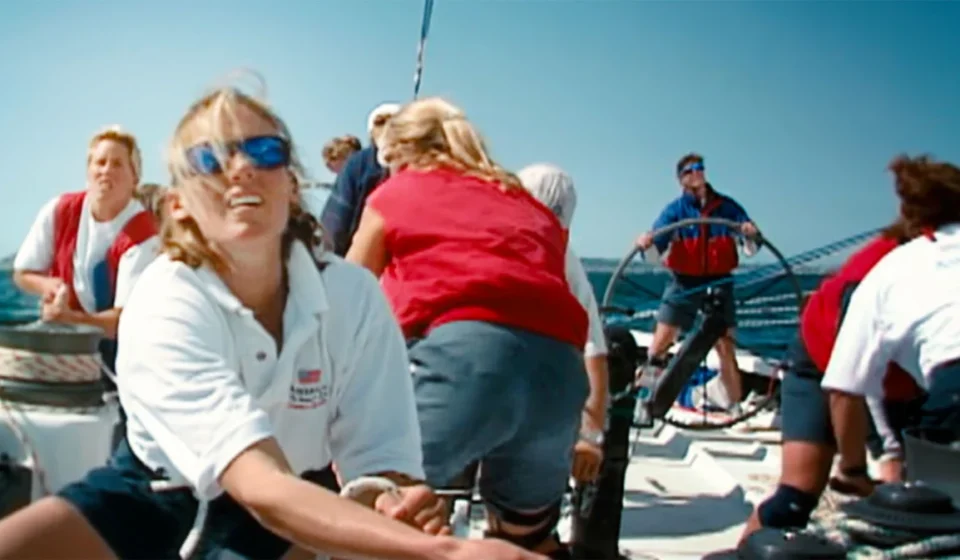
In the annals of elite sport, few events possess the gravity, the exclusivity, or the sheer technical ferocity of the America’s Cup. For over a century, it has been the "holy grail" of yachting—a bastion of tradition, immense wealth, and, until 1995, an impenetrable wall of male dominance. However, a new documentary film, Mighty Mary, is set to peel back the layers of a 1995 campaign that forever altered the trajectory of women’s sailing. Directed by the acclaimed filmmaker and former Olympian Mary Mazzio, this heart-racing documentary chronicles the rise of the first all-women’s sailing team to compete for the America’s Cup.
As Skydance Sports and Republic Pictures prepare for the film’s theatrical release on September 11, 2026, the industry is bracing for a story that is as much about the politics of the boardroom as it is about the physics of the open sea. Narrated by Elizabeth Banks and Hugh Jackman, the film serves as a visceral reminder that the path to progress is rarely a straight line.
The Genesis of an Impossible Dream
The story of Mighty Mary begins not on the water, but in the pages of the New York Times. In a bold move that sparked both curiosity and mockery, a recruitment advertisement was placed, seeking women to form a sailing crew capable of competing at the highest level of the sport. The response was a fascinating cross-section of Americana: everyone from world-class Olympic rowers and professional sailors to hopefuls who clearly lacked maritime experience—including one iconic applicant who submitted a photo of herself flexing in a bikini next to a cactus.
What started as a seemingly quixotic publicity stunt quickly morphed into a formidable operation. The resulting crew was a "motley" collection of high-achievers who defied conventional expectations. The team roster was strikingly diverse, featuring a deaf sailor, an indigenous Native Hawaiian sailor, and the inclusion of the first African-American sailor to ever win an America’s Cup race, who served as a critical coach for the team. This was not merely a group of women learning to sail; it was a high-stakes, high-pressure experiment in meritocracy.
Chronology: From Recruitment to the Backroom Deal
To understand the significance of Mighty Mary, one must look at the timeline of the 1995 America’s Cup cycle, a period defined by tension and transition.

- 1994 (The Call): The recruitment phase begins. The team forms, testing the limits of their physical endurance and technical cohesion.
- Early 1995 (The Build): Training in the rough waters of San Diego, the crew learns to handle the massive, complex vessels required for America’s Cup racing.
- The Challenger Selection Series: Against all expectations, the Mighty Mary crew finds their rhythm. Their defining moment occurs when they square off against "Stars & Stripes," helmed by the legendary Dennis Conner—the man known as "Mr. America’s Cup."
- The Upset: In a stunning display of tactical brilliance, the all-women’s team effectively eliminates Conner’s boat from contention. The sailing world is left in shock; the barrier has been broken.
- The Aftermath: Despite their success on the water, the dream is cut short by a secret backroom deal—a political maneuver orchestrated the night before a critical race that effectively dismantled the team’s momentum and changed the course of the competition.
Supporting Data: The Physics and Politics of the Cup
The America’s Cup is not just a race; it is an arms race. The vessels are feats of engineering, requiring extreme physical labor—grinding winches, managing immense sail pressure, and navigating complex wind patterns.
Critics of the 1995 all-women’s team argued that the physical demands of the "IACC" (International America’s Cup Class) yachts were insurmountable for a female crew. However, the data from the 1995 campaign suggests otherwise. The crew utilized specialized training programs, often drawing from the disciplines of elite rowing and Olympic-level tactical sailing, to compensate for the physical disparity.
The documentary highlights the "we eat nails for breakfast" ethos of the crew, showcasing how they adapted to the boat’s design—a design that had been optimized for male-centric ergonomics. By focusing on precision and communication, they proved that the "unthinkable" was, in fact, a matter of strategy rather than biological limitation.
Official Perspectives: Narrators and Filmmakers
The production of Mighty Mary has been a labor of love for Mary Mazzio, who brings her unique perspective as an Olympian to the project. Having directed works like A Most Beautiful Thing and I Am Jane Doe, Mazzio is no stranger to stories about resilience.
Elizabeth Banks, who serves as both a narrator and executive producer, expressed her deep commitment to the project: "I’m proud to be a part of this powerful documentary that shines a light on the extraordinary courage of the women aboard Mighty Mary. This team was groundbreaking, and I hope their story inspires a new generation of women to dream bigger and never give up."
The film acts as a spiritual successor to other high-profile sailing documentaries, most notably Maiden, which detailed the first all-women’s team in the Whitbread Round the World race. While Maiden focused on endurance in the open ocean, Mighty Mary explores the cutthroat, hyper-political environment of the America’s Cup—an arena where the obstacles are often found in the boardroom as much as in the swell of the sea.

The Legacy of the Mighty Mary
The implications of the Mighty Mary campaign are felt even today. While they did not hoist the cup in 1995, their performance forced a reckoning within the yachting community. The documentary argues that the team’s success triggered a shift in how professional sailing organizations recruit and train talent. By proving that a non-traditional team could not only compete but defeat the most decorated figures in the sport, they opened the door for future generations of female sailors.
The "backroom deal" that ended their 1995 run is perhaps the most compelling part of the film. It serves as a reminder that in elite sports, the outcome on the water is only one half of the story. The influence of sponsors, team owners, and tradition-bound organizations can often outweigh the efforts of the athletes themselves.
Mazzio’s film, however, refuses to let the frustration of the ending overshadow the brilliance of the journey. It is a story about the audacity to exist in a space that was not designed for you. As the film arrives in theaters this September, it stands as a testament to the fact that when boundaries are broken, they rarely ever fully close again.
Why You Should Watch
Mighty Mary is more than a sports documentary; it is an essential piece of cultural history. With its blend of archival footage, intimate interviews, and the high-octane tension of America’s Cup racing, the film offers a masterclass in narrative documentary filmmaking.
For those who enjoyed Maiden or are interested in the evolution of gender equality in sports, Mighty Mary is a required viewing. It challenges the viewer to reconsider what "elite" means and who gets to define it. As we approach the 2026 theatrical release, one thing is certain: the Mighty Mary crew has finally secured their place in the history books, not just as a footnote in a race, but as the architects of a permanent shift in the world of professional sailing.
Film Details:
- Director: Mary Mazzio
- Producers: Allison Abner, Grant Hill, Mary Mazzio
- Narrators: Elizabeth Banks, Hugh Jackman
- Release Date: September 11, 2026 (Theatrical)
- Distributor: Skydance Sports / Republic Pictures