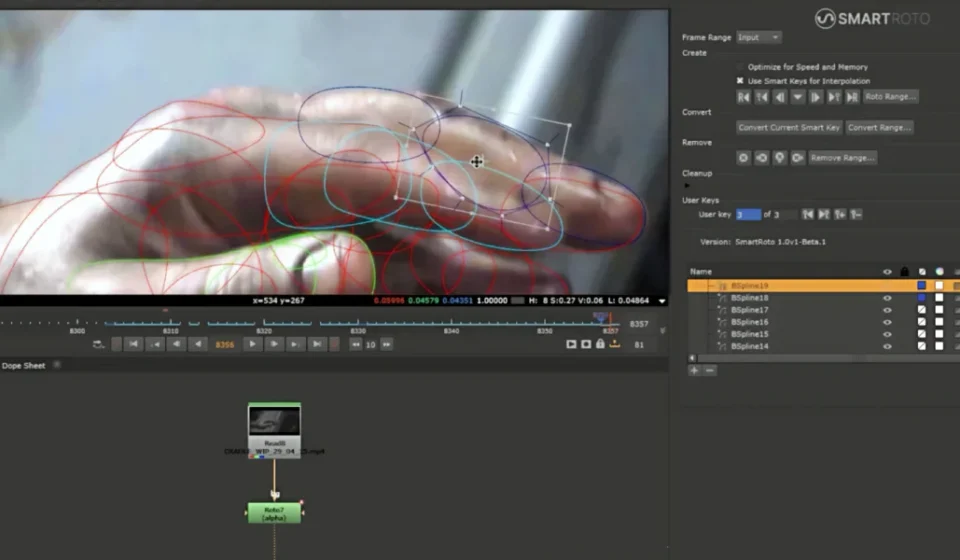

Rotoscoping—the painstaking process of tracing subjects frame-by-frame to create masks for visual effects—has long been the bane of the compositor’s existence. It is the "grunt work" of the VFX industry: essential, time-consuming, and prone to repetitive strain. However, after years of development, Foundry has officially launched SmartRoto, an AI-powered plugin for the Nuke ecosystem designed to transform how artists approach this classic challenge. By prioritizing artist intuition over full automation, Foundry aims to make the most tedious task in the post-production pipeline significantly faster without sacrificing the subpixel precision that professional compositors demand.
The Core Concept: Not a Magic Bullet, but a Force Multiplier
In an exclusive briefing ahead of the product’s launch, Adam Cherbetji, Foundry’s Director of Product for AI Research, emphasized that SmartRoto is not an "auto-magical" button. It does not attempt to replace the artist’s judgment, nor is it merely a segmentation tool that creates a rough matte.
"This isn’t a magic bullet; it doesn’t do the full spline creation for you," Cherbetji explained. "It’s about accelerating the keyframing process. There is so much artist intuition that goes into the breakdown of a subject into smaller, articulated shapes. While that is somewhat time-consuming, the really time-consuming part is the keyframing. That’s where we focused."
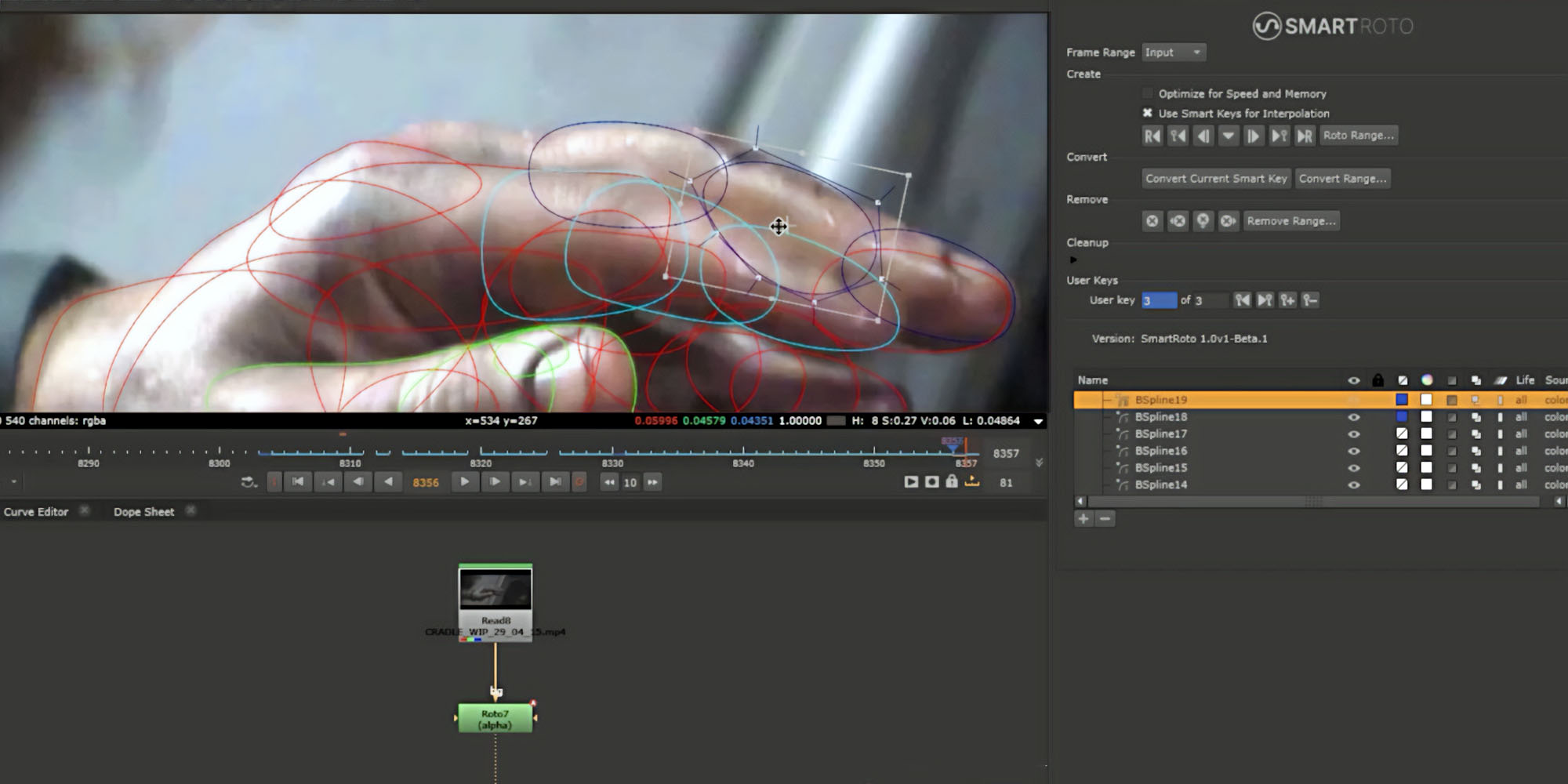
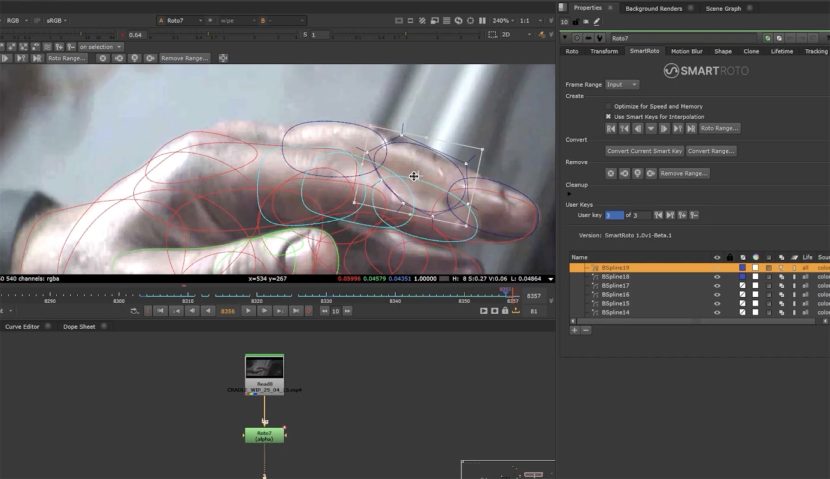
The workflow remains rooted in traditional rotoscoping practices. An artist breaks a subject down into sensible, articulated shapes on a "clean" frame where the subject is clearly visible. Once those shapes are defined, SmartRoto takes over the heavy lifting, propagating those splines across the image sequence, animating and deforming them to match the subject’s motion.
Chronology of Development: A Long-Term Research Goal
SmartRoto did not appear overnight. It is the culmination of years of iterative research. Foundry first explored the potential for AI-assisted rotoscoping with academic partners over six or seven years ago, notably in a collaboration with DNEG and the University of Bath. While those early experiments provided a foundation, they failed to yield a production-ready tool.
Four years ago, Foundry decided to pivot, moving the project entirely in-house. The team built a novel model from the ground up, training it on custom datasets curated from the Director of Research’s own filmography. To ensure industry-grade performance, the model was trained on high-quality roto, both internal and external, ensuring it understood the nuances of edge detection and motion blur.
Crucially, Foundry has committed to an ethical AI framework: the model is trained exclusively on licensed data, and it operates entirely locally. There is no cloud processing involved, which alleviates the security concerns that often plague major studios when utilizing AI tools.
The Two-Tier Keyframe System: "Smart Keys" vs. "User Keys"
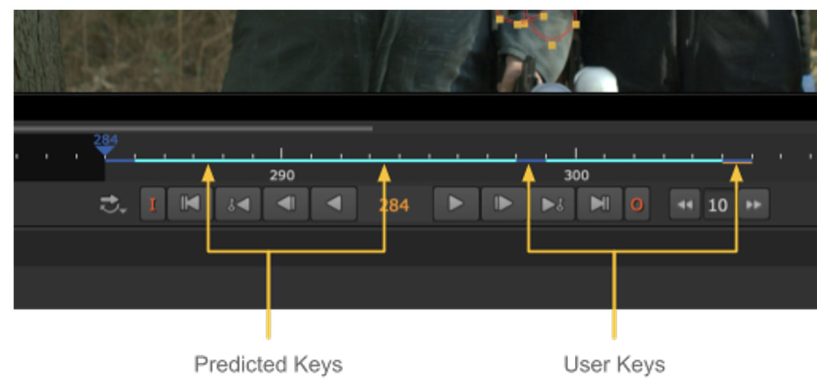
The heart of SmartRoto is its dual-tier keyframe architecture. The system differentiates between "Smart Keys" (AI-predicted) and "User Keys" (artist-placed).
- User Keys: These are the bedrock of the workflow. When an artist manually positions a spline, the system treats that data as "gospel." It will never overwrite a user key, ensuring that the artist maintains absolute control over the final output.
- Smart Keys: These are the interpolated frames generated by the AI. They fill the gaps between the user-defined anchors.
This granularity is per-shape, not per-frame. An artist can lock down specific body parts—a hand or a head—while allowing the model to continue refining the more fluid motion of a torso or clothing. If the AI’s prediction is slightly off, the artist simply adjusts the spline. This correction automatically promotes that frame to a new "User Key," and the model re-runs its calculation across the surrounding range to account for the new data. This iterative feedback loop ensures that the artist is constantly guiding the machine rather than fighting against it.
Supporting Data: Efficiency and Performance
To validate the tool before its public release, Foundry invited professional roto artists to their offices for two weeks of rigorous testing. The artists were tasked with completing a variety of shots using both standard Nuke tools and the new SmartRoto plugin, with the order of tasks randomized to avoid bias.
The results were compelling. By the end of the second week, artists were, on average, twice as fast as their previous benchmarks, with some shots seeing a four-fold increase in efficiency.
"I think that was probably on the higher end of what you can expect," Cherbetji noted, remaining cautious about over-promising for production environments. However, the qualitative feedback was perhaps more telling: artists reported that the tool felt natural and, more importantly, they expressed a strong reluctance to ever go back to manual rotoscoping.
Benjamin Bratt, a veteran compositor and author of Rotoscoping: Techniques and Tools for the Aspiring Artist, participated in the beta testing. "I’m shocked at how good SmartRoto is," Bratt remarked. "It uses principles of rotoscoping and incorporates an intuitive, easily adaptable keyframe approach that meshes with manual practices. It’s easy to fix auto-generated keys without needing to start from scratch."
Technical Differentiation: Why Not Optical Flow?
The technical hurdles for AI-assisted roto are significant. Many previous attempts failed because they relied on optical flow—which tends to degrade at the edges—or simple segmentation masks that lack the "vector" nature of a spline.
SmartRoto sidesteps these pitfalls. It does not use optical flow, as the model was designed specifically to prioritize precision at the silhouette. Furthermore, it avoids the "raster-to-vector" trap of some contemporary research, such as the RotoShop approach presented at SIGGRAPH 2026. While RotoShop attempts to fit vectors to existing segmentation masks, SmartRoto propagates the artist’s original splines directly from image features.
This is critical because splines are the "currency" of the VFX world. They are subpixel-accurate and infinitely editable. By staying within the spline domain, Foundry ensures that the output is not just a mask, but a high-fidelity, production-ready asset that can be easily integrated into existing compositing pipelines.
Implications for the VFX Pipeline
The release of SmartRoto signals a shift in the role of the roto artist. Rather than acting as manual laborers, artists are moving toward the role of "Roto Supervisors" or "AI Trainers." The tool acknowledges that while AI is excellent at predicting motion, it lacks the human ability to understand the intent behind a shot—such as how a character’s clothing should move or how to handle complex occlusions.
However, the tool is not without its limitations. Heavily blurred frames or shots with complex, full-body occlusions will still require significant manual intervention. While the model handles motion blur well by placing edges at the center of the blur, it remains a tool for humans, not a replacement.
As the industry grapples with the impact of AI, Foundry’s approach provides a template for "Human-in-the-loop" technology. By ensuring that the artist remains the primary authority, SmartRoto avoids the "black box" problem of other AI tools. The artist retains control, the pipeline remains predictable, and the final deliverable remains a clean, editable spline.
For Nuke users, the barrier to entry is manageable. The system requires approximately 8GB of VRAM to function efficiently, which is modest compared to the massive requirements of large-scale foundation models. With an annual subscription price of $499, Foundry is positioning SmartRoto as an accessible, essential utility for both boutique studios and large-scale visual effects houses, setting a new standard for how we interact with the most tedious, yet vital, tasks in the digital film industry.