Surrender to the Rhythm: Umair Bilal’s ‘As Light as Air’ Redefines the Documentary Form

In the bustling, incense-wreathed corridors of the Sufi shrine town of Sehwan, Pakistan, filmmaker Umair Bilal spent months attempting to impose the traditional architectural scaffolding of documentary filmmaking—a clear protagonist, a driving plot, and a structured narrative arc. He failed. Or, more accurately, he surrendered.
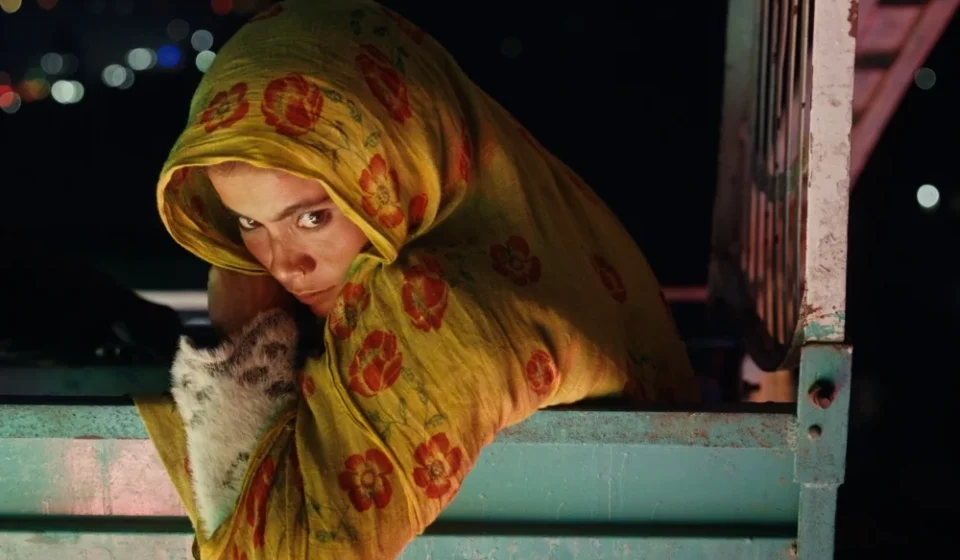
His debut feature, As Light as Air, which premieres in the Semaine de la Critique at the 79th Locarno Film Festival, is not a traditional portrait of a place. It is a 65-minute sensory immersion into the heartbeat of Sehwan. Devoid of a central protagonist or conventional conflict, the film functions as a cinematic trance, focusing on the lives of pilgrims, the ascetic malangs—wandering mystics who have renounced worldly attachments—and the ecstatic, communal ritual of the dhamal.
The Genesis of a Sensory Experience
The inception of As Light as Air was never anchored in a script or a sequence of events. For Bilal, the project began as a collection of tactile fragments: the profound, transcendent silence of prayer, the pungent drift of burning incense, the warm flicker of oil lamps, and the haunting, repetitive pull of devotional music.
"Every time I tried to impose that logic onto Sehwan, it felt like I was working against the place rather than with it," Bilal tells Variety. He realized early on that the city operated on a frequency fundamentally disconnected from the rigid, cause-and-effect logic of standard documentary narratives.
Bilal admits that the project was initially sparked by a sense of nostalgia, drawing on his own childhood memories. However, as the production unfolded, the lived reality of Sehwan eclipsed his personal recollections. "My childhood may have opened the door to Sehwan, but once I arrived, the city gradually replaced those memories with its own reality," he explains. "By the end, I realized the emotional and visual world of the film belonged far more to the Sehwan of today than to my memories of it."
Chronology of a Methodological Shift
The evolution of the film was a process of gradual shedding. Bilal and his co-cinematographer, Konstantin Stell, abandoned the traditional “shot list” early in the production. Instead, they adopted a radical, intuitive methodology: they would stand at the town’s intersections and wait for a street to “call” to them.
"We would follow our intuition without rationalizing the choice," Bilal recounts. "Quite often, we would spend the next eight hours filming whatever unfolded there." This surrender to the environment allowed the camera to function not as an intrusive observer, but as a participant in the town’s daily rhythm.
This methodology extended into the editing suite. Working with editor Siddhant Sarin, the team chose to bypass traditional plot structures in favor of emotional cadence. "We began with an initial structure guided by emotion, letting images and sound dictate their own rhythm," says Bilal. The goal was to pivot away from observing spiritual engagement to facilitating a journey for the viewer—an attempt to move the audience closer to the visceral experience of the dhamal.
The Architecture of Immersion: Sound and Collaboration
The technical production of As Light as Air is as much a global dialogue as it is a local portrait. With a team spanning Berlin and Mumbai, the film’s post-production was a collaborative effort born from long-standing friendships rather than transactional business arrangements.
Composer Sui Sofie Heinz, based in Berlin, played a pivotal role in maintaining the film’s sensory integrity. Rather than imposing a score over the top of the footage, Heinz immersed herself in the raw audio recordings and Bilal’s narratives of his time in Sehwan. "We never wanted there to be a clear boundary between the field recordings and the score," Bilal notes. "We wanted the music and the recorded sounds to flow into one another so naturally that the audience would stop thinking about where one ended and the other began."
The sound design by Sudarshan Sawant and the color grading by Mahak Gupta were similarly aimed at preserving the film’s "as light as air" ethos. By refusing to categorize the film as a traditional "experimental documentary," Bilal hopes to strip away the expectations that labels often carry. Instead, he prefers to describe it through musical terminology: repetition, variation, tension, and release.
Ethics and the Human Connection
A primary concern for any filmmaker documenting a spiritual community—particularly one they are not a member of—is the ethics of representation. Bilal addressed this by intentionally stalling the filming process. He spent weeks in the town without a camera, sitting with shoe-keepers, flower sellers, and pilgrims, forging relationships before the equipment ever came out.
"The camera came after the human connection, not before it," he says. This humility is reflected in a profound encounter he had with a malang early in the shoot. When told that Bilal had come to document the city, the malang suggested that it was the patron saint Qalandar, not Bilal, who had called him to Sehwan. "It reminded me that the film wasn’t simply the product of my own intentions," Bilal reflects. "It reflected how many people in Sehwan understand their relationship to the shrine and the spiritual nature of the city."
Omission as a Narrative Choice
A notable feature of the film is its deliberate omission of the 2017 ISIS suicide bombing at the Lal Shahbaz Qalandar shrine. While the tragedy is an undeniable part of the town’s modern history, Bilal chose not to center it.
"The bombing is part of Sehwan’s history, but I didn’t want it to become the lens through which audiences understood the place," he asserts. By choosing to focus on the eternal, rhythmic life of the shrine rather than its moments of trauma, Bilal asks a more fundamental question: where does the resilience of a community like Sehwan actually originate? It is an attempt to define the city by its capacity for endurance and spiritual devotion, rather than by the violence it has survived.
Implications for Future Filmmaking
As Bilal looks toward the future of his career, navigating the space between his roots in Pakistan and his life between Abu Dhabi and Berlin, he places himself within a lineage of cinematic seekers. He cites filmmakers like Dziga Vertov, Mani Kaul, and Gianfranco Rosi as primary touchstones—not as models to be imitated, but as mentors in the ongoing conversation of what cinema can do.
The implications of As Light as Air for the documentary genre are significant. In an age of high-velocity, character-driven storytelling, Bilal’s work serves as a reminder that cinema can function as a space of "inhabitation" rather than mere observation. It challenges the viewer to stop asking "what happens next?" and instead surrender to the "why" and the "how" of a human experience.
For the audience at the Locarno Film Festival, As Light as Air offers a rare opportunity to step outside the frantic pace of the modern world and into the timeless, rhythmic, and deeply human expanse of a Sufi shrine. For Bilal, the success of the film is not measured in critical accolades, but in the hope that it might contribute, in some small way, to the ongoing, global dialogue of what it means to truly see, to truly hear, and to truly dwell in a space that is not our own.