The Hollow Brilliance of ‘The Shards’: Ryan Murphy’s Latest Adaptation Suffers from Identity Crisis

When Ryan Murphy—the prolific architect of modern television’s most provocative, high-gloss nightmares—announced he would be adapting Bret Easton Ellis’s sprawling, 600-page "fictionalized memoir" The Shards, expectations were predictably polarized. Ellis, a titan of 1980s literary excess, and Murphy, the reigning king of stylized, camp-infused prestige drama, seemed like a match forged in the fires of Hollywood nihilism.
However, as the series prepares for its premiere on FX and Hulu, the final result serves as a stark reminder that even the most potent ingredients can result in a bland dish when the kitchen lacks a singular focus. The Shards attempts to be two things at once: a poignant, authentic coming-of-age drama and a grisly, high-stakes serial killer thriller. Ultimately, it fails to reconcile these dueling identities, leaving the audience with a hollow, frustrating, and often aimless viewing experience.
The Premise: A Coming-of-Age Story with a Blood-Soaked Edge
At its core, The Shards follows the familiar, aching trajectory of senior year in high school. We are introduced to the protagonist, a fictionalized version of Bret (played with a weary, knowing charm by Igby Rigney), as he navigates the fragile ecosystem of his social circle. This group includes the school’s golden girl, Susan (Kaia Gerber), a character whose perfection—class president, straight-A student, and social icon—masks a profound loneliness. She is joined by her boyfriend, Thom (Graham Campbell), a quintessential jock, and Bret’s own girlfriend, Debbie (Hayes Warner).
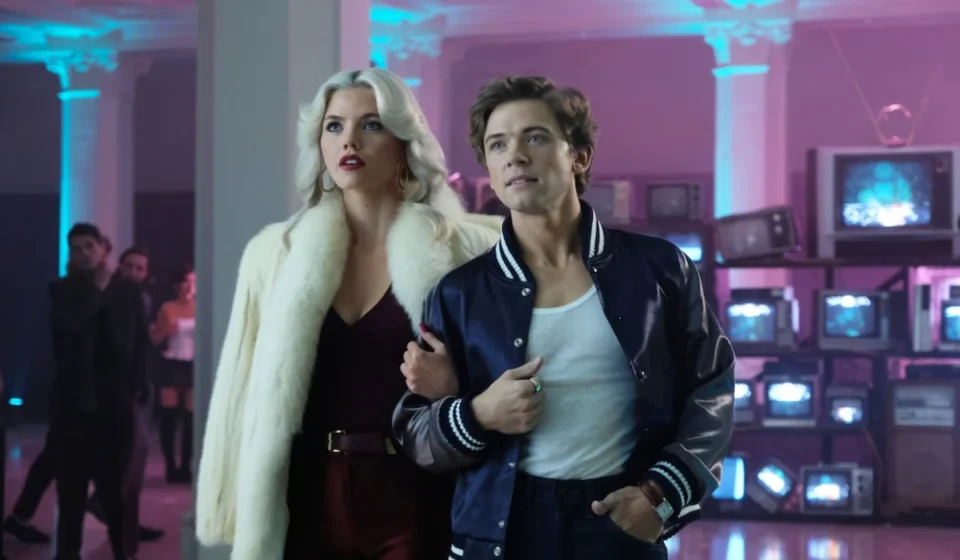
The narrative paints a vivid picture of the vacuous, opulent lives led by these teenagers in the shadow of the Hollywood Hills. Their guardians are essentially ghosts—absentee parents either too busy building their own empires or too intoxicated by their own decadence to supervise their children. Consequently, the kids have formed their own surrogate family, raising one another on a steady diet of illicit substances, empty parties, and the terrifying silence of their expansive, lonely homes.
Yet, this is a Bret Easton Ellis story. Beneath the veneer of prom planning and teenage angst lies a gruesome reality: a serial killer is stalking the halls of their elite school, abducting students and often leaving their pets as macabre calling cards. The series struggles to balance these two poles, resulting in a narrative that feels like a collision between The Breakfast Club and American Psycho.

Chronology of Disenchantment: From Mystery to Muddle
The series begins with promise. Through the heavy, often intrusive narration of the older, wiser Bret, the viewer is invited into a world of 1980s nostalgia, secret desires, and mounting dread. The early episodes do a commendable job of establishing the stakes: Bret’s closeted sexuality, his performative relationship with Debbie, and his genuine, obsessive love for both Susan and a local stoner named Matt (Owen Painter).
The arrival of the mysterious transfer student, Robert Mallory (Homer Gere), acts as the narrative’s ticking time bomb. Robert, who arrives in Los Angeles from Chicago after a series of personal tragedies, immediately triggers Bret’s suspicions. The two share a history—a lingering, unacknowledged moment at a screening of The Shining a year prior—that turns into a game of cat-and-mouse.
As the season progresses, the "coming-of-age" elements, which are deeply personal and largely engaging, begin to fray under the weight of the "serial killer" plot. The mystery of the murderer, which should serve as the engine of the series, instead feels like an intrusive distraction. As the show shifts focus toward the gruesome, the nuance of Bret’s emotional development is sacrificed for shock value that rarely lands. By the time the final episodes arrive, the show has abandoned its character-driven roots in favor of a convoluted, poorly paced thriller arc that feels increasingly tacked on.
Supporting Data: The Talent Behind the Screen
The production values, as expected from a Ryan Murphy project, are impeccable. The cinematography captures the golden, hazy sunlight of Los Angeles and contrasts it with the cold, sterile shadows of the violence lurking at the city’s edges. However, the performances range from competent to underutilized.
Igby Rigney provides a solid anchor as the younger Bret, capturing the intellectual vanity and closeted desperation of his character with enough conviction to keep the audience invested. Homer Gere, son of Richard Gere, brings a blank, eerie stillness to the role of Robert Mallory. While his lack of edge works as a narrative device—he is a void that reflects the characters’ anxieties back at them—it proves disastrous when the script demands he become a palpable, terrifying threat. Without a menacing presence, the fear that is supposed to permeate the city feels entirely performative.

The supporting cast, including the likes of Wes Bentley and Evan Rachel Wood, provides brief, searing glimpses of the "improper parents" who left these children to their own devices. Yet, even these veteran actors cannot save the scripts from their own lack of direction. The dialogue often trips over itself, attempting to be profound, but instead landing in the realm of the pretentious.
Official Responses and Industry Context
The buzz surrounding The Shards has been intense, largely due to the pedigree of its creators. FX and Hulu have positioned the series as a tentpole release, betting that the intersection of Ellis’s cult-following and Murphy’s massive audience base would create a runaway hit.
Industry analysts have pointed to the show as a litmus test for the "Murphy model"—the tendency for his productions to start with high concepts and star-studded casts, only to lose steam in the middle and collapse under the weight of their own stylistic flourishes. Critics have already noted that the show’s reliance on music cues and gratuitous violence feels less like a stylistic choice and more like a crutch. In a landscape saturated with "prestige" adaptations, The Shards risks being seen not as a masterwork, but as a derivative collage of ideas the audience has seen done better elsewhere.
Implications: The Problem with Familiarity
The most damning criticism of The Shards is its own sense of déjà vu. The themes of obscene wealth, disaffected youth, and the decay of the American Dream are foundational to the works of both Ellis and Murphy. When the two collaborate, the result is a project that feels as though it is repeating itself. There is nothing in The Shards that we have not seen before in American Horror Story, The Politician, or even Ellis’s own Less Than Zero.
The series ends on a note that suggests a desire for further exploration, introducing a mystery that feels as unearned as the rest of the season’s thriller elements. By the time the credits roll on the ninth episode, the viewer is left with a distinct sense of frustration. It is not that the series is unwatchable; it is that it is fundamentally uninspired.

Ultimately, The Shards is a cautionary tale about the dangers of style over substance. It is a series that clearly has immense potential—the raw material is there, the cast is capable, and the aesthetic is polished—but it lacks the intellectual or emotional discipline to turn those pieces into a cohesive whole. For a story about the loss of innocence and the terror of the unknown, the most disappointing thing is how predictable and safe the end result feels.
Grade: C
“The Shards” premieres Wednesday, August 5 at 9 p.m. ET on FX and Hulu. Two episodes will be released for the premiere, followed by a weekly rollout that concludes with the finale on September 9.