The Silent Architect of Modern VFX: How Clear Angle Studios is Redefining Digital Capture

In the high-stakes world of contemporary visual effects, the difference between a character that feels "alive" and one that falls into the "uncanny valley" often comes down to the quality of the source data. As production pipelines grow increasingly complex, one name has consistently surfaced in conversations among top-tier VFX supervisors and studio heads: Clear Angle Studios.
Operating quietly as a foundational pillar of the modern production ecosystem, Clear Angle has evolved far beyond its origins in simple 3D scanning. Today, the company serves as the connective tissue between the physical world and the virtual realm, leveraging everything from LiDAR to neural radiance fields. In this deep dive, we explore how Clear Angle is reshaping the industry’s approach to digital acquisition.
The Core Mandate: Bridging Physical and Virtual
At its essence, Clear Angle Studios provides the bridge between reality and digital representation. Whether it is a full-body scan for a digital double, a high-fidelity facial performance, or the photogrammetric capture of an entire landscape in Iceland, the company’s objective remains the same: to provide VFX artists with data that is not just accurate, but usable and efficient.
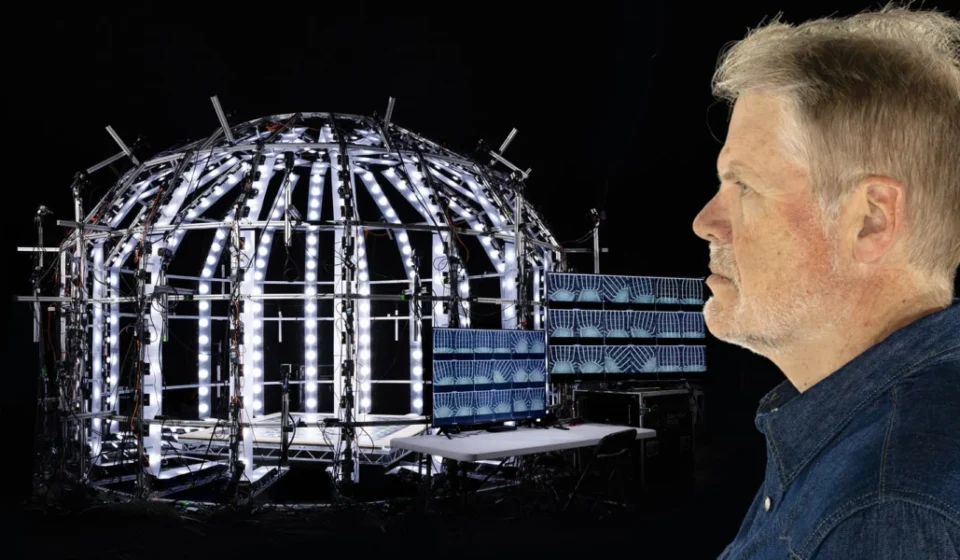
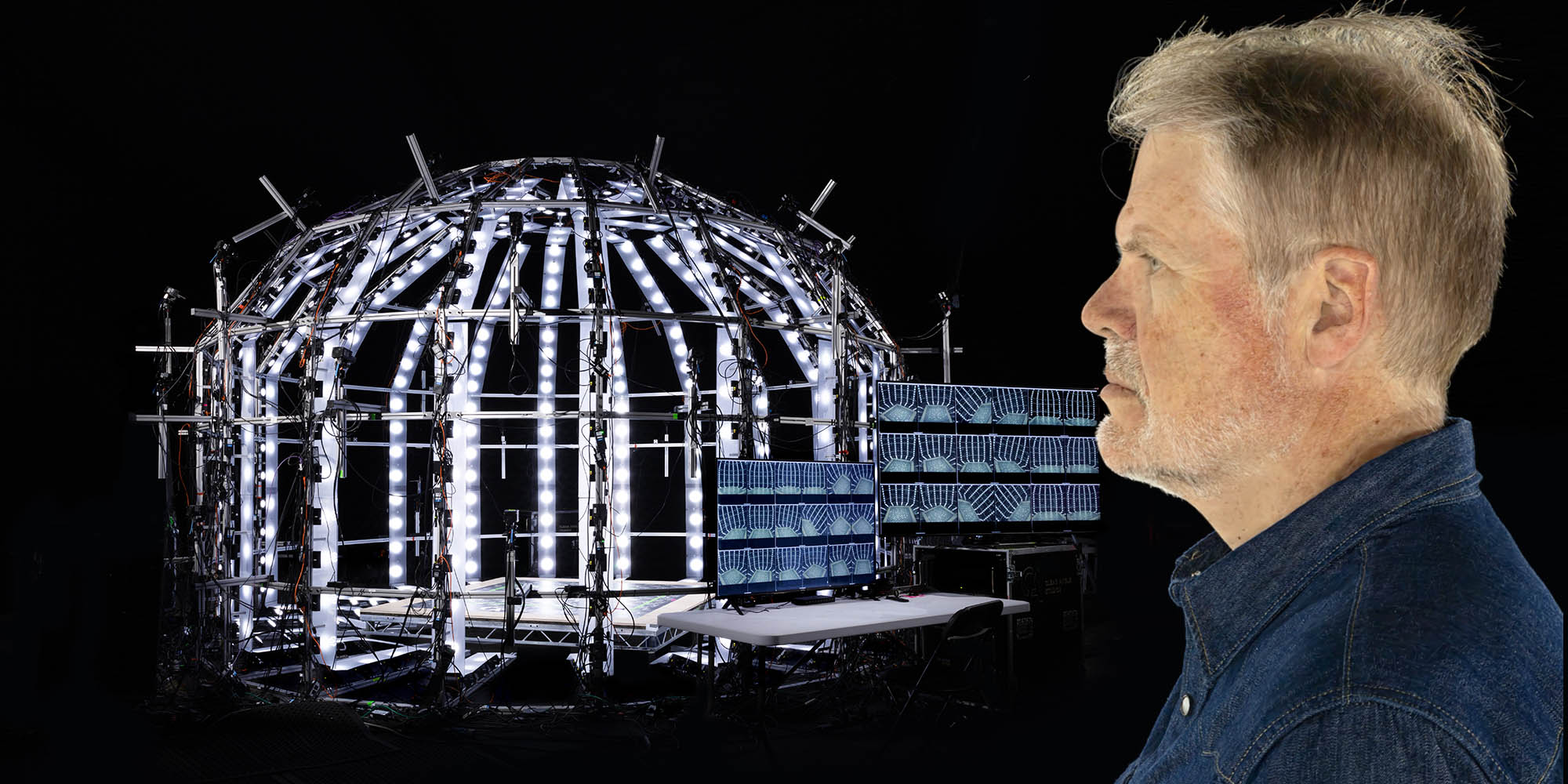
In a recent fxpodcast interview, Jamie Hearing, Digital Effects Supervisor at Clear Angle Studios, provided an inside look at the company’s Pinewood facility. The studio’s global footprint now includes 18 specialized rigs, each designed to capture high-fidelity static poses with precision geometry and texture. However, as Hearing explains, the industry’s needs are shifting. Modern production no longer asks for just a "static mesh"; it demands performance, nuance, and the ability to handle complex light transport.
A Chronology of Technical Evolution
The evolution of Clear Angle’s technology reflects the rapid maturation of the VFX industry over the last decade.
- The Foundational Phase: Initially, the company focused on standardized 24-camera arrays—the workhorses of character modeling. These systems, utilizing synchronized LED lighting, solved the industry’s need for accurate, texture-mapped digital doubles.
- The "Dorothy" Milestone: The development of the "Dorothy" rig marked a turning point in facial capture. By focusing on FACS (Facial Action Coding System) poses and 4D facial performance, Clear Angle moved from capturing how a face looks to capturing how a face moves.
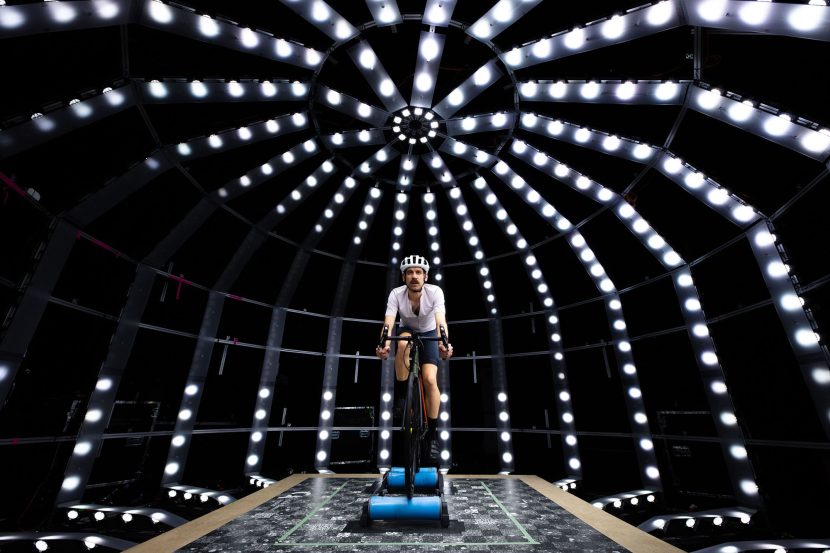
- The VCR Era: The introduction of the Volumetric Capture Rig (VCR) represents the current frontier. Using 40 high-end machine vision cameras with advanced Sony sensors, the VCR allows for the capture of groups of characters in motion, optimized specifically for the latest generation of neural rendering and Gaussian splatting workflows.
- The Integration of DI4D: By incorporating DI4D’s proprietary TopoTrack technology, Clear Angle has addressed one of the most stubborn issues in digital character creation: consistent topology and texture correspondence. This allows artists to track skin deformation over time with unprecedented mathematical consistency.
Supporting Data: The Science of High Fidelity
Clear Angle’s success is built upon a philosophy of "right data" over "more data." In the interview, Jamie Hearing emphasizes that the goal is not merely to amass terabytes of information, but to capture data with sufficient metadata to inform downstream VFX decisions.
The Rise of Neural Rendering
Perhaps the most significant shift discussed by Hearing is the move toward Gaussian Splatting and Radiance Fields. Conventional CG workflows have always struggled with "hair, reflections, and transparency." Traditional mesh-based models often fall apart when attempting to recreate the light scattering found in human hair or the complex reflections of glass.
By moving to neural rendering, Clear Angle is bypassing the "clean-up" phase of traditional modeling. Instead of generating a polygon mesh that may require hours of manual retopology, these neural approaches allow for the direct reconstruction of the visual field as the cameras perceived it. This provides a level of photorealism that was previously unattainable, especially for complex visual assets that have historically been the "bane" of the VFX pipeline.
Environmental Scale and Logistics
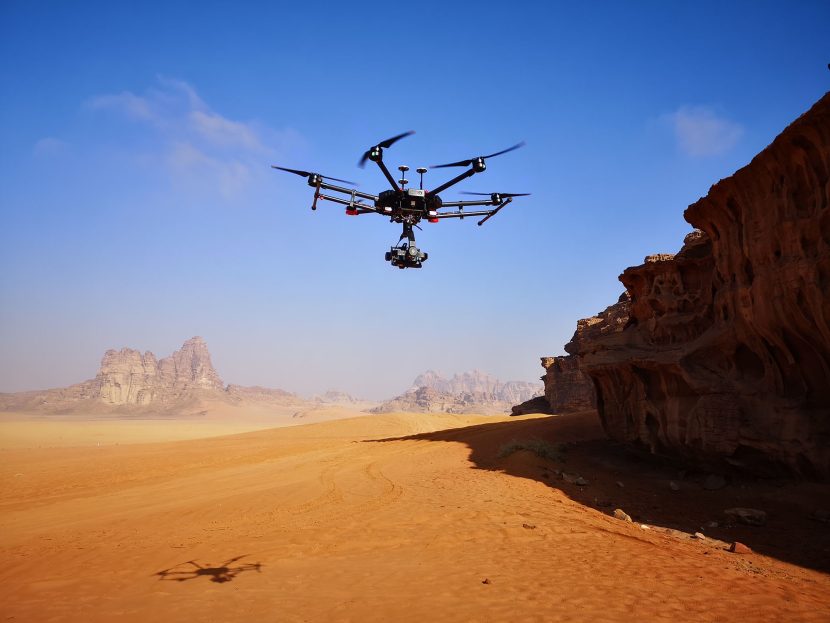
Beyond the human form, the company’s environmental capture work has seen a massive surge in scale. Utilizing a hybrid approach—combining aerial drone photography, terrestrial LiDAR scanning, and high-resolution photogrammetry—Clear Angle can replicate vast landscapes. The challenge in these environments is maintaining consistency across the entire pipeline, from the microscopic detail of a rock face to the vast, epic scale of an establishing shot.
Official Perspective: The Human-Machine Intersection
Jamie Hearing’s own career path offers a window into the company’s ethos. Transitioning from academic study at Bournemouth University to character work at DNEG, and finally into the highly technical world of on-set supervision, Hearing represents the "hybrid" worker that Clear Angle seeks to cultivate.
"It is about artistic understanding meeting production capture experience," Hearing notes. This intersection is crucial because the industry is currently transitioning toward machine-learning-driven workflows. Clear Angle is increasingly being tapped to provide "training data." In this context, a scan is not just an asset; it is the raw fuel for a machine learning model that will eventually refine the final 10 to 20 percent of a character’s performance.
This symbiotic relationship between human performance and machine-learned accuracy is the cornerstone of Clear Angle’s current business strategy.
Implications: The Future of Production
What does the ascendancy of a company like Clear Angle mean for the broader VFX industry?
1. The Death of the "Static" Asset
The era of the "static digital double" is rapidly drawing to a close. As volumetric capture and neural radiance fields become more integrated, we are moving toward a future where "performance" is captured in its entirety, with all the nuances of light and texture embedded in the data.
2. The Standardization of Capture
As Clear Angle expands its global network of 18+ rigs, the industry is seeing a de facto standardization of capture methods. When major studios can rely on a consistent, global standard for scanning, it reduces the friction involved in moving assets between different production houses, significantly lowering the cost of "re-tooling" or "fixing" assets that were poorly captured.
3. The Democratization of Complex FX
By solving the hardest technical challenges—like transparent hair or complex skin movement—Clear Angle is essentially lowering the barrier for smaller studios to achieve "A-list" production quality. When the high-fidelity reference is handled by experts, the VFX house can focus on the creative aspects of animation and lighting rather than struggling with the underlying data integrity.
4. Machine Learning and the "Final Percent"
Perhaps the most profound implication is the shift toward using capture as training data. We are entering an era where the data we capture today will teach the AI models of tomorrow how to render skin, cloth, and atmosphere with even greater accuracy. Clear Angle is essentially building the library of knowledge upon which the next generation of VFX software will be trained.
Conclusion
Clear Angle Studios has quietly positioned itself as the "silent architect" of the modern cinematic experience. By moving fluidly between traditional photogrammetry, high-end 4D facial performance, and experimental neural rendering, they are ensuring that the digital world keeps pace with the demands of modern storytelling.
As the lines between physical reality and digital imagery continue to blur, the role of specialized, data-driven capture will only become more vital. Whether it is through the precise calibration of a 40-camera VCR or the deployment of drone fleets in remote landscapes, Clear Angle is not just documenting the world—they are helping to recreate it, one scan at a time. For production teams looking to future-proof their pipelines, the message from the industry is clear: the quality of the output can never exceed the quality of the captured input, and in that arena, Clear Angle has set the new benchmark.