

To the uninitiated, the filmography of David Lynch can feel like wandering through a fever dream in a dimly lit, wood-paneled room. From the industrial, nightmarish textures of his 1977 debut Eraserhead to the fractured, neon-soaked identity crisis of Mulholland Drive, Lynch has spent decades constructing worlds that defy conventional narrative logic. Yet, for all his genius, the director is frequently met with a singular, persistent demand from audiences and critics alike: "What does it mean?"
Lynch’s response to this question has remained remarkably consistent throughout his career: he doesn’t know, and more importantly, he doesn’t care to know. In an era where audiences are conditioned to seek "lore," "easter eggs," and definitive explanations, Lynch stands as a staunch defender of the inexplicable.
The Genesis of an Enigma: A Chronology of Artistic Defiance
Born in Missoula, Montana, in 1946, David Keith Lynch did not initially set out to be a filmmaker. His early aspirations were rooted in the fine arts—specifically painting. Lynch famously described his transition to cinema as a desire to see his paintings move, a sentiment that explains the tactile, almost visceral quality of his frames.
The Eraserhead Era (1977)
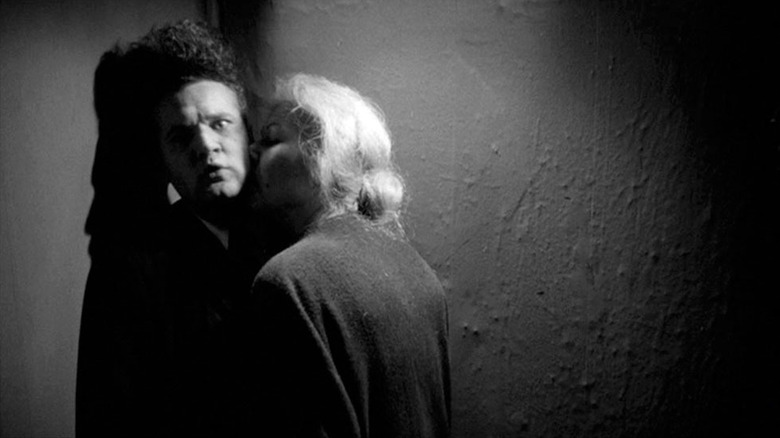
The production of Eraserhead became legendary for its five-year gestation period. Filmed in the stables of the American Film Institute in Los Angeles, the project was an exercise in patience and obsession. When it finally premiered, it defied categorization. It wasn’t a standard horror film, nor was it a traditional drama. It was, however, the birth of a unique "dream logic" that would define the rest of his career. The film’s success as a midnight movie solidified Lynch’s reputation as a purveyor of the strange.

The Prestige and the Surreal (1980s–1990s)
Lynch’s trajectory saw him move from underground obscurity to mainstream curiosity. With The Elephant Man (1980), he proved his ability to handle prestige material with profound empathy. Then came Dune (1984), a massive, albeit troubled, sci-fi epic, followed by the breakthrough neo-noir Blue Velvet (1986). Each project showcased his ability to smuggle surrealist concepts into familiar genres. By the time Twin Peaks hit television in 1990, the "Lynchian" aesthetic—a mixture of 1950s Americana, grotesque horror, and transcendental mystery—had become a cultural phenomenon.
The "Politician" Problem: Understanding Lynch’s Philosophy
In a revealing 1989 interview with the Los Angeles Times, conducted just as Twin Peaks was poised to change television forever, Lynch articulated his disdain for the "message-first" approach to art.
"That’s a very dangerous thing," Lynch explained regarding the focus on subtext. "It’s like money—if you think of it first, then you’re like a politician. You’re gearing your campaign around winning, and everything you say is to make the message known—and a message is a load of crap."
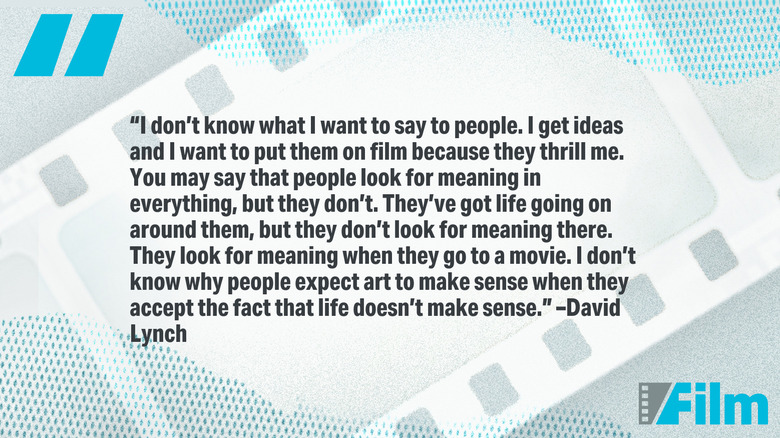
For Lynch, the creative process is not an intellectual exercise in delivering a pre-packaged moral. Instead, it is an intuitive pursuit. "I get ideas and I want to put them on film because they thrill me," he noted. This distinction is vital: Lynch is not a storyteller in the traditional sense; he is a collector of inspirations. If he forces a "message" into a scene, the magic dissipates.

The Paradox of Subjectivity
One of Lynch’s most profound insights is his observation of the disconnect between how we experience life and how we experience art. He points out a curious human paradox: we live in a world that is inherently chaotic, often nonsensical, and largely devoid of clear, written-in-the-sky meaning. Yet, when we enter a cinema, we demand that the director provide a coherent, A-to-B narrative that explains every plot point.
"I don’t know why people expect art to make sense when they accept the fact that life doesn’t make sense," he once mused.
The Implications of Ambiguity
The refusal to provide a "key" to his films has significant implications for how we consume media:
- Ownership of the Experience: By leaving his films open-ended, Lynch essentially hands the final edit over to the viewer. The "meaning" of Mulholland Drive is not what Lynch intended, but what the viewer constructs based on their own emotional resonance with the imagery.
- The Anti-Didactic Approach: Contemporary media is often obsessed with "world-building" and clear character motivations. Lynch’s work acts as a counter-weight, suggesting that the feeling of a scene is more important than the literal function of the plot.
- Longevity through Mystery: Films that are fully explained often have a "use-by" date. Once the mystery is solved, the impetus to return is diminished. Lynch’s films, however, invite endless re-watching precisely because they cannot be "solved."
Official Responses and Public Interactions
Lynch’s public persona regarding his work has evolved from thoughtful, if defensive, in the late 80s to playful and occasionally curt in his later years. The 2007 BAFTA interview remains the gold standard for this shift. When asked to elaborate on his description of Eraserhead as his "most spiritual film," he simply replied, "No."
This was not an act of arrogance, but of boundary-setting. Lynch understands that once a creator explains a piece of art, the mystery dies. The explanation becomes the "official" version, which inevitably narrows the scope of the viewer’s imagination. He prefers to let the art exist in a state of flux.
Reflections on the "Art Life"
Lynch’s career is not merely a collection of films, but a testament to the "art life." He has often spoken about the joy of the creative process—the act of drinking coffee, smoking, and allowing the mind to wander into deep waters.
In his famous metaphor, ideas are like fish. "If you want to catch little fish, you can stay in the shallow water. But if you want to catch the big fish, you can’t go deep." His commitment to the "big fish"—the abstract, powerful, and often terrifying ideas—is what keeps his work relevant.
Essential Wisdom from Lynch
Beyond his films, his philosophy on life offers a roadmap for those struggling with the pressure of productivity:
- On Intent: "Keep your eye on the doughnut, not on the hole." Focus on the substance of your work, not the voids or the criticisms.
- On Personal Meaning: "It’s better not to know so much about what things mean. Because the meaning, it’s a very personal thing."
- On Resilience: Even when the world feels like it’s falling apart—"Even bad coffee is better than no coffee at all."
Conclusion: The Enduring Spell
David Lynch’s contribution to cinema is not a body of work that can be summarized in a thesis or explained in a video essay. It is a body of work that asks us to sit with our discomfort. In a world that prizes efficiency and clarity, Lynch serves as a reminder that the most profound experiences are often the ones that leave us with more questions than answers.
By rejecting the role of the "politician" and refusing to force his films into a rigid box of meaning, Lynch has ensured that his work remains a living, breathing entity. He doesn’t want you to understand his movies; he wants you to feel them, to be haunted by them, and ultimately, to define them for yourself. In the vast, confusing, and often nonsensical reality of our existence, perhaps that is the only kind of sense we are entitled to.