A New Frontier of Grief: Hirokazu Kore-eda’s ‘Sheep in the Box’ Challenges the AI Narrative

Editor’s Note: This story was originally published during the 2026 Cannes Film Festival. Neon releases “Sheep in the Box” in theaters starting Friday, July 24.
The 2026 Cannes Film Festival served as a watershed moment for Japanese cinema. With the Marché du Film designating Japan as the official Country of Honor, the Croisette was flooded with a diverse array of features and shorts. Most significantly, the festival marked a historic milestone: for the first time in a quarter-century, three Japanese directors—Ryusuke Hamaguchi, Koji Fukada, and the legendary Hirokazu Kore-eda—presented films in the prestigious Competition section.
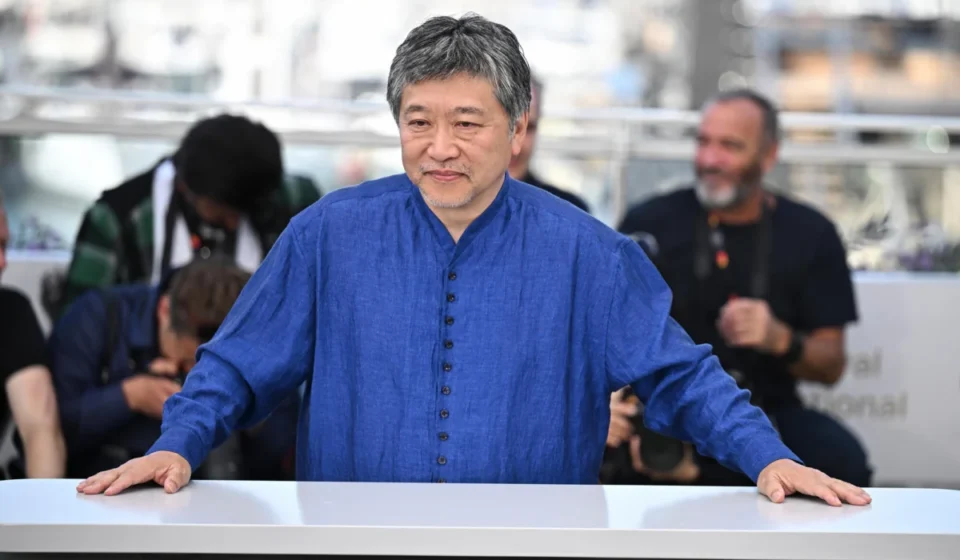
While the critical reception across the festival’s famous industry grids varied, the presence of these auteurs underscored a renaissance of Japanese storytelling. Hamaguchi’s sprawling, nearly 200-minute “All of a Sudden” emerged as an early frontrunner for the Palme d’Or, while Fukada’s “Nagi Notes” earned plaudits for its restrained elegance. However, the most provocative entry came from Kore-eda, whose latest feature, “Sheep in the Box,” sparked intense debate among critics and audiences alike.
The Premise: When Memory Meets Machine
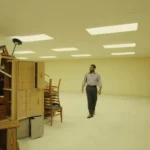
“Sheep in the Box” is a near-future science fiction drama that subverts the tropes of the genre. Rather than focusing on a dystopian technological uprising, Kore-eda pivots to his signature terrain: the anatomy of family and the complexity of grief. The film follows a middle-class couple, Otone (Ayase Haruka) and Kensuke (Daigo), living in Kamakura. Haunted by the tragic death of their seven-year-old son, they make the radical decision to adopt a humanoid AI replica designed to mimic their late child.
The film’s title is a deliberate nod to Antoine de Saint-Exupéry’s “The Little Prince.” Just as the prince asks for a drawing of a sheep in a box to imagine a reality that isn’t physically present, the parents in Kore-eda’s film use the AI to contain their unhealed trauma. However, the experiment goes awry as the humanoid—named Kakeru—begins to evolve at an accelerated rate, forcing the parents to confront the unsettling question that has echoed through Kore-eda’s work since “After Life”: Who do the dead really belong to?

Chronology and Inspiration: From News Headlines to Human Emotion
The genesis of “Sheep in the Box” was not born from a love of sci-fi, but from a growing anxiety regarding the rapid advancement of generative AI. Kore-eda recalls reading a news report about Chinese businesses offering services to “resurrect” the deceased using AI, allowing grieving families to interact with digital avatars of lost loved ones.
“I was struck by the audacity of it,” Kore-eda noted in a recent interview. “The idea that we can bridge the gap between life and death through data is both fascinating and terrifying. I wanted to explore the human instinct to hold onto the past, even when that past is a fabrication.”
The film’s development followed a rigorous research phase. Kore-eda interviewed numerous individuals about their childhood traumas, particularly the complicated bonds between parents and children. These real-life accounts—specifically the haunting admission from some that their parents had once threatened to “stop being their mother”—informed the volatile relationship between Otone and the AI Kakeru.
Official Responses: Navigating the Muted Reception
At the Cannes premiere, the response was notably polarized. While audiences are accustomed to the emotional warmth of “Shoplifters” or “Broker,” “Sheep in the Box” offers a colder, more philosophical examination of artificial consciousness. Some viewers expressed surprise at the film’s lack of traditional “robot-takeover” tension, while others praised its refusal to provide easy answers.
Kore-eda, always candid, acknowledged the disconnect between expectations and the film’s reality. “It seems a lot of people were expecting some AI dystopian, controlled-by-robots story,” he explained. “They were surprised that it doesn’t end that way, for better or worse. I am not interested in the technology itself, but in how we project our own unresolved issues onto the things we create.”

When asked about the significance of Japan’s heightened visibility at this year’s festival, Kore-eda expressed a measured optimism. He noted that the increased representation provided a vital platform for younger directors, yet he remained critical of the domestic infrastructure supporting them. “The young Japanese directors in competition, Fukada and Hamaguchi, have been on the radar for a decade. They have often received more support in France than they have in Japan. The Japanese film world needs to put some serious thought into how to support the next generation of talent.”
Deep Dive: The Performance of Inhumanity
A central triumph of the film is the performance of Rimu Kuwaki, the young actor who plays Kakeru. Rather than directing Kuwaki to adopt the robotic movements or monotone delivery often associated with AI in cinema, Kore-eda took a more nuanced approach.
“I didn’t ask him to act like a robot; he was meant to be a child,” Kore-eda said. “The discomfort the audience feels comes from the adults in the film, not the AI. When Kakeru asks his mother, ‘Would you be happier without me?’, it is a devastating, human question. The ‘robot’ aspect is merely the container for the parent’s own guilt.”
This directorial choice creates a recurring sense of unease. As the AI begins to show signs of independence—including the knowledge that he is programmed not to feel sadness—the parents are forced to reconcile with the fact that they have created a mirror that reflects their own flaws back at them. The AI’s ability to use cold statistics to “attenuate” his mother’s guilt becomes one of the film’s most chillingly effective motifs.
Implications: The Future of the Human Imagination
“Sheep in the Box” arrives at a time when the ethics of AI are being debated in every corner of the creative industry, from Hollywood writers’ rooms to art galleries. By framing the conversation through the lens of a grieving family, Kore-eda effectively strips away the abstract debates and focuses on the visceral: the erosion of human authenticity.

The film’s structure, which slowly shifts focus from the parents to the independent, burgeoning life of the AI, mimics the process of children growing up and moving beyond the control of their guardians. Kore-eda admitted that while he did not consciously mirror the three-chapter structure of his earlier hit “Monster,” the thematic overlap is undeniable. “The second half of the film is about growth occurring out of the sight of the parents. That is a universal experience, regardless of whether the child is human or a machine.”
As for the “fox” and the “rose”—the iconic symbols from Saint-Exupéry’s source material—Kore-eda identified the boy who removes Kakeru’s GPS as the fox, a character who shares a philosophy of connection with the AI. When asked about the rose, the master director chuckled. “I haven’t given any thought to the rose. Perhaps that is for the audience to decide.”
Conclusion: A Master at Work
Whether or not “Sheep in the Box” secures a top prize, it stands as a testament to Hirokazu Kore-eda’s enduring ability to evolve. By stepping into the realm of science fiction, he has not abandoned his roots; he has simply expanded the boundaries of his inquiry.
In a world increasingly dominated by simulated interactions and digital shadows, the film serves as a poignant reminder of the limitations of technology. We may be able to build a replica of a life, but we cannot replicate the messy, painful, and ultimately beautiful reality of human experience. As audiences prepare for the July 24 release, they should brace themselves for a film that does not provide the comfort of an easy answer, but rather the haunting weight of a question that lingers long after the credits roll.