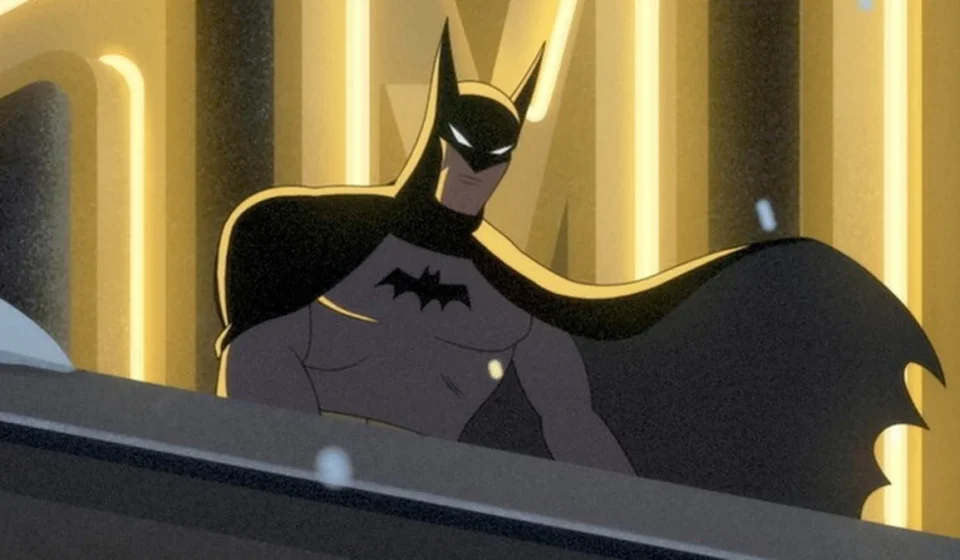
Beyond the Noir: How ‘Batman: Caped Crusader’ Season 2 Embraces the Supernatural with The Spectre

This article contains major spoilers for "Batman: Caped Crusader" Season 2, Episode 5, "The Spectral Hand."
When Bruce Timm, the visionary co-creator behind the seminal Batman: The Animated Series, returned to the streets of Gotham with Prime Video’s Batman: Caped Crusader, the promise was clear: a return to the moody, pulpy roots of the 1940s noir aesthetic. For fans of the classic animated series, the show felt like a long-awaited reunion with a specific brand of atmospheric storytelling—a world defined by shadows, fedoras, and grounded, gritty detective work.
However, as the series has unfolded, it has become increasingly evident that Caped Crusader is not merely interested in mimicking the past. It is actively expanding the boundaries of Gotham’s gothic horror potential. With the release of Season 2, the series has fully embraced its supernatural streak, most notably with the chilling introduction of one of DC Comics’ most formidable antiheroes: The Spectre.
The Evolution of Gotham’s Supernatural Landscape
While Batman himself remains a mortal man—a pinnacle of human conditioning—the Caped Crusader writers have recognized that the character’s dark, gothic aesthetic is the perfect gateway into the macabre.
In the show’s inaugural season, the narrative began to peel back the curtain on the occult. In Episode 6, "Night Ride," viewers saw Batman engage in a literal battle against the Gentleman Ghost (Toby Stephens), the vengeful spirit of 17th-century Gothamite Jim Craddock. To secure a victory against a foe that could not be punched or outsmarted by standard forensic science, Batman was forced to delve into the arcane, casting a spell to neutralize the threat.
The trend continued in Episode 8, "Nocturne," which featured the vampire villain Natalia Night, known as Nocturna. Her inclusion was particularly resonant for DC historians, as the character was famously barred from appearing in the 1990s Batman: The Animated Series due to strict network censorship. By bringing these figures into the fold, Caped Crusader is carving out a unique identity that distinguishes it from its predecessors: it is a show that treats the supernatural not as an anomaly, but as a lurking, terrifying reality of Gotham City.
The Return of Jim Corrigan: A Chronology of Corruption and Redemption
Season 2, Episode 5, "The Spectral Hand," serves as the centerpiece for this supernatural expansion. To understand the gravity of the episode, one must look at the trajectory of Jim Corrigan, a character who has undergone a radical transformation throughout the series.
The Rise and Fall of Detective Corrigan
In the early days of Caped Crusader, Jim Corrigan (voiced by Roger Craig Smith) was introduced as a corrupt figure within the Gotham City Police Department. Drawing inspiration from the acclaimed Gotham Central comic series—penned by Ed Brubaker and Greg Rucka, both of whom served on the writing staff for Caped Crusader—the show initially positioned Corrigan as a detestable antagonist.
During Season 1, specifically in the episode "Moving Target," Corrigan attempted to orchestrate the murder of Barbara Gordon (Krystal Joy Brown), driven by a desperate, greedy need to claim a criminal’s bounty. He was a man defined by his own moral failings, a dark reflection of the very police force he was sworn to uphold.
The Prison Experiment
Following his incarceration, the narrative took a sharp, Frankenstein-esque turn. Seeking early release, the imprisoned Corrigan volunteers for a high-stakes, ethically dubious prison experiment. The procedure results in his apparent death, but in a classic trope of supernatural horror, death is merely a transition. Corrigan returns to the streets of Gotham not as a man, but as an undead vigilante—a shambling, relentless force of nature driven by unfinished business.
The Spectre: A Comics Legacy Reimagined
DC Comics fans have been familiar with The Spectre since his debut in 1940. Created by Jerry Siegel and Bernard Baily, the character is historically depicted as an entity of divine wrath, an angel of vengeance usually bound to a human host—most frequently a detective named Jim Corrigan.
The Caped Crusader interpretation, however, is a departure from the traditional cape-wearing, ethereal guardian seen in the comics. Here, the character is depicted as a rotting, decomposing corpse, clad in tattered rags. The show employs a clever layer of "plausible deniability," suggesting that his return might be the result of the corrupt science conducted in the prison. Yet, the supernatural markers are undeniable: when he strikes, his pupils twist into the shape of skulls—a direct homage to his comic book counterpart’s signature gaze.
Implications for the Future of ‘Caped Crusader’
The decision to merge the corrupt Gotham Central iteration of Jim Corrigan with the divine vengeance of The Spectre is a masterstroke of character development. In "The Spectral Hand," the narrative arc culminates in an act of profound redemption. Instead of pursuing his old vendetta against Barbara Gordon, the undead Corrigan seeks her forgiveness.
This evolution poses significant questions for the future of the series:
- The Moral Gray Area: Unlike Batman, who adheres to a strict code against lethal force, the Spectre operates on a different moral axis. He acts as an instrument of retribution. How will Batman, a man who relies on order and justice, reconcile his methods with an ally—or perhaps an adversary—who serves a higher, more violent authority?
- The Expansion of the Occult: By establishing the existence of ghosts, vampires, and vengeful spirits, the show has effectively raised the stakes. Gotham is no longer just a city of mobsters and madmen; it is a nexus for forces beyond mortal comprehension.
- Narrative Versatility: The inclusion of writers like Brubaker and Rucka has provided the show with a deep well of procedural knowledge. By blending the "police procedural" feel of Gotham Central with the "supernatural horror" genre, Caped Crusader has created a formula that keeps viewers guessing, shifting tones from episode to episode without losing its noir heart.
Final Reflections
Batman: Caped Crusader is proving to be a sophisticated piece of animation. It understands that to keep a character as storied as Batman fresh, you must challenge the environment he inhabits. By moving from the shadows of crime syndicates to the supernatural shadows of the afterlife, Bruce Timm and his team are honoring the spirit of the comics while refusing to be shackled by them.
The transformation of Jim Corrigan from a small-time, corrupt detective into a conduit for divine vengeance is a compelling arc that highlights the series’ ability to weave complex, character-driven narratives into its episodes. As the show continues its run on Prime Video, it remains a must-watch for those who appreciate a darker, more experimental take on the Dark Knight.
Whether or not the Spectre will return to serve as a recurring figure remains to be seen, but his debut has irrevocably changed the landscape of the show. Gotham is now a city where the dead do not always stay buried—and for Batman, the hunt has never been more complicated.