
By Alex Billington | July 30, 2026
"We all make failures. Try not to make a famous one."
This sobering piece of advice serves as the thematic backbone for Boorman and the Devil, a compelling new documentary feature from filmmaker David Kittredge. Distributed by Yellow Veil Pictures, the film explores one of the most storied cautionary tales in the annals of Hollywood: John Boorman’s ill-fated attempt to capture lightning in a bottle twice with Exorcist II: The Heretic.
Following a successful premiere at the 2025 Venice Film Festival and a robust circuit of international film festivals, the documentary is finally set for a wide theatrical release, beginning in select art house theaters on August 28, 2026, with an expanded rollout throughout September.
The Context: A Career at the Crossroads
To understand the gravity of Exorcist II, one must first understand the standing of its director in the mid-1970s. John Boorman was, by all accounts, a visionary. Having established himself as a master of style and tension with the neon-noir masterpiece Point Blank (1967) and the harrowing, culturally seismic Deliverance (1972), Boorman was one of the most sought-after directors in the industry.

When Warner Bros. approached him to helm the sequel to William Friedkin’s The Exorcist—the highest-grossing horror film of all time—it was viewed as the ultimate coronation. The studio expected a surefire hit, a commercial juggernaut that would replicate the terror of the original. What they received, however, was a surreal, ambitious, and deeply personal exploration of theology and psychology that baffled critics and audiences alike.
Boorman and the Devil dissects the friction between a studio expecting a product and an auteur delivering a fever dream. It is a story of what happens when high-concept artistic ambition collides with the unforgiving machinery of the Hollywood studio system.
A Chronology of a Hollywood Disaster
The documentary meticulously reconstructs the timeline of the 1977 release. It begins with the initial optimism of the project, highlighting the creative freedom Boorman believed he was granted. As the film details, Boorman did not view the project as a mere cash-grab; he viewed it as an opportunity to expand the mythos of the supernatural into a grand, metaphysical epic.
The Production Phase (1975–1976)
Kittredge utilizes archival footage and intimate interviews to show the scale of the production. The film takes viewers through the complex set designs, the ambitious visual effects of the era, and the sheer logistical nightmare of filming a project with such high expectations. It was, in many ways, an experimental film masquerading as a blockbuster.
The Release (1977)
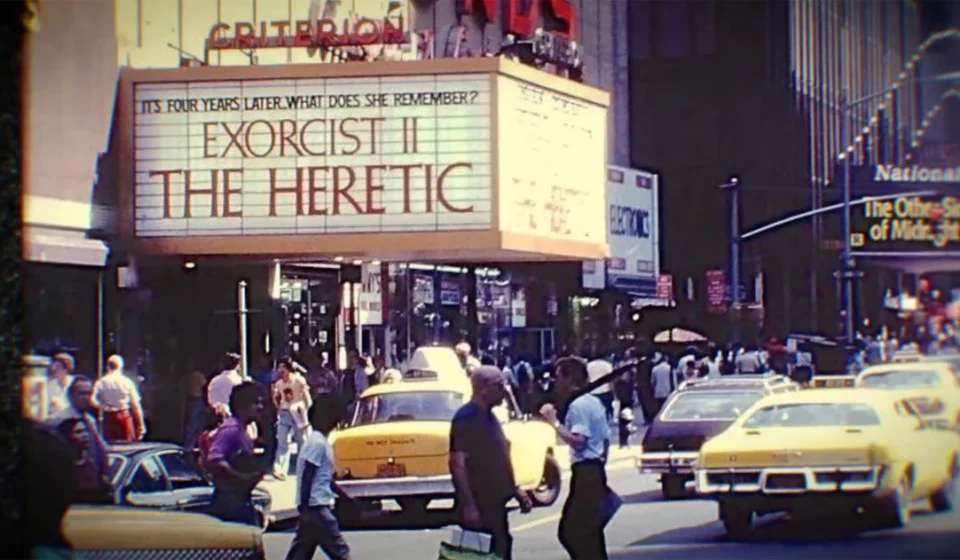
The archival clips included in the documentary serve as a stark reminder of the vitriol the film faced upon its debut. Reviews were scathing, and audiences, expecting the visceral terror of the first film, were alienated by the sequel’s abstract pacing and eccentric imagery. The film became a punchline almost overnight, nearly stalling Boorman’s career permanently.

The Aftermath and Re-evaluation
The documentary shifts its focus to the "long tail" of the film. It tracks how Exorcist II transitioned from a commercial flop to a cult object. Through modern interviews, we see how the film’s reputation has been rehabilitated by subsequent generations of directors who admire its refusal to adhere to conventional genre tropes.
Supporting Data: The Anatomy of a "Big Swing"
Boorman and the Devil is not merely a "making-of" feature; it is an analytical deep dive into the philosophy of risk-taking. The film features a powerhouse roster of interviewees, including original cast members Linda Blair and Louise Fletcher, alongside prominent modern filmmakers such as Karyn Kusama, Joe Dante, and Mike Flanagan.
The Artistic Merit of Failure
The consensus among these industry veterans is clear: Hollywood today suffers from a lack of "big swings." In the documentary, Mike Flanagan articulates the frustration of modern creators who find themselves constrained by focus groups and IP mandates. He argues that Boorman’s failure, while public and painful, was a testament to his belief in the power of cinema as an expressive, rather than purely commercial, medium.
Technical Craft
Kittredge doesn’t shy away from the technical aspects that made Exorcist II unique. With animation and graphics provided by Mindbomb Films and Craig Smith, the documentary visualizes the complex narrative structure of Boorman’s work, allowing viewers to see the connections between the director’s later, more successful projects and the seeds of ideas he planted during his time on the Exorcist set.
Official Responses and Creative Intent
In his director’s statement, David Kittredge notes that the impetus for the film was a desire to honor the "bravery" of the 1970s studio era.

"I miss big, ambitious filmmaking that takes huge risks," Kittredge writes. "In 1977, John Boorman took an enormous creative and commercial swing with Exorcist II: The Heretic which didn’t connect with almost anybody at the time—but now we can look back and appreciate how big creative swings are what going to the movies is all about. Boorman is one of the greatest filmmakers that has ever stepped behind a camera, and I’m so happy to be telling the story of the one film that not only nearly destroyed him, but forever changed the way he made films."
The documentary serves as a cathartic moment for Boorman himself, who reflects on the project with a mixture of wisdom, humility, and lingering defensiveness. He does not apologize for the film’s failure; rather, he defends its right to exist as an honest, if misguided, artistic endeavor.
Implications for Modern Cinema
The release of Boorman and the Devil comes at a pivotal time for the film industry. As theaters struggle to define their identity in a post-streaming, AI-augmented landscape, the question of "risk" is more relevant than ever.
The Death of the Mid-Budget Gamble
The documentary highlights the stark contrast between the studio environment of 1977 and 2026. While Warner Bros. gave Boorman a massive budget to pursue a "swing," modern studios are increasingly risk-averse, focusing on pre-established franchises with rigid templates. Boorman and the Devil serves as both a eulogy for a lost era and a rallying cry for the next generation of directors.
The Cultural Legacy of "The Heretic"
By framing Exorcist II not as a failure of talent, but as a failure of market alignment, the documentary forces the audience to reconsider their own definitions of success. If a film is meant to challenge, provoke, and leave an indelible mark on the psyche of the viewer, does it matter if it fails to turn a profit at the box office?

Conclusion: A Must-Watch for Cinephiles
Boorman and the Devil is an essential addition to the canon of film documentaries. It manages to be both a sympathetic portrait of a man under pressure and a rigorous examination of the industry that both enables and exploits the visionary.
Produced by Travis Stevens, Jim Fall, and David Kittredge, with an evocative score by Eduardo Daniel Victoria, the film is a masterclass in documentary pacing. It manages to make the dry subject of studio politics feel like a high-stakes thriller, all while maintaining a deep reverence for the craft of filmmaking.
As the industry prepares for the September theatrical expansion, Boorman and the Devil stands as a reminder that the most interesting stories are often the ones that fall apart in the most spectacular ways. It encourages us to look at our own "failures" not as endings, but as the inevitable cost of attempting something truly original.
For those who have felt alienated by the homogenization of modern cinema, this documentary offers a glimmer of hope: that even in the heart of the machine, there is still room for the artist to take a swing, even if they miss.
Catch Boorman and the Devil in select theaters beginning August 28, 2026. Have you seen The Exorcist II? Whether you love it or hate it, this documentary will change the way you view it forever.