
Mythic Realism: Deconstructing the Technical Odyssey of Christopher Nolan’s 2026 Epic

In the annals of cinematic history, few filmmakers have pushed the boundaries of physical production with the relentless fervor of Christopher Nolan. With his 2026 adaptation of Homer’s The Odyssey, a $250 million production, Nolan has not only retold one of the oldest stories in Western literature but has also fundamentally altered the methodology of "supernatural" filmmaking. By committing to an entirely IMAX 70mm production—a first for a feature film—Nolan has challenged the industry’s reliance on pure digital fabrication, opting instead for a philosophy of tactile, grounded mythology.
The Genesis of the IMAX Odyssey
The production of The Odyssey represents a massive undertaking, not merely in its budget or its star-studded cast—led by Matt Damon as the weary, battle-hardened Odysseus—but in its commitment to in-camera reality. For Nolan, the challenge was clear: how does one portray the gods, monsters, and divine interventions of the Homeric epic without succumbing to the "glossy, weightless" aesthetic often associated with modern CGI-heavy blockbusters?
Under the guidance of visual effects supervisor Andrew Jackson and the creative powerhouse DNEG, the production team embarked on a journey to marry traditional cinematic craft with cutting-edge invisible effects. The goal was never to replace the frame with digital data, but to use digital tools as a "finishing pass" to enhance, rather than dictate, the physical environment.
Chronology of a Mythic Production
The film’s development followed a rigorous, multi-year schedule that prioritized location shooting and physical performance:

- Pre-production (2024): Nolan and his team focused on "mythic archaeology," scouting locations across Greece that mirrored the descriptions in Homer’s text. This phase involved intense collaboration between production designers and VFX teams to determine where physical builds could meet digital extensions.
- Principal Photography (2025): The production utilized proprietary IMAX 70mm camera rigs. Unlike standard digital captures, these rigs required unprecedented lighting and logistical support, particularly in the subterranean environments of the various caves and islands depicted in the film.
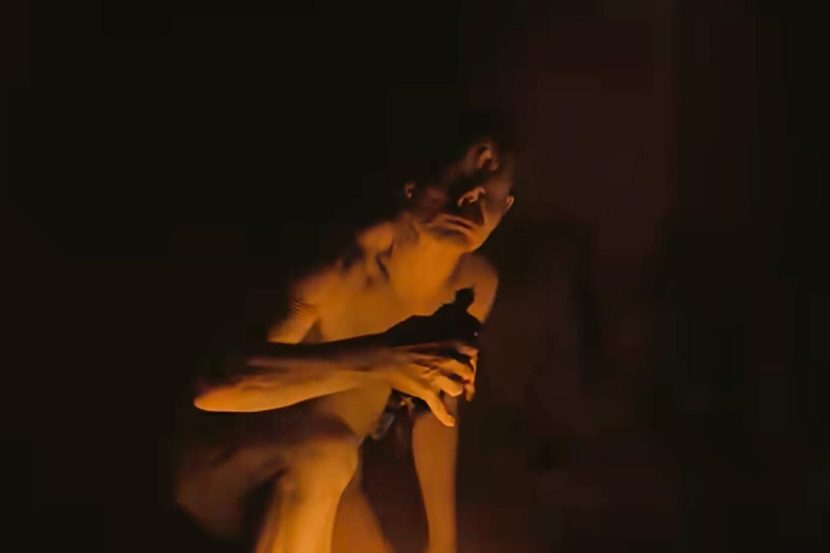
- The "Creature" Sessions: Months were dedicated to the performance capture of the Cyclops, Polyphemus. Rather than relying on motion capture suits in a vacuum, the team employed actor and theatrical clown Bill Irwin to perform the creature live on set, utilizing prosthetics that forced the actors to respond to a tangible, intimidating presence.
- Post-Production (2026): DNEG synthesized the plates. The primary directive was "invisible effects"—a technique where digital elements are used to remove rigs or blend physical puppets with live-action actors, ensuring that the audience can never quite pinpoint where the human performance ends and the digital correction begins.
The Mechanics of Scale: Prosthetics and Perspective
One of the film’s most daunting tasks was the depiction of the Cyclops, Polyphemus. To achieve the terrifying 60-foot scale while maintaining the nuance of a performance, the team turned to Bill Irwin. Known for his work as the physical foundation for the robots in Interstellar, Irwin’s performance as the Cyclops was captured via a combination of prosthetics and real-time voice acting.
By filming from low angles and utilizing a colossal physical puppet on set at Nestor’s Cave, the actors were not looking at a "tennis ball on a stick" or a green screen, but a monstrous presence that occupied physical space. This interaction is the heartbeat of the film’s effectiveness; the terror in the soldiers’ eyes is authentic because the threat was, in a very real sense, there.
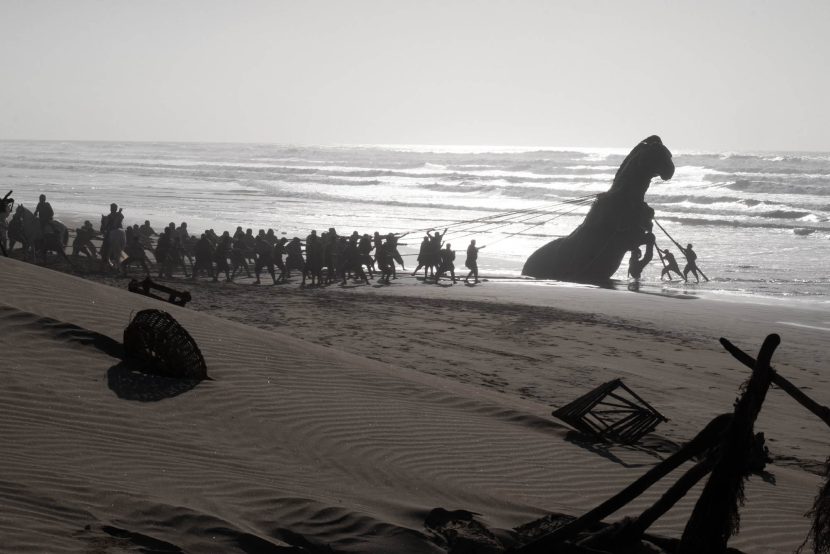
For the Laestrygonian giants, the production employed "old-school" cinematic trickery. Through a combination of forced perspective—a technique as old as silent film—and the integration of seven-foot stunt performers alongside undersized doubles, the film creates a jarring, disorienting sense of scale. These techniques, when married to modern color grading and light-matching, produce a result that feels more "mythical" than any fully animated creature could achieve.
Supporting Data: The VFX Philosophy
The partnership with DNEG underscores a shift in the VFX industry. As the line between "practical" and "digital" continues to blur, the production of The Odyssey stands as a testament to "Integrated VFX."
Data provided by the production team suggests that over 70% of the screen time involving "supernatural" elements was rooted in at least one physical, in-camera component. This was achieved through:
- Plate-based Compositing: Using real-world textures and lighting captured on 70mm film to ground digital elements.
- Environmental Anchoring: Building actual sections of the caves and ships to provide actors with physical interaction points, which were then extended through digital set-extensions.
- Naturalistic Phenomenon: Nolan’s insistence that the "gods" be represented through natural weather events or seismic shifts rather than magical light beams, grounded the fantasy in a relatable, physical reality.
The Disagreement: A Tradition of Debate
As noted in the latest VFXShow podcast, the critical reception of The Odyssey is as contentious as the film’s own internal battles. The hosts—Matt Wallin, Jason Diamond, and Mike Seymour—find themselves in a familiar cycle of disagreement regarding the efficacy of Nolan’s approach.
The debate centers on a fundamental question: Is the "invisible effect" truly invisible if the audience is constantly trying to solve the puzzle of how it was done? For some, the reliance on practical effects is a masterstroke of immersion; for others, it creates a "uncanny valley" where the physical and the digital don’t perfectly align, leading to a visual dissonance that threatens to pull the viewer out of the narrative. This disagreement has become a hallmark of the fxpodcast series, serving as a reminder that even when a film is technically perfect, the subjective experience of the audience remains the final, and most volatile, judge.
Implications for Future Filmmaking
The implications of The Odyssey for the wider film industry are profound. With its $250 million price tag and reliance on analog film capture, the project is a high-stakes gamble on the longevity of "prestige" filmmaking. If the film succeeds commercially, it provides a blueprint for how mid-to-large-budget features can move away from the "volume-based" production models—often associated with LED stages and purely digital environments—toward a more craft-oriented, location-heavy approach.
Moreover, the success of the film’s "invisible effects" suggests that audiences are becoming increasingly savvy. They are no longer satisfied with the sterile look of fully digital environments. The "Nolan method" of building the impossible in front of the camera, then using digital tools only to bridge the gaps, is likely to influence the next generation of directors looking to provide their films with a weight and texture that feels timeless.
Conclusion: A Mythic Achievement
Christopher Nolan’s The Odyssey is, at its core, an exploration of human limitation when confronted with the infinite. By forcing his team to solve these narrative problems through physical, mechanical, and optical means, Nolan has crafted a film that feels as rugged and unpredictable as the ancient stories it draws upon.
Whether one finds the technical results to be a triumph or a flawed experiment is, ultimately, secondary to the film’s achievement in re-centering the human element in epic cinema. As the industry looks toward the next wave of blockbusters, the lessons of The Odyssey remain clear: in the age of the digital, the most powerful tool in the filmmaker’s kit is still the one that captures light reflecting off a physical object.
As the podcast team continues to argue, analyze, and dissect the film, one thing remains certain: the voyage is far from over, and the debate is just beginning. The odyssey of making this film may have ended, but its impact on the craft of visual effects is only just beginning to be felt.