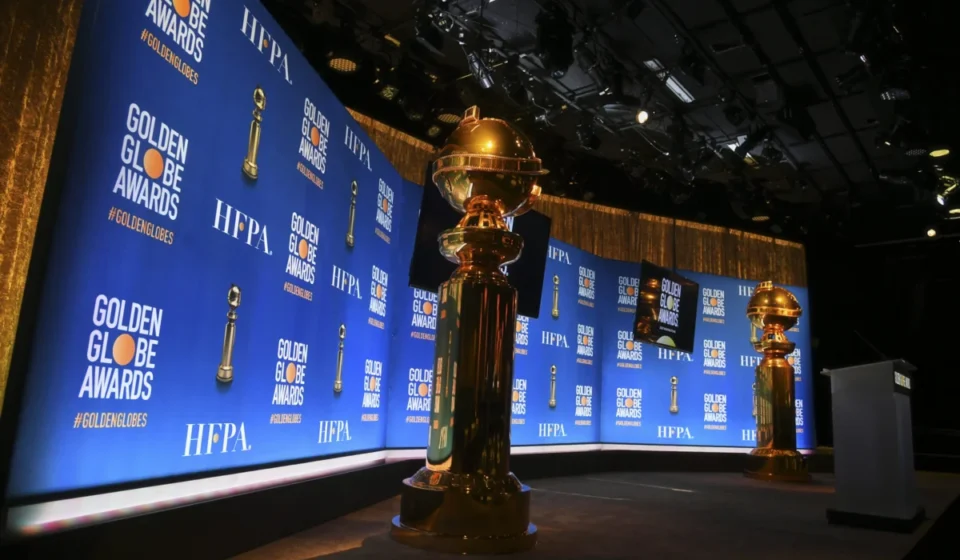
The Golden Globes Aftermath: HFPA Launches $150 Million Antitrust Offensive Against Penske Media Corporation

In a dramatic legal escalation that threatens to reopen one of Hollywood’s most contentious chapters, the Hollywood Foreign Press Association (HFPA) has filed a sprawling antitrust lawsuit against Penske Media Corporation (PMC). The filing, submitted to the U.S. District Court in Los Angeles, challenges the legitimacy of the 2023 acquisition of the Golden Globe Awards, alleging that the parent company of Variety orchestrated a "sham process tainted by fraud" to seize control of the historic property.
The suit seeks damages of at least $150 million, asserting that PMC engaged in predatory tactics to systematically dismantle the HFPA’s autonomy, turning a once-independent body of international journalists into a captive arm of a media conglomerate.
A Chronology of Conflict: From Prestige to Peril
To understand the gravity of the current litigation, one must examine the rapid descent of the HFPA. For nearly eight decades, the organization served as a powerful, albeit controversial, arbiter of cinematic excellence. However, the turning point arrived in February 2021, when a landmark investigation by the Los Angeles Times exposed the association’s lack of Black members and detailed long-standing ethical concerns regarding influence peddling.
The fallout was immediate and catastrophic:
- March 2021: Industry publicists, representing the biggest stars in Hollywood, launched a coordinated boycott, refusing to grant their clients access to HFPA members.
- May 2021: NBC, the longtime broadcast partner of the Golden Globes, announced it would not air the 2022 ceremony, citing the organization’s sluggish pace of reform.
- 2021–2022: The HFPA scrambled to implement radical changes, including the expansion of its voting body and the implementation of new ethics codes.
- 2023: In a move framed as the "salvation" of the brand, the HFPA agreed to sell the assets of the Golden Globes to a joint venture led by PMC’s Dick Clark Productions (DCP) and Eldridge Industries.
- 2024–2025: The HFPA, which was intended to dissolve following the sale, paused its liquidation process, citing an internal mandate to investigate potential "malfeasance and conflicts of interest" regarding the transaction.
The Allegations: Fraud, Boycotts, and Broken Promises
The core of the HFPA’s complaint rests on the theory that PMC acted as a "wolf in sheep’s clothing." The lawsuit posits that PMC did not merely purchase the Golden Globes; it actively engineered their downfall to facilitate a fire-sale acquisition.
The "Boycott" Theory
The complaint alleges that PMC—leveraging its status as a titan of industry trade news—instigated or amplified the industry boycott against the HFPA to weaken the organization’s financial standing and bargaining power. By starving the show of talent access and broadcast viability, the suit argues, PMC ensured that the HFPA would have no choice but to sell the franchise at a bargain price.
The Breach of Contract
The litigation highlights specific promises allegedly made to the HFPA membership during the transition. According to the filing, members were assured that their lifetime voting rights and access to the ceremony would be preserved. The lawsuit claims that PMC subsequently reneged on these foundational guarantees.
"Penske later reneged on that fundamental promise, guaranteeing voting rights only to those members who accepted direct employment with the Penske Trust," the complaint states. The HFPA argues that this move effectively neutralized the independent nature of the voting body, transforming it into a group that operates solely at the discretion of a media mogul.
Monopoly Power and Market Dominance
Beyond the specific contractual disputes, the lawsuit raises significant antitrust concerns regarding PMC’s footprint in Hollywood. The complaint argues that PMC, through its ownership of Variety, The Hollywood Reporter, Deadline, and other major trade publications, exercises near-total control over the "secondary awards" and "For Your Consideration" (FYC) advertising markets.
By controlling both the platforms that report on the industry and the organization that bestows the awards, the suit argues, PMC has created a closed-loop system. The filing alleges that PMC has taken deliberate steps to exclude traditional HFPA members from participating in these markets, thereby solidifying its monopoly over the infrastructure of Hollywood recognition. The suit posits that this vertical integration stifles competition and prevents an objective awards environment from existing.
The Defense: "Absurdity and Irrationality"
The response from PMC was swift and scathing. A spokesperson for PMC and the current Golden Globes organization characterized the lawsuit as an act of desperation from a disgraced, defunct entity.
"Today’s lawsuit continues the absurdity and irrationality that the industry has come to expect from the defunct organization formerly known as the HFPA," the company stated. "The Golden Globes transaction closed more than three years ago and received all required approvals—any assertion that it did not close, or remains subject to reversal, is once again unequivocally false."
PMC’s statement further escalated the rhetoric, labeling the litigation a "new low" for the former members. The company specifically addressed the motivations behind the suit, suggesting it was an attempt to reclaim lost perks. "The attempt by former HFPA members to leverage the Golden Globe Foundation, an independent nonprofit, simply to secure Golden Globes tickets is an unfortunate distraction that inappropriately diverts resources from legitimate charitable causes."
PMC’s representatives maintained that the HFPA’s long history of ethical failures, racism, and misconduct makes them an invalid actor in the eyes of the industry, questioning why any legal counsel would take up such "illegitimate claims."
Implications for the Future of Awards Season
The implications of this lawsuit are profound, both for the Golden Globes and for the broader media landscape.
For the Golden Globes
The stability of the Golden Globes has been a central goal for PMC since the acquisition. The brand has been slowly rebuilding its reputation with a revamped voting body and a move to a new broadcast partner, CBS. A prolonged legal battle—especially one questioning the fundamental ownership of the awards—could stall these efforts and cast a shadow over the upcoming awards season.
For Antitrust Law in Media
If the case reaches discovery, it could force a rare, deep-dive examination into the business practices of media conglomerates. The question of whether an owner of major trade publications can also own the awards shows that its publications cover is a significant issue in media ethics and competition law. Should the court find merit in the claims of "monopoly power," it could force a restructuring of how awards bodies operate in relation to the media ecosystem.
The "Duty to Investigate"
The fact that the HFPA board chose to pause its dissolution is a signal that the internal factions within the former organization remain deeply divided. The lawsuit serves as a rallying cry for those who feel the organization was hollowed out rather than reformed.
As the litigation proceeds, the industry will be watching closely to see if the HFPA can substantiate its claims of fraud or if the court will dismiss the action as a retaliatory strike from a defunct organization looking for a final payday. For now, the "Golden" prize remains mired in the very type of behind-the-scenes drama that the awards show itself has spent decades documenting.