The Digital Ghost in the Machine: Hirokazu Koreeda Confronts Grief and AI in ‘Sheep in the Box’

Editor’s Note: This story was originally filed during the 2026 Cannes Film Festival. Neon is set to release "Sheep in the Box" in theaters nationwide starting Friday, July 24.
The 2026 Cannes Film Festival has served as a landmark moment for Japanese cinema. With the Marché du Film designating Japan as the official Country of Honor, the Croisette has been flooded with a diverse array of nearly a dozen features and shorts. Most significantly, this year marks the first time in a quarter-century that three Japanese directors have vied for the Palme d’Or simultaneously.
The presence of Ryusuke Hamaguchi, Koji Fukada, and the legendary Hirokazu Koreeda represents a generational breadth of talent, yet their respective receptions have been as varied as their filmmaking styles. As critics digest the offerings, the spotlight has fallen heavily on Koreeda’s latest experiment in human fragility: Sheep in the Box.
A Landscape of Contrasts: Japanese Cinema at Cannes
The current climate of Japanese film on the global stage is one of both celebration and critical introspection. Ryusuke Hamaguchi’s All of a Sudden—a sprawling, 200-minute follow-up to his Oscar-winning Drive My Car—has emerged as an effervescent frontrunner in the eyes of many festival attendees. Meanwhile, Koji Fukada’s Nagi Notes has garnered respect for its restrained elegance and quiet emotional depth.
However, the conversation surrounding Hirokazu Koreeda—a filmmaker whose 2018 masterpiece Shoplifters redefined the international perception of the modern family drama—has been notably polarized. Sheep in the Box, a science-fiction-inflected drama, explores the lives of two grieving parents who adopt a humanoid AI replica of their late seven-year-old son. While audiences have praised the film’s technical ambition, many have found themselves "surprised" by the director’s departure from the intimate, earthbound realism that has defined his career.

The Genesis of a Digital Mourning
When sitting down with IndieWire just days after the film’s premiere, Koreeda appeared remarkably composed, despite the critical dissonance surrounding the project. He acknowledged the "muted" response with the characteristic, thoughtful grace that fans of his work have come to expect.
"I feel all the interviews today and yesterday have given me a good idea of how people have received the film," Koreeda reflected. "What struck me is that it seems a lot of people were expecting some AI dystopian, controlled-by-robots story. They seem surprised that it doesn’t end that way—for better or worse."
The inspiration for the film, he revealed, was not rooted in the technological anxieties of Silicon Valley, but in the existential questions posed by modern generative AI. After reading reports about Chinese businesses using AI to "resurrect" the deceased, Koreeda felt a visceral need to interrogate the ethics of grief. "Who do the dead really belong to?" he asked—a query that echoes his earlier preoccupation with the afterlife in his 1998 classic, After Life.
The Structural Anatomy of ‘Sheep in the Box’
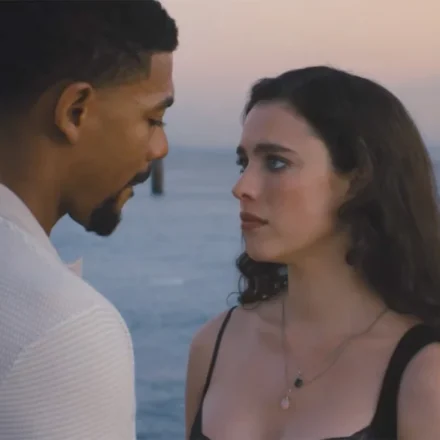
The film follows Otone (Ayase Haruka) and Kensuke (Daigo), a middle-class couple in Kamakura struggling to reconcile with the death of their son. Their decision to bring an AI humanoid—named Kakeru—into their home serves as the catalyst for a series of philosophical, often unsettling exchanges.
Koreeda made a deliberate choice to have Kakeru mature at an accelerated rate, creating a jarring displacement for the parents. The child-AI’s detached observations—such as citing a statistic about maternal abandonment—are designed to test the limits of the human bond. When asked about these nuanced, sometimes cruel lines of dialogue, Koreeda pointed to extensive research.

"I asked different people, including friends, about their relationships with their own mothers," he explained. "They spoke of being traumatized by hearing, ‘I’m not going to be your mother anymore.’ I realized that Otone is caught in that same cycle. She is traumatized by her own mother, and now she is saying those same words to a machine that looks like her son."
Performance and Direction: The Rimu Kuwaki Factor
The centerpiece of the film’s emotional weight is the performance of young actor Rimu Kuwaki. Despite the science-fiction premise, Koreeda revealed that he gave very little instruction regarding the "robotic" nature of the character.
"I didn’t ask him to act like a robot. He was meant to be a child," Koreeda noted. "The adults interacting with him feel a sense of discomfort because of the way he overlaps with their memory of the boy, but I didn’t emphasize the ‘AI’ aspect to the boy. When he asks his mother, ‘Would you be happier without me?’ I didn’t tell him to act like a machine. I simply directed the adults to react to that line with the horror and discomfort such a question deserves."
The Future of Japanese Talent
Beyond the film itself, the "Country of Honor" status at Cannes provided a platform for Koreeda to reflect on the structural challenges facing his home industry. While he expressed joy at the increased representation of Japanese filmmakers at the festival, he remained skeptical about the level of domestic institutional support.
"I hope this representation continues next year and the year after," he said. "But I’m not sure that it is necessarily thanks to support from the Japanese film industry. Directors like Fukada and Hamaguchi have been on the radar for a decade, and they have received more support in France than they have in Japan. The Japanese film world needs to put some thought into how to support the next lot of talent coming through."

Implications: The Fox and the Box
The film’s title is a direct reference to Antoine de Saint-Exupéry’s The Little Prince, specifically the illustration of a sheep inside a box. When asked about the metaphorical parallels—the fox and the rose—Koreeda was coy but specific.
"The boy who takes out Kakeru’s GPS is the fox," he mused. "He shares a certain philosophy with him." As for the rose? A faint smile crossed his face: "I haven’t given any thought to the rose."
Conclusion: A Master’s Evolution
Whether or not Sheep in the Box wins the Palme d’Or, its significance lies in Koreeda’s refusal to stand still. By moving into the territory of the "digital uncanny," he has challenged his audience to look past the surface of technological advancement and into the mirror of human attachment.
The film is not a cautionary tale about robots, but a deeply human inquiry into why we cling to the past and how we eventually learn to let go. As the film prepares for its July 24 release, it stands as a testament to a master filmmaker who is still willing to risk confusion to find a new, uncomfortable truth.
The question remains: in an age of infinite digital replication, what is the value of a single, finite life? In Sheep in the Box, Koreeda does not offer a comforting answer, but he provides a profound, haunting reflection.