Unearthing the Silence: Frank Berry’s ‘The Lost Children of Tuam’ and Ireland’s Cinematic Reckoning

The landscape of Irish cinema is increasingly defined by a somber, necessary excavation of the country’s mid-20th-century history. From the harrowing depictions of institutional abuse in The Magdalene Sisters to the poignant personal quest of Philomena and the atmospheric moral tension of Small Things Like These, Irish filmmakers are systematically dismantling the wall of silence that once protected the Catholic Church’s most egregious failures. Joining this vital canon is Frank Berry’s The Lost Children of Tuam, a film that recently garnered the top prize for Best Irish Film at the Galway Film Fleadh.
Rather than focusing on the visceral horrors within the walls of the Mother and Baby Homes, Berry’s film—written by She Said scribe Rebecca Lenkiewicz—is a restrained, procedural drama. it focuses on the painstaking grassroots effort required to force a nation to look at its own buried secrets. Based on the real-life investigative work of local historian Catherine Corless, the film serves as both a tribute to a singular woman’s tenacity and a haunting elegy for the 796 children whose lives were discarded by an institution sworn to "mercy."
Main Facts: The Cinematic Portrait of a Quiet Crusader
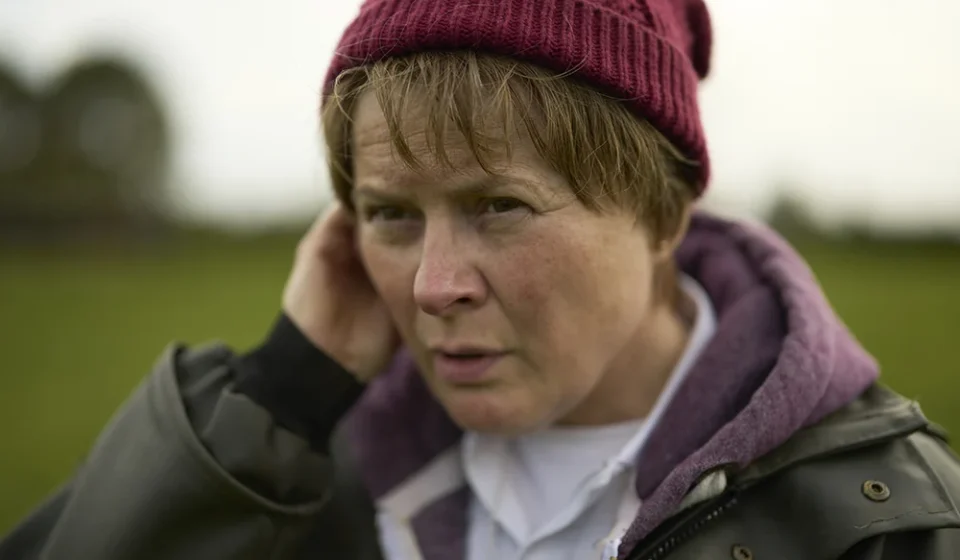
The Lost Children of Tuam is a dramatization of events that shocked the international community in 2014. At its center is Catherine Corless (played by Monica Dolan), a resident of Tuam, County Galway, whose amateur interest in local history led to the discovery of a mass grave on the site of the former St. Mary’s Mother and Baby Home. The facility, run by the Bon Secours Sisters from 1925 to 1961, was a place where unmarried mothers were sent to give birth in secret, often suffering under harsh conditions while their children were frequently separated from them for adoption—or, as Corless discovered, died in staggering numbers.
The film is produced by a powerhouse team including Liam Neeson, alongside Element Pictures’ Ed Guiney and Andrew Lowe, the duo behind recent critical hits like Poor Things and The Banshees of Inisherin. This high-profile backing underscores the film’s significance as a major cultural event.
The narrative, however, avoids the sensationalism often found in "prestige" investigative dramas. Instead of the high-stakes newsroom energy of Spotlight, Berry and Lenkiewicz offer a "patiently procedural study." The film focuses on the "thankless grassroots legwork"—the scouring of dusty archives, the cross-referencing of death certificates with burial records, and the quiet persistence needed to navigate a community that would often prefer the past remain buried.
Chronology: From a Night Class to National Outcry
The timeline of The Lost Children of Tuam mirrors the slow, agonizing emergence of the truth in real life, spanning over a decade of research and resistance.
2010–2012: The Hobbyist’s Inquiry
The film begins in 2010, depicting Catherine as an unassuming wife and mother grappling with her own history of clinical depression. Her journey starts not with a crusade, but with a community-college night class. Tasked with writing an essay on a local subject, she chooses St. Mary’s, motivated by the fact that her own mother was born "illegitimate." At this stage, Catherine expects to find a standard historical record of a closed institution.
2013–2014: The Discovery of the 796
As Catherine’s research deepens, she discovers a jarring discrepancy. While the local records office provides death certificates for nearly 800 children who died at the home over its 36 years of operation, there are no corresponding records of their burial in any local cemeteries. The film captures the chilling realization that these children were not given the dignity of a grave. Her research eventually leads back to a 1970s discovery by local boys of a "hollow" filled with bones, which at the time was dismissed as a Famine-era burial site.
2014–2017: International Exposure and the NYT Article
The narrative shifts as Catherine’s findings are picked up by the media. The film draws heavily from Dan Barry’s 2017 New York Times article, which brought the Tuam scandal to a global audience. We see the transition from local suspicion to international outrage. Survivors began to come forward, their "halting, shattered testimonies" forming a moving montage that serves as the emotional heart of the film.
The Present Day: The Fight for Excavation
The film concludes not with a neat resolution, but with the ongoing struggle for accountability. It follows Catherine as her project "escapes her control" and becomes a focal point for a national conversation regarding the Irish State’s and the Church’s shared responsibility.
Supporting Data: The Statistics of Silence
The power of The Lost Children of Tuam lies in its adherence to the grim data that Catherine Corless unearthed. The statistics provided in the film reflect the findings of the subsequent Commission of Investigation into Mother and Baby Homes:
- The Death Toll: Catherine identified 796 children who died at the Tuam home.
- Mortality Rates: In some years, the mortality rate for children in these homes was five times higher than that of the general population.
- The Burial Site: Evidence suggested that many of the remains were interred in a decommissioned septic tank structure on the grounds of the home, a detail that became a symbol of the institutional dehumanization of these children.
- The Timeline: The home operated for 36 years (1925–1961) under the management of the Bon Secours Sisters, funded by the Irish State.
The film uses these numbers not just as facts, but as the weight that Catherine carries. Monica Dolan’s performance as a "moral and psychological anchor" illustrates the "internal wear and tear" of documenting nearly 800 preventable deaths while facing a wall of institutional "non-cooperation."
Official Responses: Institutional Pushback and Recognition
The film does not shy away from the cold reception Catherine’s work initially received. Historically, the responses from the involved institutions were characterized by delay and obfuscation:
- The Church: The Bon Secours Sisters initially claimed they had no records of the burials. It was only after years of public pressure that the order issued an apology and contributed to a compensation fund.
- The Irish Government: Following the international outcry in 2014, the Irish government established a Commission of Investigation into Mother and Baby Homes. In 2021, Taoiseach (Prime Minister) Micheál Martin issued a formal state apology, acknowledging a "profound generational wrong" and a "dark, difficult, and shameful chapter of very recent Irish history."
- The Community: The film poignantly captures the internal conflict within Tuam itself. In a "largely silent community," Catherine’s work was sometimes seen as an unwelcome reopening of old wounds, highlighting the "thankless" nature of her activism.
The film itself has been met with official acclaim, winning Best Irish Film at the Galway Film Fleadh. This recognition within Ireland suggests a readiness to finally confront these truths through the medium of art.
Implications: Cinema as a Tool for Justice and Remembrance
The release of The Lost Children of Tuam carries significant implications for the ongoing process of transitional justice in Ireland.
The Dignity of the Dead
The film reinforces the demand for a full excavation and DNA recovery at the Tuam site. For the survivors and the families of the "lost children," the film is a validation of their trauma. It moves the conversation from abstract historical "tragedy" to a concrete demand for the "institutional acknowledgement and accountability" mentioned in the screenplay.
Redefining the Heroic Narrative
By casting Monica Dolan—a "redoubtable character actor"—rather than a traditional "movie star," Frank Berry shifts the focus from the hero to the work. The film suggests that change does not always come from grand gestures, but from the "unvarnished, heartsore" persistence of ordinary citizens. It serves as a blueprint for how cinema can document the "patiently procedural" nature of activism.
A Global Resonance
While the story is uniquely Irish, its themes of institutional cover-ups, the marginalization of vulnerable women, and the power of grassroots truth-telling have universal appeal. With producers like Liam Neeson and the distribution power of Element Pictures, the film is poised to reach an international audience, ensuring that the names of the 796 children are not forgotten.
Conclusion: An Elegy for the Unseen
Ultimately, The Lost Children of Tuam is described as an "elegy for lives unseen and unknown." It avoids the "distancing arthouse trappings" of many social dramas, opting instead for a direct, emotional appeal. Through the lens of DP Kate McCullough and the score by Hannah Peel, the film captures the "resonant sadness" of a landscape that literally holds the bones of the forgotten. It is a vital, haunting addition to Ireland’s ongoing artistic reckoning—a film that proves that while the past can be buried, it can never truly be silenced.