
In the corridors of power at Imax, CEO Richard Gelfond has found himself at the center of an unexpected social storm. His phone, once a conduit for routine business, has become a high-demand hotline for friends—both old and new—desperate for a singular favor: a golden ticket to an early screening of The Odyssey. Christopher Nolan’s latest epic, shot entirely on Imax-native cameras, has become the quintessential symbol of a resurgent industry. So intense is the anticipation that Imax opened ticket sales a full year in advance, only to watch the inventory vanish in a matter of hours.
"I’ve gotten calls from people I haven’t talked to in years!" Gelfond says with a chuckle. "It’s pretty apparent the prospect of getting Odyssey tickets in Imax has reunited me with old friends—and made me new ones."
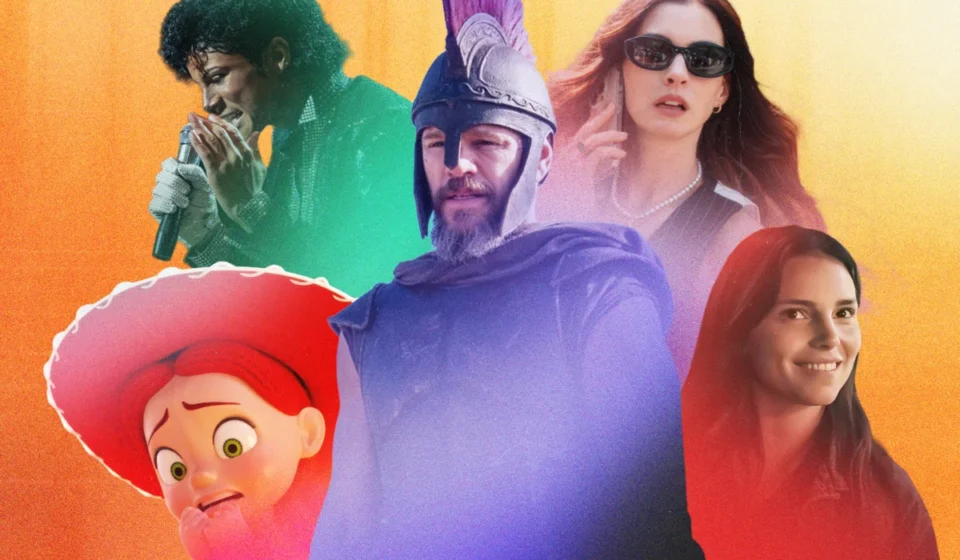
This frenzy is not an isolated incident. Across the United States, the theatrical experience is enjoying a profound and unexpected revival, signaling a departure from the "cinema-is-dead" narrative that dominated industry discourse during and after the COVID-19 pandemic. From the rhythmic success of the Michael biopic to the high-fashion fervor surrounding The Devil Wears Prada 2, audiences have returned to the silver screen in force.
The Chronology of a Comeback: From Lockdown to Blockbuster
The journey to this moment was fraught with existential threats. Following the initial onset of the pandemic, theaters faced a period of profound uncertainty as audiences retreated to the safety of home streaming. The 2023 labor strikes, which halted production and stifled marketing efforts, served as a "destruction of momentum," according to Tom Rothman, chairman of Sony Pictures.

"People don’t understand how extreme the destruction of the strike was, and how because of it everything got delayed," Rothman explains. "We lost momentum. We not only shut down production, but we essentially shut down marketing and promotion because actors couldn’t talk about their work."
However, the "Barbenheimer" phenomenon of 2023 acted as a crucial bridge, reminding the public of the joy inherent in shared cinematic spaces. By 2026, that spark has fanned into a full-blown fire. The industry has stabilized its production output, with 115 to 120 wide releases slated for the year—a return to pre-pandemic volumes. New distributors, including Black Bear and a revitalized theatrical division at Amazon MGM, have joined the legacy studios in a renewed commitment to the big screen.
Supporting Data: By the Numbers
The metrics of this recovery are undeniable. According to Rentrak, overall ticket sales are currently trending 10% above the same period in 2025. With current momentum, industry analysts project that annual domestic grosses will hit the $10 billion mark for the first time since 2019.
The success of individual titles underscores a shift in audience behavior:

- The Billion-Dollar Standard: The Super Mario Galaxy Movie and the biopic Michael have both crossed the $1 billion threshold, proving that both family-oriented animation and music-driven drama remain potent drawcards.
- The Indie Revolution: A24’s Backrooms, directed by 20-year-old YouTuber Kane Parsons, secured a staggering $81 million debut—the studio’s largest ever—on its way to $363 million globally.
- Efficiency and Profit: Obsession, a psychological thriller directed by newcomer Curry Barker, turned a minuscule $750,000 budget into a $426 million global smash, proving that low-budget ingenuity can rival blockbuster scale.
Furthermore, the "collectible" economy has become a massive revenue driver. AMC Theatres CEO Adam Aron reports that movie-themed popcorn buckets—ranging from haute couture bags for Prada 2 to elaborate Trojan horses for The Odyssey—will generate over $100 million in revenue this year alone.
Official Perspectives: The Industry Responds
The prevailing mood among studio heads and theater operators is one of cautious, yet profound, optimism. Seth Rogen, starring in this summer’s comedy The Invite, captures the shift in sentiment: "I am constantly having conversations with studio heads, and you can sense an optimism that they haven’t felt in a long time. It reminds me a little bit more of how it felt 15 years ago."
Michael Kustermann, CEO of the dine-in chain Alamo Drafthouse, echoes this, noting that the key to success has been a diverse pipeline of content. "There’s not just a good pipeline of content, but a diverse balance within the slate. That’s what we’ve been missing," he states.
This sentiment is supported by the changing demographics of the audience. A Fandango report indicates that 87% of Gen Z and 82% of millennials have visited a theater in the last 12 months, effectively debunking the myth that the theatrical experience is a "dying" relic of the past. As director Richard Linklater puts it, "The theatrical film experience has been under threat for 80 years, and it always withstands the ups and downs because we are communal beings."

Implications: The New Rules of Engagement
The current landscape forces a recalibration of how Hollywood views success. The "one-size-fits-all" model of the past is being replaced by a more nuanced strategy.
1. The Death of Mediocrity
The era of the "guaranteed hit" based on brand recognition alone is over. The failures of Masters of the Universe and The Mandalorian and Grogu demonstrate that audiences are increasingly discerning. "If a movie isn’t great or isn’t perceived to be great, it doesn’t open strong," says Disney Entertainment Studios chairman Alan Bergman. "Long gone are the days where you can have a movie that’s not very good and still get a week or two out of it."
2. The Rise of the Internet-Native Filmmaker
The success of creators like Kane Parsons (Backrooms) and Curry Barker (Obsession) has triggered a race to secure "internet-native" talent. Studios are now aggressively acquiring rights to digital phenomena like Siren Head and Mandela Catalogue. However, industry veteran Jason Blum warns against over-commercialization. "You can’t rush things," Blum cautions. "The movies have to be good, and that takes time and effort."
3. The Windowing Consensus
The industry has largely coalesced around a 45-day exclusive theatrical window. This stability is vital for consumer clarity. "The audience needs to understand the only place they can see a film for the first 45 days is in a movie theater," says Paramount co-chair Josh Greenstein. "There’s no ‘Let me just wait’ if they want to be part of the conversation."

4. Structural Concerns
Despite the current success, clouds remain on the horizon. The potential merger of Warner Bros. and Paramount Skydance has raised alarms. Industry trade group Cinema United, led by Michael O’Leary, fears that consolidation inevitably leads to decreased production volumes. "One of the legacy studios that has been a pillar of this industry for over 100 years is going away," O’Leary says. "When you have mergers like this, production goes down… and that is exactly what this industry doesn’t need."
Conclusion: A Forward-Looking Industry
As the year heads into the final quarter, the slate remains packed with high-profile releases, including sequels to Dune, The Avengers, and The Hunger Games. Yet, as Amazon MGM’s Courtenay Valenti notes, the goal is not to replicate the past.
"We have to be very forward-looking, stay nimble and keep innovating," Valenti says. "The audiences of 2026 are not like they were in 2018 or 2019."
Ultimately, the revival of the cinema is a testament to the audience’s desire for connection. Whether it is a $750,000 horror film or a massive, Imax-shot odyssey, the "connective experience" remains the beating heart of Hollywood. As long as studios continue to prioritize quality over assembly-line IP, the silver screen will continue to shine, proving that the rumors of its death were, indeed, greatly exaggerated.