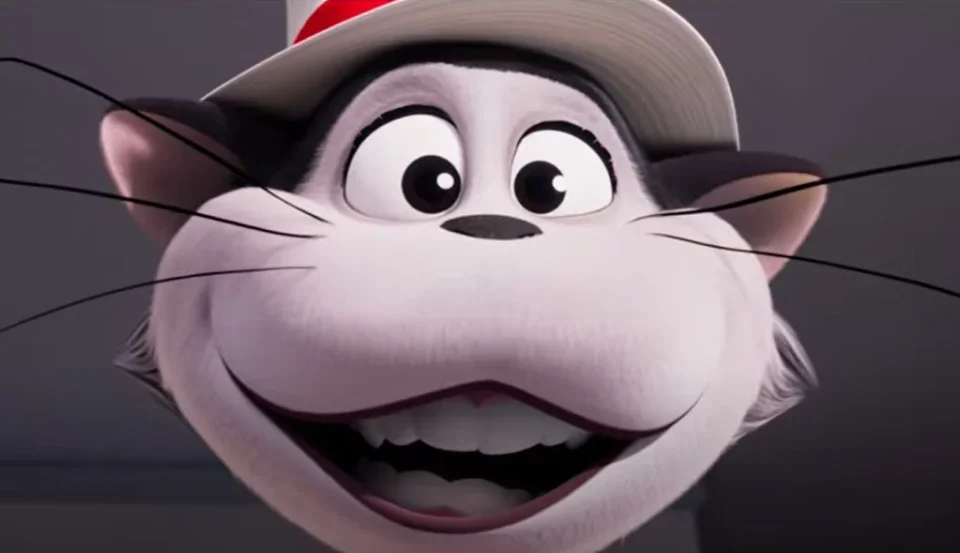
The Evolution of Anarchy: Analyzing the New Animated "The Cat in the Hat" and the Corporate Reimagining of Dr. Seuss

Main Facts: A Modern Reinterpretation of a Literary Icon
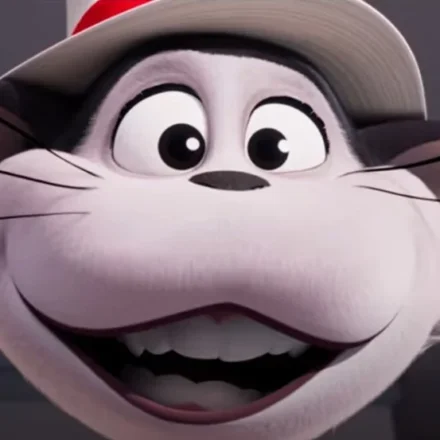
The legendary Dr. Seuss character, the Cat in the Hat, has returned to the silver screen, this time shedding the prosthetic fur of live-action for the polished sheen of digital animation. Directed by Alessandro Carloni and Erica Rivinoja, this latest iteration features Bill Hader not only as the titular voice but also as an executive producer. The film represents a significant pivot for the franchise, attempting to distance itself from the critically panned 2003 live-action adaptation while simultaneously navigating the demands of a modern, franchise-hungry cinematic landscape.
The voice cast is rounded out by rising star Xochitl Gomez as Gabby, a teenage protagonist; Tiago Martinez as her younger brother, Sebastian; and America Ferrera as their mother, Carmen. In a nod to the original source material’s more eccentric elements, Matt Berry lends his distinctive baritone to Waffles, the family’s British-accented goldfish. While the film seeks to capture the "friendly" side of the Cat, early critical reception suggests a production caught between the "innocent wildness" of Theodor Geisel’s original 1957 book and the hyper-kinetic, "video-games-on-Ritalin" energy required of contemporary children’s blockbusters.
Chronology: From Hand-Drawn Whimsy to Digital Multiverses
The journey of The Cat in the Hat from the page to the screen has been fraught with tonal shifts. The original 1971 animated television special remains the gold standard for many, capturing the mischievous, slightly dangerous spirit of the character. However, the trajectory of Seuss adaptations took a sharp turn in 2003 with the Mike Myers-led live-action feature. That film, characterized by a "New Yawk" snarl and a costume that resembled a "marshmallow with teeth," became a cautionary tale of how misjudging a character’s essence can lead to a "noisy, antic hairball of a movie."
In the two decades since the Myers debacle, the industry has seen a resurgence of Seuss properties, most notably through Illumination Entertainment’s The Lorax (2012) and The Grinch (2018). These films established a blueprint for the "modern Seuss" movie: high-octane animation, celebrity voice casts, and a heavy reliance on pop-culture references.
The current 2024/2025 production follows this modern lineage. It moves away from the 2003 version’s "Catskills resort" humor, instead positioning the Cat as a corporate "office drone" within a massive spirit-lifting company. The narrative timeline of the film itself shifts from a grounded story of a family moving to a new city into a surrealist, "junior Marvel" epic involving time-traveling devices (the "Go-Backer") and interdimensional portals hidden within cardboard moving boxes.
Supporting Data: Voice Performance and Narrative Mechanics
The Hader vs. Day-Lewis Paradox
A central point of critique in this latest adaptation is the vocal performance of Bill Hader. While Hader is a celebrated impressionist and comedic actor, his portrayal of the Cat is described as "capital-F Friendly." This stands in stark contrast to the intellectual exercise of actors like Daniel Day-Lewis, who famously spent months perfecting the "timbre and inflection" of Abraham Lincoln. Critics argue that while Hader’s Cat is safe and ingratiating, it lacks the "spiky and audacious" quality that a more transformative actor might have brought to the role. The Cat of the books was an aristocratic, effete troublemaker—a "blithe troublemaker" who understood that his mischief was a necessary catharsis for children. Hader’s version, by comparison, feels more like a "corporate mascot" than a catalyst for anarchy.
Narrative Recycling and the "Pixar" Influence
The film’s plot structure appears to borrow heavily from established tropes of the last decade. The protagonist, Gabby, is a lonely trumpet player struggling with a move—a character beat that mirrors Riley from Pixar’s Inside Out with startling specificity. The "supporting data" of the film’s world-building further emphasizes this "mish-mosh of pop recycling":
- The Portals: Three sealed cardboard boxes serve as literal gateways to other worlds, a mechanic reminiscent of the "multiverse" storytelling prevalent in modern superhero cinema.
- The Mess-o-Meter: A literal gauge that measures the Cat’s irresponsibility, turning Dr. Seuss’s theme of chaotic play into a quantifiable, video-game-like metric.
- The "Things": Thing One and Thing Three (notably skipping Thing Two) communicate through percussion and rhythmic tapping. However, the film’s meta-joke about them having their own franchise reveals a calculated move toward "Minions-style" merchandising.
The Antagonist and Visual Spectacle
The film culminates in a battle with a "glowy-eyed giant leaping demon monster" known as "The Something." This antagonist is less a Seussian creation and more a "gloss on Te Kā from Moana," signaling a departure from the intimate, house-bound chaos of the original book in favor of high-stakes, world-ending spectacles.
Official Responses: Studio Goals and Creative Intent
While official statements from the directors, Alessandro Carloni and Erica Rivinoja, emphasize a desire to modernize the story for a new generation, the subtext of the production points toward "corporate diligence." The creative team has successfully avoided the "black hole of misjudgment" that plagued the Mike Myers version, but in doing so, they have leaned into a "safe" aesthetic.
The inclusion of a "Go-Backer" (a stopwatch that turns back time) and the "Supply Closet" (a Mary Poppins-esque storage space in the Cat’s hat) are presented as inventive tools to keep the plot moving at a breakneck pace. From a studio perspective, these gadgets serve as potential toy tie-ins, a necessity in the current climate of "franchise-plush-toy" filmmaking. The "official" stance is one of delivering a "bumptious" and "hectic" experience that "delivers" for children, even if it leaves purists feeling that the film is "talking through its hat."
The casting of America Ferrera and Xochitl Gomez also reflects a conscious effort to broaden the story’s demographic appeal, grounding the surreal elements in a relatable, modern family dynamic. However, the response from literary traditionalists suggests that this grounding comes at the cost of the "innocent wildness" that made Dr. Seuss’s work timeless.
Implications: The Future of the Seuss "Cinematic Universe"
The implications of this new Cat in the Hat extend far beyond a single film’s box office performance. It signals a definitive shift in how classic children’s literature is handled by major studios.
The "Minionization" of Intellectual Property
By introducing a "whole clan" of Things, the film sets the stage for a sprawling franchise. This suggests that the goal of modern adaptations is no longer to tell a self-contained story, but to create a "franchise ecosystem." If the Things are indeed the "new Minions," we can expect a decade of spin-offs, short films, and merchandise that further dilutes the original character’s subversive edge in favor of "cuddly" commercialism.
The Loss of Artistic Specificity
The comparison to Daniel Day-Lewis’s Lincoln highlights a growing concern in the industry: the preference for "safe," "ingratiating" performances over "audacious" artistic choices. When a character as iconic as the Cat in the Hat is flattened into a "friendly office drone," the medium loses its ability to challenge or truly surprise its audience.
The "Video-Game" Aesthetic
The film functions as a "de facto video-game movie" for a game that doesn’t exist. This "The Cat in the Hat Saves the Universe" approach implies that for a children’s movie to be successful today, it must be "bigger, louder, and more erupting with gadgets." The implication for future adaptations—whether of Seuss, Dahl, or Sendak—is that the quiet, psychological depth of children’s literature may continue to be sacrificed at the altar of "attention-crashing" spectacle.
In conclusion, while the new Cat in the Hat is a technical upgrade from its 2003 predecessor, it serves as a quintessential example of modern "pop recycling." It is a film that measures its success on a "Mess-o-Meter" but refuses to actually get its hands dirty with the genuine, unscripted chaos of the human (or feline) spirit. As the credits roll on this "junior Marvel surrealism," the audience is left with a product that is undeniably efficient but fundamentally "underfelt."