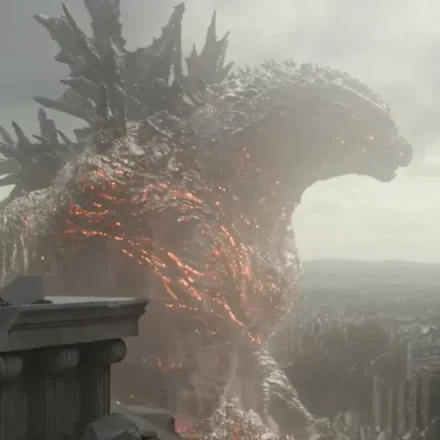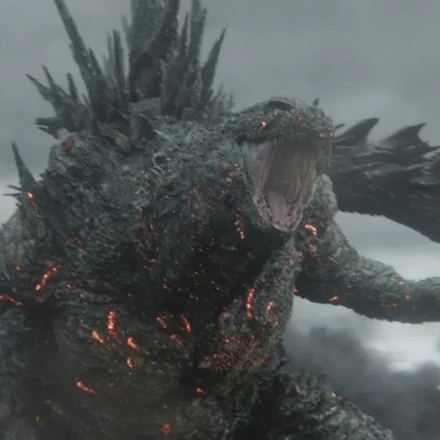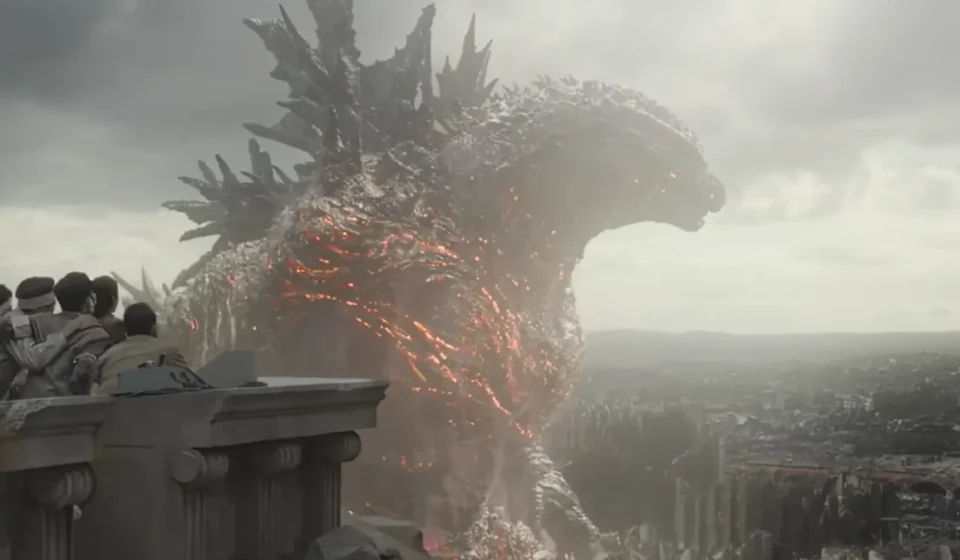
The Titan Returns: Decoding the Legacy and Evolution of King Ghidorah in Godzilla Minus Zero

Major spoilers for "Godzilla Minus Zero" follow.
The King of the Monsters has reclaimed his throne, but the cinematic landscape of post-war Japan has shifted in ways even the most seasoned kaiju enthusiasts could not have anticipated. Following the monumental, Oscar-winning success of Godzilla Minus One, director Takashi Yamazaki has returned with a visceral, high-stakes follow-up: Godzilla Minus Zero. While the pressure to follow a critical darling was immense, Yamazaki opted for a bold strategy: introducing Godzilla’s most formidable extraterrestrial rival, King Ghidorah, to his grounded, period-accurate universe.
Though merchandise leaks had preemptively punctured the veil of secrecy Toho attempted to maintain, the film’s release has confirmed that Minus Zero is not merely a retread of classic tropes. It is a calculated modernization of the Three-Headed Monster, reimagined through a lens of R-rated brutality and existential dread.
The Chronology of a Nemesis: Ghidorah’s Franchise Roots
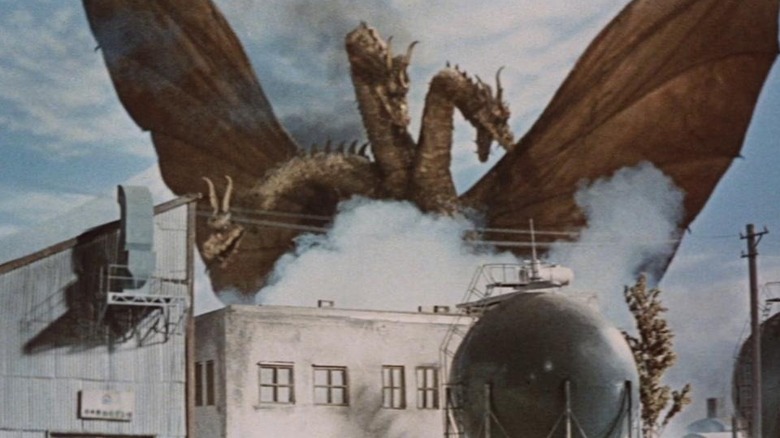
To understand the weight of Ghidorah’s arrival in the Minus timeline, one must look back at the creature’s storied history. King Ghidorah first descended upon the cinematic world in 1964’s Ghidorah, the Three-Headed Monster. At that juncture, the Godzilla franchise was already evolving; the titular monster had transitioned from a singular, unstoppable force of nature into a protagonist of sorts, having battled foes like Anguirus and Mothra.
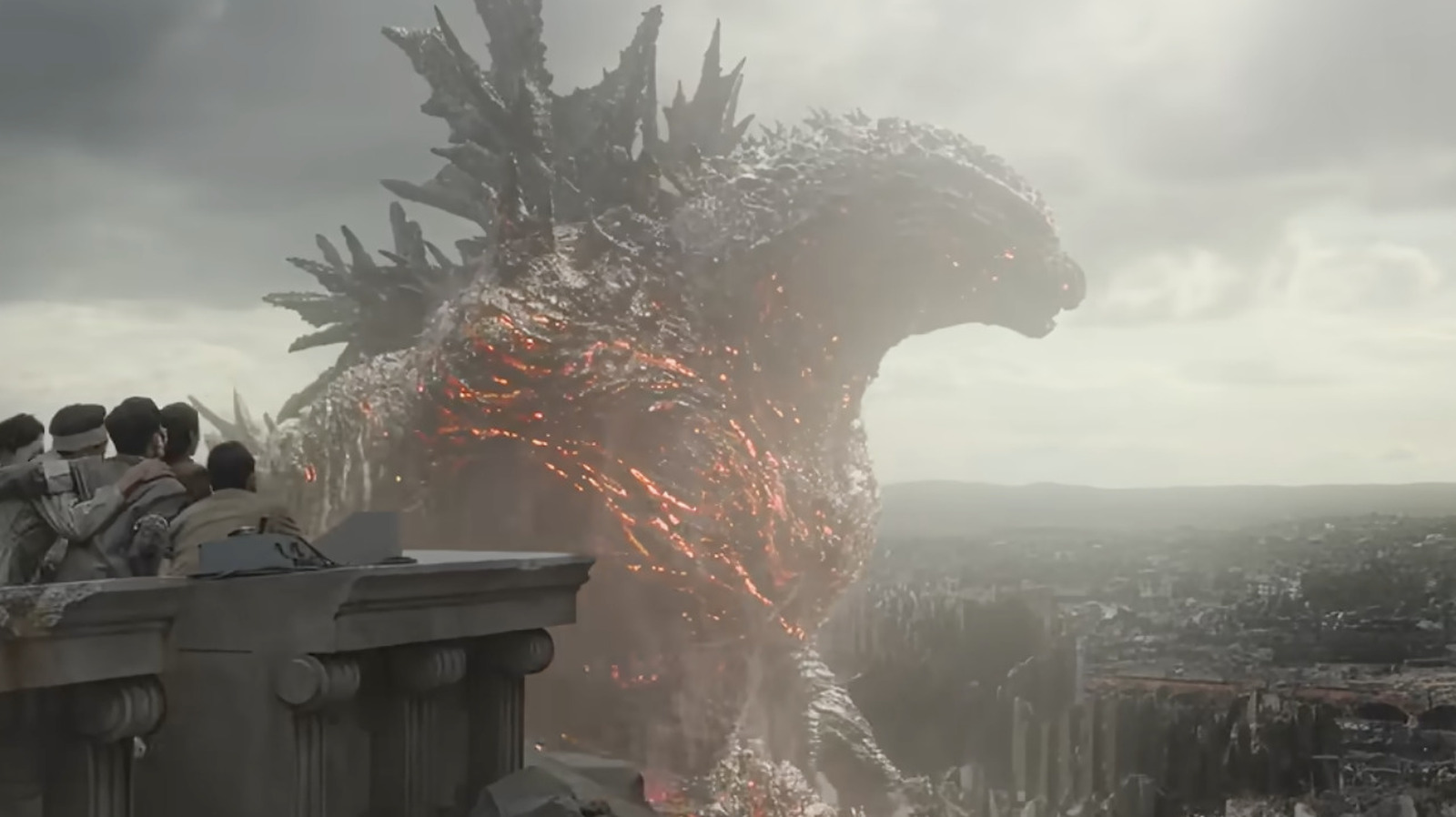
However, Ghidorah represented a paradigm shift. Unlike terrestrial titans, Ghidorah was an interstellar agent of entropy, a dragon-like entity that had systematically purged entire civilizations—most notably on Venus—before arriving on Earth via a meteor. The sheer scale of his threat necessitated a rare alliance: Godzilla, Mothra, and Rodan had to unite to repel the golden terror. This narrative arc marked the genesis of the "team-up" dynamic that would define the Showa era.
Throughout the decades, Ghidorah remained a persistent shadow over the franchise. He returned in 1965’s Invasion of the Astro-Monster and played a central role in the 1968 classic Destroy All Monsters. As the franchise migrated through the Heisei era (1984–1995), the monster was reimagined with cybernetic augmentations in Godzilla vs. King Ghidorah (1991), introducing the terrifying Mecha-King Ghidorah. Later, the Millennium era’s Godzilla, Mothra and King Ghidorah: Giant Monsters All-Out Attack (2001) presented him as a guardian deity, a rare deviation from his status as a herald of extinction. By the time of the 2019 Legendary MonsterVerse entry Godzilla: King of the Monsters, the character was cemented as the primary foil to Godzilla—a status that Godzilla Minus Zero now seeks to redefine for a new generation.
Reinventing the Apex: The Yamazaki Approach
Takashi Yamazaki’s approach to Godzilla Minus Zero is a masterclass in balance. He respects the silhouette and the core identity of the beast while stripping away the campier elements that accumulated over the decades.
A Dragon Born from Science and Myth
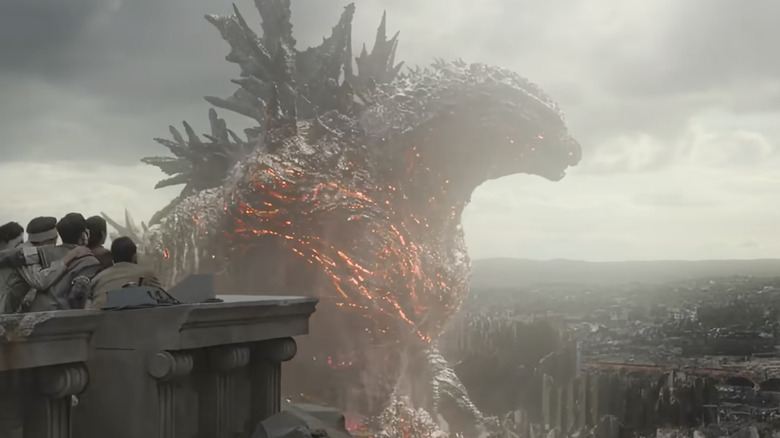
The film’s opening act introduces a version of Ghidorah that defies initial expectations. Rather than appearing as the multi-headed golden god immediately, the creature is first encountered in a singular, proto-dragon form. The design is stark, visceral, and terrifyingly organic, reminiscent of the creature designs found in Reign of Fire. By grounding the creature’s initial appearance in a more "realistic" biological framework, Yamazaki heightens the sense of horror.
The Evolutionary Catalyst
The film’s most striking narrative choice involves the human military’s attempt to neutralize a dormant Ghidorah. When a conventional bombing run fails to kill the creature and instead impales him, the narrative forces a terrifying evolution. As lightning strikes the metallic shards embedded in his hide, the monster undergoes a grotesque metamorphosis, emerging in his final, iconic three-headed form. This serves as a commentary on humanity’s tendency to meddle with forces beyond their comprehension, a recurring theme in Yamazaki’s work.
Supporting Data: Why the R-Rating Matters
The decision to grant Godzilla Minus Zero an R-rating was not merely for shock value; it was an artistic necessity. In previous iterations, the scale of destruction was often tempered by the limitations of practical effects or the need for a broader audience reach. Here, the constraints are removed.
The primary manifestation of this is Ghidorah’s revamped combat style. His "gravity beams" are no longer just colorful energy blasts; they are depicted with terrifying kinetic physics. In one of the film’s standout sequences, Ghidorah utilizes these beams to exert localized gravitational manipulation, literally tearing entire coastal towns from their foundations and hoisting them into the stratosphere before plummeting them back to earth. The resulting carnage provides a level of visual gravitas that aligns with the somber, post-war tone established in Minus One.
Implications for the Future of the Franchise
The final act of Godzilla Minus Zero serves as a definitive statement on the hierarchy of the kaiju world. The climactic battle is not merely a slugfest; it is a brutal grudge match that demands total exertion from the King of the Monsters. Godzilla’s victory—achieved by literal dismemberment—is pyrrhic.
The implications for the franchise are significant:
- The Human Element: The film underscores that humanity’s role in these conflicts is often that of a catalyst. By forcing the hand of the monsters, humans inadvertently create higher-stakes scenarios.
- The "Minus" Universe Potential: By successfully introducing a supernatural, extraterrestrial threat like Ghidorah into a "grounded" world, Toho has essentially opened the door for other classic monsters (such as Biollante or Destoroyah) to be adapted with this same level of gritty, high-stakes intensity.
- The Supremacy of Godzilla: Despite the immense power of the alien invader, the film ends on a note of clarity. Regardless of the technology or the sheer physical prowess of his rivals, Godzilla remains the apex, the singular entity around which the world revolves.
Conclusion: A New Standard for Kaiju Cinema
Godzilla Minus Zero succeeds because it refuses to rest on the laurels of its predecessors. Takashi Yamazaki has managed to honor the legacy of the Three-Headed Monster while simultaneously stripping away the decades of franchise "baggage." By treating Ghidorah as an evolutionary biological horror rather than a static villain, the film offers a fresh, chilling perspective on one of cinema’s most enduring rivalries.
As the credits roll and the dust settles on the ruins of the battlefield, the message is clear: the Godzilla franchise is currently experiencing a renaissance. By embracing the R-rating, focusing on the sheer terror of the monsters, and maintaining a human-centric narrative that feels emotionally tethered to its time period, Godzilla Minus Zero has not only justified its own existence but has set a terrifyingly high bar for whatever monster rises to challenge the King next. The world of Godzilla is wider, darker, and more dangerous than ever before.