Echoes of Identity: Akira Yamamoto’s ‘The Intertwining’ Examines the Fragility of Self

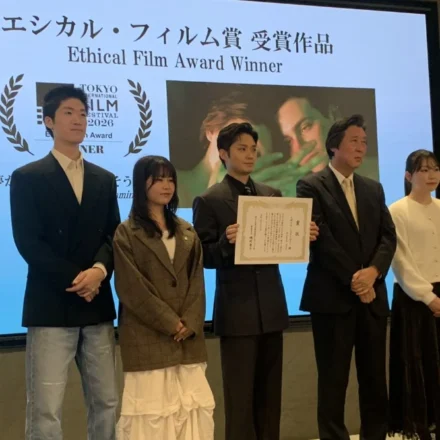
In the quiet, deliberate landscape of contemporary Japanese cinema, few directors have managed to cultivate a sense of dread with such surgical precision as Akira Yamamoto. His latest feature, The Intertwining, which premiered to significant acclaim at the 2026 Tokyo International Film Festival, serves as a masterclass in psychological restraint. By weaving a politically charged narrative of ethnic identity and systemic prejudice into a deeply intimate family drama, Yamamoto has crafted a film that feels both like a personal manifesto and a broader commentary on the nature of belonging.
The film, which is currently seeking North American distribution, bears the unmistakable DNA of its director’s mentor, the legendary Kiyoshi Kurosawa. Much like his teacher, who spent nearly two decades shaping the next generation of talent at the Tokyo University of the Arts, Yamamoto exhibits a mastery of composition and temporal pacing that renders his quietest scenes the most profoundly unsettling.
The Foundations of Tension: A Stylistic Study
Yamamoto’s primary tool in The Intertwining is the long take—a technique that, while common in arthouse cinema, is utilized here with singular intent. Shots frequently linger several seconds past their expected expiration, forcing the audience to sit with the characters in the agonizing silence that precedes a difficult confession.
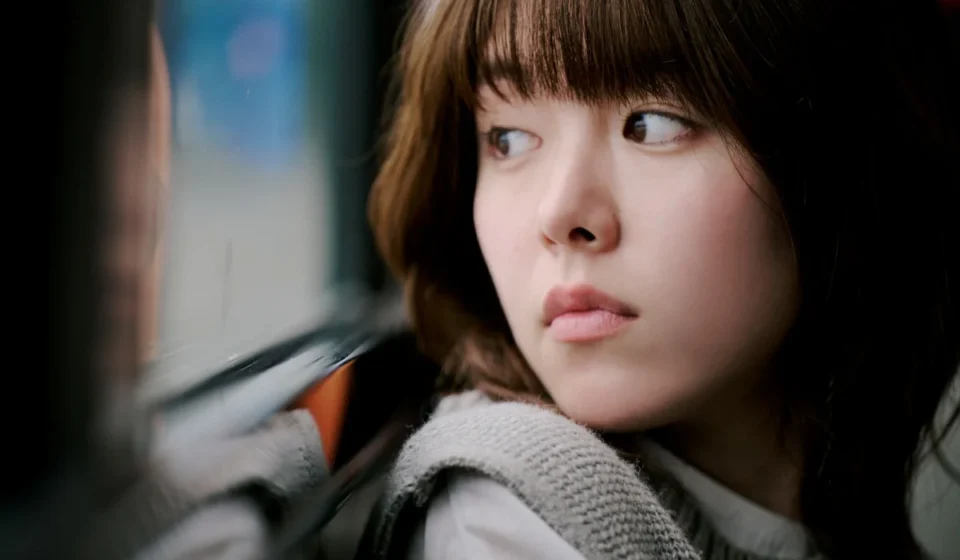
While many filmmakers who employ such lingering shots inevitably punctuate the tension with bursts of operatic violence, Yamamoto exhibits a remarkable degree of containment. The film’s inciting incident—an elderly woman’s collapse on a city bus—is captured in a wide, Kurosawa-esque long shot that emphasizes the helplessness of the onlookers rather than the spectacle of the emergency. This decision sets the tone for the remainder of the film: the struggle is not physical, but existential. The violence in The Intertwining is entirely psychological, vibrating beneath the surface of polite, everyday exchanges.

A Chronology of a Crisis
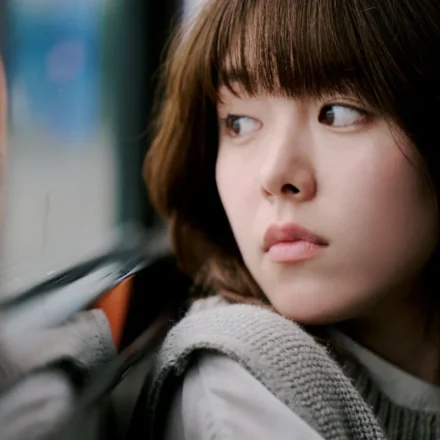
The narrative centers on the intersection of two lives: Ji-hyun (Jiyoung), a fifth-year Korean exchange student living in Japan, and Nakano (Karata Erika), a medical student. Their meeting, sparked by the medical emergency on the bus, acts as the catalyst for a slow-burn revelation of shared history.
- The Initial Connection: Following the bus incident, the two women realize they share a striking number of commonalities. Both are medical students, both have parents in the hospitality industry, and, as they eventually discover, both were born at the same clinic within days of each other.
- The DNA Revelation: While studying DNA sequencing in a medical lecture, Nakano decides to test her own genetic markers against those of her family. The results reveal the unthinkable: she is not the biological child of the parents who raised her.
- The Clinic’s Error: A records search leads to an envelope containing the truth. More than two decades ago, a fertility clinic committed a grave error. The embryos of two families—one Korean, one Japanese—were swapped.
- The Confrontation: The truth forces a collision between the two families. When the clinic head attempts to address the mistake, the film reaches a rare, explosive peak. Nakano’s father, confronted with the reality that he raised a Korean child, reacts with visceral, xenophobic rage. His immediate prioritization of “family honor” over his daughter’s existence serves as a chilling indictment of the lingering prejudices that continue to shape social dynamics in Japan.
Sociopolitical Implications: The Weight of Heritage
At its core, The Intertwining is a meditation on the construct of nationality versus the reality of blood. Ji-hyun, who has faced persistent discrimination for her ethnicity while living in Japan, finds herself in a position of forced displacement. While she maintains a deep, loving bond with her parents, the revelation that she is, by blood, Japanese—a nationality that has systemically marginalized her—creates an identity crisis that she is hesitant to embrace.
Conversely, Nakano’s journey is one of liberation. Finding that her parents are not her own—and that her father’s love was conditional on a genetic purity he mistakenly thought he possessed—allows her to detach from a family structure that never truly felt like home. The film masterfully avoids the tropes of a “family reunion” drama. Instead, it observes how political tensions—specifically the friction between Japan and Korea—act as invisible walls that dictate the happiness and self-worth of individuals.
Performances and Directorial Vision
The success of The Intertwining rests on the shoulders of its two leads. Jiyoung and Karata Erika deliver performances of immense, controlled intensity. Having both worked previously with Ryusuke Hamaguchi—another of Kurosawa’s most celebrated pupils—the actresses bring a level of naturalism that balances Yamamoto’s highly structured, almost rigid directorial style.

Rather than externalizing the trauma of their characters, the leads internalize it, echoing the unspoken boundaries that define their friendship. Even when the pair travels to South Korea to visit Ji-hyun’s family—a setting that is warmth and light compared to the cold, antiseptic atmosphere of the Tokyo scenes—the tension remains. The film does not offer a neat resolution or a cathartic embrace. Instead, it leaves the audience with the haunting question of whether we are defined by our biology, our upbringing, or the arbitrary circumstances of our birth.
Supporting Data: The Craft of the "Coincidence"
Critics have noted that the film relies heavily on coincidences—a staple of melodrama that Yamamoto navigates with the skill of a seasoned veteran. While a less disciplined director might have let the plot devolve into soap opera, Yamamoto utilizes these coincidences as "invisible reverberations of fate."
- Pacing: The film demands patience. By refusing to rush the revelation of the swap, Yamamoto forces the viewer to invest in the characters’ internal lives first.
- Cinematography: The visual language of the film utilizes clinical, sharp framing that emphasizes the coldness of the medical environment, contrasting sharply with the chaotic, lived-in warmth of the seaside restaurant in Korea.
- Thematic Depth: By casting the clinic error not as a simple mistake but as a seismic event that reveals the latent racism of the characters’ environment, Yamamoto elevates the genre beyond standard mystery.
Implications for Modern Japanese Cinema
The Intertwining represents a significant moment for the "new wave" of Japanese directors who studied under the Kurosawa-Hamaguchi lineage. It is a film that values the "unsaid." In a media landscape that increasingly demands immediate gratification and high-octane plot points, Yamamoto’s insistence on the quiet, the uncomfortable, and the deeply human is a breath of fresh, albeit chilling, air.
As the film continues its festival run, its search for U.S. distribution is expected to be competitive. It is a work that does not just ask to be watched; it asks to be interrogated. By the time the credits roll, the audience is left not with the relief of a solved mystery, but with a lingering sense of unease about the fragility of identity and the structures we build to protect it.

Conclusion: A Grade of Excellence
Yamamoto has delivered a film that is as intellectually rigorous as it is emotionally devastating. While it requires an active, patient viewer, the payoff is a profound exploration of the human condition.
Grade: B+
The Intertwining stands as a testament to the power of the long take and the enduring influence of Japan’s most cerebral filmmakers. It is a film that will likely resonate with international audiences as much as it has with its domestic critics, proving that while identity may be a social construct, the pain of losing one’s place in the world is universal.