Beyond the Lens: How Framestore Redefined Virtual Production for Project Hail Mary

In the landscape of modern blockbusters, the barrier between the physical set and the digital void is thinning. For the highly anticipated adaptation of Andy Weir’s Project Hail Mary, directed by Phil Lord and Christopher Miller, the production team faced a daunting challenge: how to render the vast, isolating, and technically precise environment of deep space without sacrificing the tactile, organic intuition of a master cinematographer.
The solution lay in a year-long collaboration between the production and Framestore Pre-production Services (FPS), led by Realtime Supervisor Michael Zaman and Virtual Production Supervisor Connor Ling. Together, they provided cinematographer Greig Fraser with a "digital playground"—a sophisticated virtual environment that allowed him to light, frame, and explore the film’s spacecraft months before a single physical wall was erected at Shepperton Studios.
The Genesis of the Virtual Set
The initial phase of the project was rooted in necessity. With the spacecraft’s interiors designed as separate, modular sets, the art department under Charlie Wood needed a way to verify the spatial logic of the ship.

"We weren’t just building a digital model; we were building a functional map," notes Michael Zaman. By creating a comprehensive virtual version of the ship, the filmmakers could traverse the entire vessel, assessing scale and the disorienting effects of the story’s shifting gravity. This VR exploration allowed Fraser and the art department to stress-test their designs in real-time. They could identify structural obstructions, test camera sightlines, and designate which panels needed to be removable for physical access long before construction began.
The primary breakthrough was not just the technology, but the application of it. VR often suffers from the "restless observer" problem, where the wide, jittery field of view inside a headset can cause motion sickness for observers watching on a monitor. Ling’s team solved this by anchoring a virtual cinematic camera to the headset, applying film-standard lens and filmback settings, and stabilizing the view. This allowed Fraser to move freely within the virtual space while his team watched a clear, "cinematographically correct" view on the monitor, fostering immediate, informed creative dialogue.
Chronology: From Concept to Simulcam
The collaboration unfolded in three distinct stages, each pushing the boundaries of traditional filmmaking.

Phase 1: Pre-production and Virtual Scouting
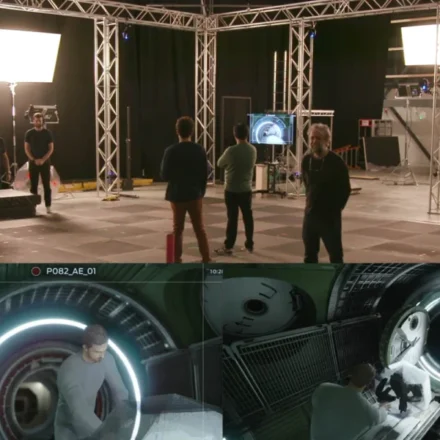
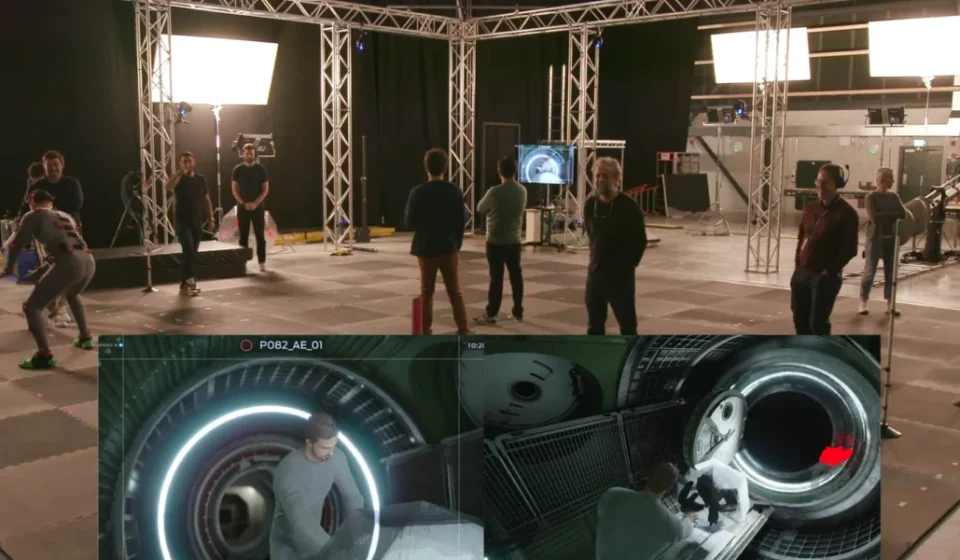
Over roughly 12 months, the team operated out of Shepperton Studios. The focus here was "information over direction." Utilizing motion-capture performer Josh Wichard, the team blocked out character movements, which were then viewed through virtual cameras. This stage allowed the team to refine the visual language of the film—using technical parameters like lumens, ISO, and aperture settings to ensure that the digital lighting felt grounded in the physics of the real world.
Phase 2: The Volume and Physical Integration
As the project moved onto the physical stages, the focus shifted to the Amazon MGM Studios Simulcam system. This allowed for live compositing, where the photographed set was seamlessly integrated with its digital surroundings. Using RedSpy camera tracking and LiDAR-based point-cloud alignment, the team could register virtual extensions to the physical scenery. This enabled Fraser to see exactly how the partial ship sets interacted with the vast, rendered void of space, allowing him to adjust engine lighting or light bounce in real-time.
Phase 3: Post-Visualization and Continuity
The partnership didn’t end when the cameras stopped rolling. The data captured during the virtual shoot—including camera animation, lens settings, and lighting—was handed over to the VFX department. This ensured that the "digital photography" captured by Fraser remained the definitive source of truth, preventing the "drift" that often occurs when a film moves from production to post-production.

Technical Data and the "Vertical" Challenge
A significant technical hurdle involved the film’s unique optics. The production utilized an ALEXA 65 paired with vertically oriented anamorphic lenses. This choice created the film’s distinctive IMAX-ready, tall framing, but it wreaked havoc on standard virtual camera software.
"Conventional virtual camera setups simply couldn’t handle the de-squeeze of those lenses," Zaman explains. The team had to build bespoke software to calibrate these specific, non-standard optics within Unreal Engine. This was not merely an aesthetic choice; it was a mathematical one. By recording the lens metadata—focus, aperture, and zoom—as they shifted in real-time, the team ensured that the digital environment matched the physical lens performance.
During the 65 days spent in the volume, the team captured 1,096 distinct virtual-camera shots. Each shot was not just an animation; it was a recorded performance by the cinematographer, preserved in a format that allowed VFX artists to "render what he shot" rather than re-inventing the framing from scratch.

Official Perspectives: The Philosophy of Control
The team at Framestore emphasizes that the technology was never meant to replace the human element. "Digital can do anything, but that doesn’t mean it should," says Zaman.
The goal was to provide Fraser with a "digital dial" to move the sun. To achieve this, the team built a bespoke physical mixing deck equipped with tactile dials and trackballs. Instead of clicking through menus, Fraser could adjust sunlight along specific axes or pull focus with physical controllers that mirrored his traditional kit. For the space sequences, they calculated astronomical relationships as a baseline, but the system was designed to allow Fraser to "art-direct" the physics, favoring the emotional impact of the light over strictly empirical accuracy.
Implications for the Future of Filmmaking
The success of Project Hail Mary in the virtual space carries significant implications for the industry. It demonstrates that virtual production is at its most effective when it is treated as an extension of the cinematographer’s traditional toolkit, rather than a separate department.

The workflow established by FPS—where data is captured, preserved, and handed off through the entire pipeline—effectively solves the "black box" problem of VFX, where the intentions of the cinematographer are often lost in translation. By treating the virtual environment with the same rigor as a physical soundstage, the team has provided a blueprint for how future films can maintain visual consistency while utilizing the limitless possibilities of digital environments.
Ultimately, the lesson of this collaboration is one of integration. By inviting the cinematographer into the digital design process early, and by giving them physical, tactile control over digital assets, the filmmakers behind Project Hail Mary have bridged the gap between the possible and the impossible. They haven’t just created a film; they’ve created a new way to see the stars.