A New Era for Qatari Cinema: Naomi Kawase to Lead Jury at the Revamped Doha Film Festival

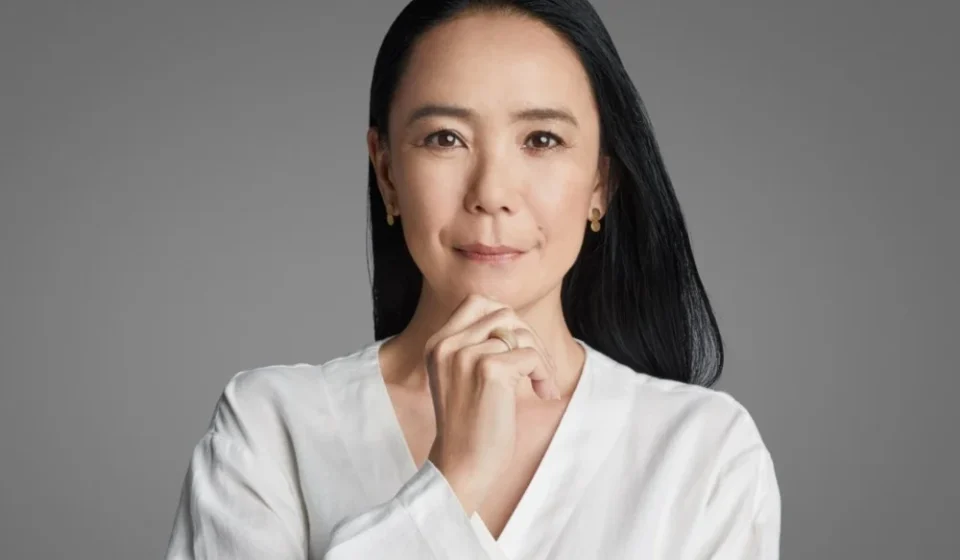
The cultural landscape of the Middle East is set to undergo a significant transformation this November as the Doha Film Festival (DFF) prepares to launch its second, more ambitious iteration. In a move that signals the festival’s growing stature on the international circuit, organizers have announced that acclaimed Japanese auteur Naomi Kawase will serve as the President of the Main Competition Jury. The festival, which will run from November 19 to 27 in the Qatari capital, represents a strategic evolution for the Doha Film Institute (DFI), positioning the event as a premier destination for global independent cinema.
The Jury: A Convergence of Global Visionaries
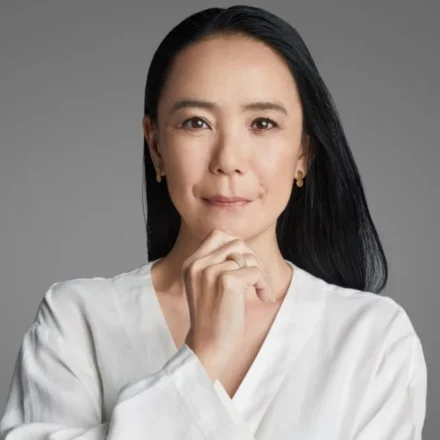
The selection of Naomi Kawase to lead the jury is a testament to the festival’s commitment to artistic rigor. Kawase, widely regarded as Japan’s most prominent female filmmaker, brings a deep, meditative sensibility to the chair. Her history with the DFI is well-established; she previously served as a mentor for the Institute’s prestigious Qumra program in 2016, where she guided a new generation of filmmakers in refining their craft.
Joining Kawase is a diverse panel of luminaries, each representing a different facet of contemporary global cinema:
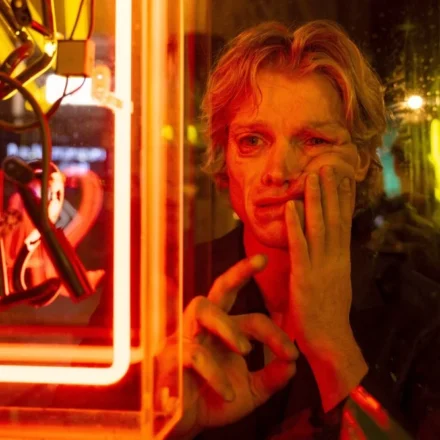
- Adam Bessa: The French-Tunisian actor, currently rising to international prominence following his standout performance in Ghost Trail.
- Dora Bouchoucha: A pioneering Tunisian producer whose work has been instrumental in placing North African cinema on the global map.
- Gianfranco Rosi: The Italian documentary master known for his unflinching, poetic gaze, most notably in the Golden Bear-winning Fire at Sea.
- Kamal Aljafari: A distinguished Palestinian filmmaker celebrated for his evocative, hybrid approaches to narrative and documentary, including his recent work With Hasan in Gaza.
This assembly of jurors is designed to balance technical mastery with social consciousness—a reflection of the festival’s core mandate to champion stories that challenge, provoke, and inspire.
A Legacy of Excellence: The Career of Naomi Kawase
To understand the weight of Kawase’s appointment, one must look at her storied trajectory. Based in her ancestral hometown of Nara, Japan, Kawase has cultivated a filmography defined by its intimacy and connection to the natural world.
Her career was launched into the global stratosphere in 1997 when she became the youngest filmmaker at the time to win the Caméra d’Or at the Cannes Film Festival for her debut feature, Moe no Suzaku. This was merely the beginning of a long and fruitful relationship with the Croisette. She returned to claim the Grand Prix in 2007 for Mogari no Mori (The Mourning Forest) and later earned significant acclaim for Hikari (Radiance) in 2017. Her reach extends beyond France; her 2000 film Hotaru earned the FIPRESCI award at the Locarno Film Festival, and her latest feature, Yakushima’s Illusion, premiered in competition at Locarno in 2025, proving that her artistic vision remains as vital and evolving as ever.
Beyond her directing prowess, Kawase is an experienced arbiter of film. Her service on the 2013 Cannes competition jury cemented her reputation as a thoughtful, articulate, and fair-minded judge of cinematic quality. Her presence in Doha is expected to bring a level of prestige that will attract further international attention to the Qatari film industry.
Evolution of the Festival: From Ajyal to Global Ambition
The current iteration of the Doha Film Festival marks a strategic pivot for the Doha Film Institute. For years, the DFI was synonymous with the Ajyal Film Festival, a highly successful event focused on youth and family-friendly cinema. While Ajyal served as a vital incubator for local talent and a cornerstone of community engagement, the Institute has now opted to expand its horizons.
By rebranding and restructuring, the DFF is shedding its "youth-only" skin to become a comprehensive international film festival. This transition is not a rejection of its roots, but an expansion of its mandate. The festival aims to bridge the gap between emerging voices in the MENA (Middle East and North Africa) region and the established giants of world cinema. This evolution is designed to create a year-round ecosystem where the development, funding, and exhibition of films are handled under one institutional roof.
The Opening Spotlight: The Station
The festival’s ambitious second edition will kick off with the premiere of Yemeni-Scottish filmmaker Sara Ishaq’s The Station. A timely and poignant drama, the film explores the visceral impact of the Yemeni civil war on the everyday lives of its citizens. The selection of The Station as the competition opener is a clear statement of intent: the Doha Film Festival is not interested in escapist cinema, but in narratives that engage with the geopolitical realities of the contemporary world.
By providing a platform for voices like Ishaq’s, the DFF reaffirms its role as a sanctuary for political, social, and cultural storytelling that might otherwise struggle to find a foothold in the global commercial marketplace.
Supporting Independent Voices: The Prizes
The DFF’s commitment to independent film is underscored by a generous prize structure that provides tangible support to filmmakers. The competition awards include:
- Best Narrative Feature: $75,000
- Best Documentary Feature: $50,000
- Best Artistic Achievement: $45,000
- Gender-Neutral Acting Award: $15,000
These grants serve as a vital lifeline for independent creators. By removing the financial barriers to production and distribution, the DFI aims to empower directors to remain uncompromising in their artistic vision. The gender-neutral acting award is particularly noteworthy, reflecting a modern, inclusive approach to performance evaluation that aligns with the festival’s progressive ethos.
Official Perspectives: The Philosophy of the DFI
Fatma Hassan Alremaihi, CEO of the Doha Film Institute, articulated the vision behind the current festival in a recent statement: "We are immensely proud to welcome friends of the Institute who share our vision and have dedicated their lives to nurturing independent cinema. Their collective experience and artistic integrity embody the spirit of DFI and DFF: championing original voices, creating space for bold ideas, and ensuring that powerful stories find their way to audiences around the world."
This mission statement highlights the "Qatari Model" of cultural development. Unlike festivals that focus purely on the red carpet, the DFF is built upon a foundation of education and mentorship. The synergy between the jury members and the local filmmaking community is a deliberate design, meant to foster a cross-pollination of ideas that can sustain the regional industry long after the festival lights dim.
Implications for the Regional Market
The expansion of the Doha Film Festival occurs at a critical juncture for the Gulf film industry. With Saudi Arabia’s rapid cinema development and the UAE’s long-established festival circuit, Qatar is carving out a niche as the "thinking person’s festival."
The involvement of major partners—including Katara, Media City Qatar’s Film Committee, and Visit Qatar—indicates that the festival is viewed as a vital pillar of the nation’s cultural infrastructure. By inviting international auteurs like Naomi Kawase, Qatar is not just hosting an event; it is participating in a global conversation. The festival provides a platform for MENA filmmakers to stand alongside international peers on equal footing, helping to dismantle long-standing perceptions of the region as a peripheral player in the global film industry.
Conclusion: A Future of Cinematic Discovery
As November 19 approaches, the industry’s eyes turn to Doha. The appointment of a jury as distinguished as the one led by Kawase suggests that the festival is no longer testing the waters—it is diving headfirst into the deep end of the international festival circuit.
Through its combination of high-stakes competition, generous financial support, and a commitment to difficult, necessary stories, the Doha Film Festival is poised to become a landmark event. For filmmakers, it offers a stage; for the audience, it offers a window; and for the Middle East, it offers a future where local narratives are told with the technical precision and creative audacity required to capture the world’s attention. As the curtain rises on this new era, the DFF stands ready to redefine what a film festival can achieve in an increasingly interconnected, yet fractured, world.