Beyond Borders: Fan Bingbing and Wayne Wang’s Provocative Reimagining of ‘Diary of a Mad Old Man’

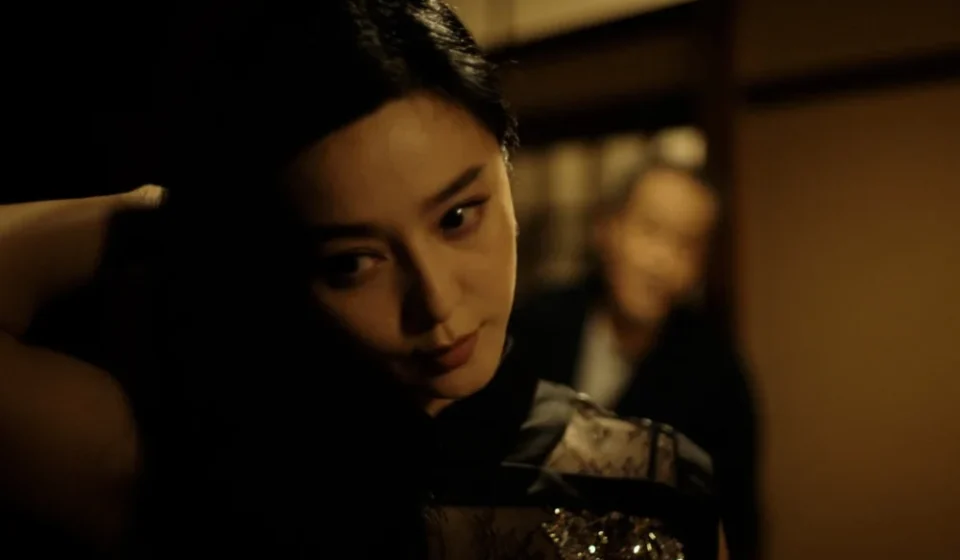
Chinese cinema icon Fan Bingbing has long been a fixture of global red carpets and large-scale blockbusters, but her latest venture sees her stepping into a more intimate, psychologically complex arena. In Wayne Wang’s Diary of a Mad Old Man, an adaptation of Tanizaki Jun’ichirō’s 1961 literary classic, Fan portrays Susu—a Chinese caregiver navigating the precarious, shifting landscape of a Japanese household.
The film, which is making its world premiere in the gala presentations section of the Toronto International Film Festival (TIFF) and serves as a major selection at the Busan International Film Festival, marks a pivotal shift in Fan’s career. By blending the provocative nature of the original source material with contemporary themes of displacement, power, and autonomy, the film has become one of the most anticipated international co-productions of the season.
The Core Dynamic: A Study in Power and Vulnerability
At the heart of the film is the unusual, often uncomfortable relationship between Susu and her employer, Utsugi, played by the acclaimed Japanese actor Lily Franky. Utsugi is an aging, stroke-paralyzed widower whose fixation on his daughter-in-law creates a tense, claustrophobic atmosphere.
For Fan, the role of Susu is a departure from the archetypes she has played in the past. She is neither a traditional victim nor a calculated predator. Instead, Fan portrays a woman who is acutely aware of her influence over a physically incapacitated man, yet entirely beholden to the family that employs her.
"I don’t think Susu is someone who is simply trying to control Utsugi," Fan explains. "She understands the influence she has over him, but in many ways, she is also vulnerable and dependent on the family around her."
For the actor, the film is less about a power struggle and more about a desperate, emotional exchange. Both characters are trapped—one by his physical limitations and obsession, the other by her status as an immigrant and a caregiver. Their bond is built on imagination and desire, existing in the grey spaces between tenderness and manipulation.
Chronology and Evolution of the Project
The road to Diary of a Mad Old Man follows a trajectory of high-profile international collaborations for Fan. Since 2023, the star has been methodically pivoting away from the domestic mega-productions that defined her early career, opting instead for auteur-driven, cross-cultural projects.
- 2023: Fan’s return to the international circuit began with the premiere of Han Shuai’s Green Night at the Berlin Film Festival, where she played a woman seeking liberation in Seoul.
- 2025: She cemented her status as an international character actor by starring as a shamanistic healer in Chong Keat Aun’s Malaysian period drama, Mother Bhumi. The film earned her critical acclaim, including the Best Leading Actress award at the Golden Horse Awards.
- 2026: The premiere of Diary of a Mad Old Man at TIFF and Busan marks the next phase of this transition.
Director Wayne Wang, a filmmaker whose own career has been defined by stories of the diaspora—from the seminal Chan Is Missing (1982) to the cultural phenomenon The Joy Luck Club (1993) and the Berlin Silver Bear-winning Smoke (1995)—brings a distinct perspective to this adaptation. By casting a Chinese actor in a role originally envisioned as Japanese, Wang elevates the themes of the original novel, adding a layer of linguistic and cultural friction that forces the audience to rethink the power dynamics at play.
Supporting Data: Crafting the Character
To prepare for the role, Fan worked closely with Wang to calibrate the tone of the relationship between Susu and Utsugi. They deliberately avoided "conventional" portrayals of intimacy, opting instead for a performance that shifts from scene to scene.
"There is tenderness, desire, dependency, and also discomfort," Fan notes. "All of these things can exist together."
The production’s decision to make Susu a Chinese woman living in a Japanese household was a deliberate choice that echoed Fan’s own experiences. As an actor who has moved between industries in China, the U.S., and now Japan, she found a direct line of empathy for her character.

"When you enter another culture, you are always observing," she says. "How people communicate, what they don’t say, the relationships—sometimes being an outsider makes you more sensitive to these things."
Wang, an expert at navigating the intersection of cultures, encouraged this sensitivity. He did not ask Fan to perform as a Japanese woman; rather, he encouraged her to utilize her own instincts as an observer, capturing the specific tension of being "inside" a culture while still being viewed from the outside.
Official Responses and Creative Vision
The film is currently generating significant buzz at TIFF. Critics have praised the film’s refusal to offer a clear moral compass. By avoiding a singular reading of Susu’s motivations, Fan and Wang have created a character that is intentionally slippery.
Regarding the morality of the character, Fan is adamant that she does not want to define Susu by 1960s standards. While the original novel was written in a different era, the film presents a woman with modern agency.
"She understands her body, her attractiveness, and the effect she has on Utsugi, and I think she has the right to have that awareness," Fan explains. "Financial dependence, family expectations, loneliness—these things still exist today. The contradiction is what interested me most: Susu has agency, but she also has significant limitations."
Fan is uninterested in providing the audience with a "clean" answer regarding whether Susu loves or uses her employer. "Human emotions are rarely completely pure or simple," she says. "I hope everyone can have their own interpretation of her."
Implications: The Future of Fan Bingbing’s Career
The success of Diary of a Mad Old Man suggests that Fan is entering a "third act" of her career. Having conquered the commercial box office, she is now seeking roles that challenge her, test her linguistic capabilities, and allow her to disappear into the skin of a character.
"For me, it is not about choosing international cinema over Chinese cinema," she clarifies. "I simply want to work with good filmmakers and good stories, wherever they come from."
The implications of this shift are profound for her future. By actively seeking out directors with unique, auteurist visions, she is building a portfolio that prioritizes artistic legacy over public image. As she looks toward her next projects, the scale of the production is secondary to the strength of the director’s voice.
"Cinema should be able to cross borders," she says. "If there is a filmmaker with a unique vision and a story that truly moves me, wherever they come from, I would love to work with them."
As Diary of a Mad Old Man prepares for its broader release, it stands as a testament to the power of cross-cultural storytelling. Alongside co-stars Saito Takumi and Kudoh Youki, Fan has helped create a piece of work that is as much about the silence between people as it is about the words spoken in the script—a nuanced, provocative addition to both Wang’s legendary filmography and Fan’s rapidly evolving career.