"Daayra" Review: A High-Stakes Thriller That Fails to Fully Deliver on Its Ambitious Premise

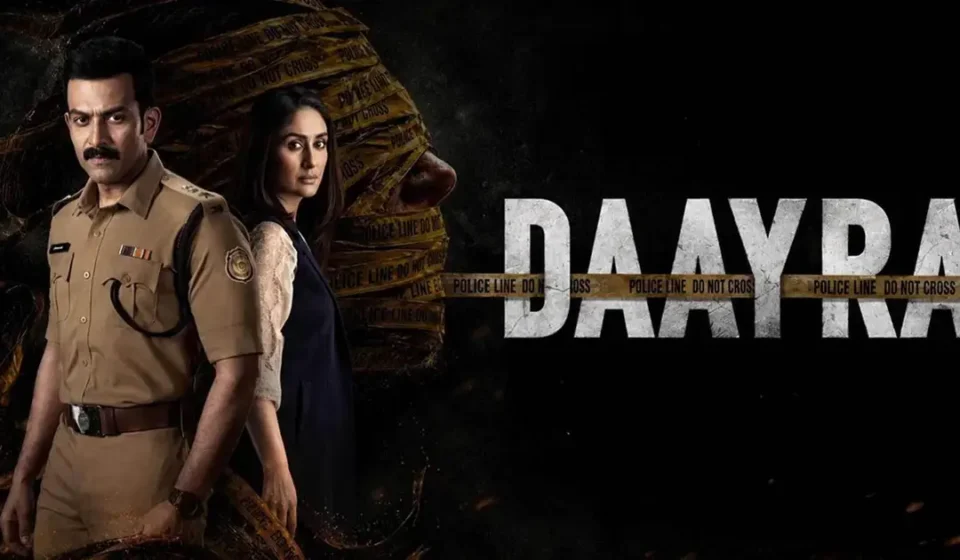
Mumbai, India – September 18, 2026 – The cinematic landscape eagerly anticipated the release of "Daayra," an investigative crime thriller helmed by the critically acclaimed director Meghna Gulzar, renowned for her nuanced portrayals of complex real-world events. Starring the formidable duo of Prithviraj Sukumaran and Kareena Kapoor Khan in pivotal roles, alongside a strong supporting cast including Jitendra Joshi and Kshitee Jog, the film promised a gripping narrative rooted in real incidents, exploring the contentious battle between swift vigilante justice and the meticulous wheels of the judicial system. However, early critical reception suggests that "Daayra," despite its potent premise and stellar ensemble, falls short of its ambitious potential, earning a middling 2.5/5 rating from 123telugu.com.
The film’s core explores a deeply sensitive and highly debated societal issue: the public’s demand for immediate retribution in heinous crimes, often clashing with the principles of human rights and due process. With Gulzar at the helm, known for her masterful handling of morally ambiguous stories in films like Talvar and Raazi, expectations were understandably sky-high for a penetrating and thought-provoking cinematic experience. Yet, the initial verdict points to a narrative that, while starting strong, ultimately wavers in its conviction, leaving audiences with a sense of unfulfilled promise.
Chronology of a Complex Narrative: From Concept to Screen
The journey of "Daayra" to the silver screen began with significant industry buzz, fueled by the announcement of its subject matter and the collaboration of such prominent talents. Meghna Gulzar, whose filmography is marked by a distinctive blend of investigative rigor and emotional depth, was seen as the ideal director to tackle a story inspired by real incidents of public outrage and controversial police actions. The decision to base the film on real events, particularly those reminiscent of highly publicized cases involving "encounter killings" – a term often used in India to describe extrajudicial killings by police – immediately positioned "Daayra" as a film of significant social relevance.
Early Development and Casting: The project was reportedly conceived with the intention of sparking a vital national dialogue. Producers Dhaval Jayantilal Gada recognized the timeliness and gravity of the subject, greenlighting a production that aimed for both dramatic impact and intellectual engagement. The casting of Prithviraj Sukumaran, known for his intense performances and nuanced characterizations (particularly in roles demanding moral ambiguity, as seen in films like Jana Gana Mana), was a strategic choice for the character of DCP Raman Kumar, the police officer at the center of the controversy. His ability to convey internal conflict and steely resolve made him a natural fit. Similarly, Kareena Kapoor Khan’s selection as DCP Ajooni Kohli, the Special Investigation Team (SIT) head, brought a gravitas and star power that promised a compelling ideological clash. Her portrayal was anticipated to embody the stringent adherence to legal protocols and human rights, providing a crucial counterpoint to Sukumaran’s character.
Production and Creative Team: The technical team assembled for "Daayra" also reflected a commitment to high production quality. Amit Trivedi, the acclaimed music director, was tasked with crafting a score that would underscore the film’s somber tone and escalating tension, with Ketan Sodha later contributing to the background score. Saurabh Goswami ISC, the cinematographer, was challenged to visually articulate the "gloomy atmosphere" essential to the film’s serious narrative. Charu Shree Roy was brought on as editor, tasked with weaving together the intricate plot and maintaining a gripping pace, particularly given the investigative nature of the thriller. Filming reportedly involved extensive research and consultation to ensure a degree of authenticity, especially concerning police procedures and legal frameworks, while also navigating the sensitivities inherent in adapting real-life tragedies.
Anticipation and Release: As the release date of September 18, 2026, approached, marketing efforts highlighted the film’s timely theme and the star power of its lead actors. The trailer, accessible via the provided link (https://youtu.be/khru4exyahg?si=CAQZq3e-LQe5aK0f), offered a glimpse into the high-octane drama and the moral quandaries awaiting audiences, further amplifying expectations for a definitive statement on justice in contemporary India. Upon its theatrical debut, the film was expected to not only entertain but also provoke thoughtful discussion, a hallmark of Meghna Gulzar’s previous successes.
Deconstructing the "Daayra" Narrative: Supporting Data and Thematic Analysis
The core of "Daayra" revolves around a horrific crime – a gruesome rape – and the subsequent public outcry demanding immediate justice. This premise immediately taps into a highly charged emotional and political landscape in India, where instances of sexual violence often ignite widespread public fury and calls for swift, often extra-legal, retribution.
The Incendiary Premise: Instant Justice vs. Due Process
The film’s narrative begins with the police, led by DCP Raman Kumar (Prithviraj Sukumaran), swiftly apprehending the four criminals responsible. However, the escalating public demand for "instant justice" places immense pressure on law enforcement. This scenario directly mirrors real-life incidents, most notably the 2019 Hyderabad Disha case, where four rape and murder suspects were killed in a police "encounter" during crime scene recreation, an event that polarized the nation. While many celebrated the police action as justice delivered, others raised serious concerns about human rights, the rule of law, and the potential for abuse of power.
"Daayra" directly addresses this moral tightrope. DCP Raman Kumar and his team stage a narrative where the criminals allegedly attacked them by snatching their weapons, leading to their "encounter." This fabrication is a desperate attempt to satisfy public sentiment while providing a semblance of legal justification. The immediate aftermath sees public jubilation, but also the inevitable scrutiny from human rights organizations. This leads to the formation of a Special Investigation Team (SIT), headed by DCP Ajooni Kohli (Kareena Kapoor Khan), tasked with investigating the encounter itself. The film thus sets up a compelling ideological battle: Raman’s pragmatic, "justice by any means necessary" approach versus Ajooni’s steadfast commitment to the letter of the law and human rights.
Prithviraj Sukumaran’s Compelling Portrayal of a Conflicted Cop
One of the film’s undeniable strengths lies in Prithviraj Sukumaran’s performance as DCP Raman Kumar. He delivers a "stunning act" as a cop burdened by the demands of his job, public pressure, and his own evolving interpretation of justice. Sukumaran excels at portraying characters with complex moral compasses, and Raman is no exception. His character is not a cartoonish villain but a man operating within a system under immense strain, forced to make decisions that blur ethical lines. The review highlights his "A-game," suggesting a performance that grounds the film’s serious tone and makes Raman’s motivations, however controversial, understandable. The scenes depicting the police chase and capture of the criminals are lauded for their realistic portrayal, adding to the credibility of Raman’s world.
Kareena Kapoor Khan: A Role Underserved?
In stark contrast to Sukumaran’s impactful presence, Kareena Kapoor Khan’s role as DCP Ajooni Kohli receives significant criticism for being "less screen time" and "less convincing." Ajooni is positioned as the antithesis to Raman, representing the legal and ethical framework that such encounters violate. Her character is meant to champion due process, investigate potential human rights abuses, and ensure accountability. However, the review points out that her character’s impact is diminished due to insufficient development and a lack of substantial screen time. For a film aiming to present a "moral battle," the underutilization of one of its central ideological figures is a critical misstep. Her role "should have been designed strongly enough to deliver the intended impact," implying that the screenplay failed to fully explore the nuanced arguments she was meant to represent, thereby weakening the film’s overall thematic depth.
The Director’s Lens: Meghna Gulzar’s Vision and Execution
Meghna Gulzar’s reputation precedes her. Films like Talvar (based on the Aarushi Talwar murder case) and Raazi (a spy thriller during the Indo-Pak War) showcased her ability to weave intricate narratives around real-life events, maintaining suspense while offering balanced perspectives. Chhapaak, another film dealing with a horrific crime (acid attack), also demonstrated her sensitivity and storytelling prowess. Given this impressive body of work, the critique that her direction in "Daayra" "isn’t at the expected level" and feels "mediocre" is particularly damning.
The primary directorial flaw highlighted is the failure to capitalize on the inherent conflict between Raman and Ajooni. The review states, "There aren’t enough combination scenes between Prithviraj and Kareena to fully immerse the audience in the moral battle that the film tries to present." This suggests a fundamental misjudgment in the screenplay and direction – establishing a potent ideological divide but then shying away from exploring it through compelling confrontations and dialogues. Instead of a powerful debate between two opposing philosophies, the film reportedly offers "just one small moment involving the leads, and that too at the end," resulting in an "extremely weak payoff." This indicates a reluctance or inability to delve deep into the thorny ethical questions the premise raises, ultimately making the film feel less profound than intended. The second half’s aimless trajectory and boring nature further underscore the directorial struggles to maintain narrative momentum and thematic focus.
Technical Craftsmanship: A Glimmer in the Gloom
Despite the narrative shortcomings, "Daayra" receives commendation for certain technical aspects. Saurabh Goswami ISC’s cinematography is praised for its ability to create and sustain a "gloomy atmosphere throughout," perfectly suiting the film’s serious and often grim subject matter. This visual language is crucial in immersing the audience in the dark reality of the story. The "neatly done" intercuts and "good production values" also contribute to the film’s polished exterior, indicating that significant effort was put into its visual and aesthetic quality. Ketan Sodha’s background score is deemed "fine," effectively supporting the mood and tension, even if it doesn’t stand out as exceptionally memorable. Amit Trivedi’s overarching musical direction would have set the tone, with Sodha enhancing specific scenes. These technical merits provide some artistic integrity to a film struggling with its core storytelling.
Echoes of the Past: A Comparison to ‘Jana Gana Mana’
The review makes a crucial comparison to Prithviraj Sukumaran’s own Malayalam film, Jana Gana Mana. This comparison is highly insightful because Jana Gana Mana also tackled themes of encounter killings, public outrage, and the complexities of justice, reportedly drawing inspiration from the very same Hyderabad Disha case. The review notes that Jana Gana Mana "has shown the other side of the coin with more insightful episodes and revelations," suggesting that it offered a more comprehensive and critical examination of the issue.
This comparison underscores "Daayra’s" missed opportunity. While Jana Gana Mana delved into the political manipulations, media trials, and systemic failures surrounding such events, providing a multi-layered critique, "Daayra" seemingly "holds back when it needs to deliver." It failed to explore "the subject matter fully, with more conversations around the contrasting opinions surrounding a staged encounter." This indicates that while "Daayra" had the potential to be a powerful social commentary, it shied away from the necessary depth and confrontation, ultimately delivering a more superficial treatment of a profoundly complex issue.
Responses from the Creative Sphere
While no official statements regarding the critical reception are available at this early stage, one can infer potential reflections from the creative team. Meghna Gulzar, known for her meticulous research and intent to spark dialogue, might have aimed for a more subtle exploration of the moral ambiguities, perhaps trusting the audience to ponder the unresolved questions. However, the critical response suggests that this subtlety may have translated into an underdeveloped narrative, particularly in the crucial second half.
Prithviraj Sukumaran, who has consistently chosen roles that challenge societal norms and explore complex human psychology, likely approached DCP Raman Kumar with a deep understanding of the character’s internal conflicts. His strong performance indicates a commitment to the role, even if the overall script didn’t fully support the character’s potential impact on the narrative. For Kareena Kapoor Khan, a seasoned actress, a role with less screen time and a diminished impact could be a source of artistic frustration, especially when positioned as a co-lead in such a high-stakes story. The producers, Dhaval Jayantilal Gada, undoubtedly had a vision for a commercially successful and critically acclaimed film that would resonate with the public. The mixed reviews, particularly regarding the film’s narrative execution, will undoubtedly prompt an internal review of the creative choices made during production.
The Broader Implications: A Missed Opportunity?
"Daayra’s" underwhelming reception carries several implications for Indian cinema and public discourse:
Impact on Public Discourse: Films based on real incidents, especially those touching upon sensitive legal and ethical issues, have the power to shape public opinion and contribute to national conversations. A film like "Daayra," with its potentially divisive subject matter, could have been a catalyst for widespread debate on the justice system, police accountability, and human rights. However, by "not making the most of its intriguing premise" and offering a "weak payoff," it risks being perceived as merely another crime thriller rather than a profound social commentary. This is a missed opportunity to engage audiences meaningfully on issues that deeply affect society.
Filmmaking Lessons: The critical reception of "Daayra" serves as a reminder that even with a strong director and stellar cast, a compelling screenplay that fully develops its themes and characters is paramount. The film highlights the challenge of balancing star power with narrative depth, and the need for a script that isn’t afraid to delve into the complexities of its subject matter, especially when dealing with moral battles. The comparison to Jana Gana Mana further emphasizes that a more audacious and comprehensive approach to such sensitive themes can yield stronger critical and intellectual returns.
Audience Expectations: Audiences for a Meghna Gulzar film, especially one starring Prithviraj and Kareena, come with high expectations for intellectual rigor and emotional resonance. When a film with such potential "runs out of steam" and "offers no significant moments" in its latter half, it can lead to audience disappointment and affect the future reception of similar projects.
Commercial Performance: A 2.5/5 rating, while not a complete disaster, suggests that the film might struggle to achieve significant box office success in the long run, particularly if word-of-mouth aligns with the critical assessment of a promising but ultimately underwhelming experience.
Conclusion
"Daayra" arrived with the weight of expectation, promising a gripping investigative thriller that would courageously explore the thorny issues surrounding justice, law enforcement, and human rights in contemporary India. With Meghna Gulzar at the helm and a powerful cast led by Prithithviraj Sukumaran and Kareena Kapoor Khan, the stage was set for a cinematic triumph.
However, the film, according to 123telugu.com, emerges as an "underwhelming film" that fails to fully capitalize on its potent premise. While the first half meticulously builds a "gloomy atmosphere" and offers "gripping moments," particularly through Prithviraj Sukumaran’s commanding performance, the narrative momentum falters significantly in the second half. The film’s most critical failing lies in its inability to adequately explore the ideological clash between its lead characters, leaving the anticipated "powerful face-off" and "strong climax" conspicuously absent. This lack of deep engagement with its central moral dilemma ultimately prevents "Daayra" from transcending the genre and making a lasting impact, positioning it as a cautionary tale of ambition unfulfilled.
123telugu.com Rating: 2.5/5