Shadow and Sensuality: How Neil Jordan Defied Hollywood to Make ‘Interview with the Vampire’

In the late 1980s, Irish filmmaker Neil Jordan stood at a crossroads. Having established his reputation as a visionary auteur with atmospheric, independent-leaning projects like Mona Lisa and The Company of Wolves, Jordan took a leap into the studio system with the star-studded We’re No Angels. The experience was, by his own account, an exercise in frustration. Burdened by excessive studio interference, Jordan questioned whether he was truly built for the machinery of Hollywood. Yet, fate—and the persuasive power of legendary producer David Geffen—had other plans.
Following the breakout success of The Crying Game, which cemented Jordan as a formidable creative force, he was approached with an offer that seemed both daunting and enticing: an adaptation of Anne Rice’s gothic masterpiece, Interview with the Vampire. What followed was a rare, lightning-in-a-bottle moment in cinematic history—a high-budget, major-studio production that maintained the dark, idiosyncratic soul of a true independent film.
The Architecture of Creative Freedom
When Geffen presented the project to Jordan, the director was already captivated by the source material. He saw in Rice’s novel a fertile ground for the kind of fantasy-driven, gothic storytelling that had defined his earlier work. However, Jordan was resolute: he would only helm the picture if he could replicate the artistic autonomy he enjoyed on his smaller, non-studio projects.
"I said, ‘Look, I’ll make this movie if you set it up so I can make it the way I make independent movies,’" Jordan recalled in an interview with IndieWire.
The leverage required to achieve this was substantial. Fortunately, Geffen held a unique position within Warner Bros., possessing the influence to shield Jordan from the typical meddling that often dilutes big-budget tentpoles. By granting Jordan total creative agency, the studio allowed for the exploration of the novel’s most complex, often taboo, themes—specifically the dysfunctional, homoerotic, and eternal bond between the vampires Louis and Lestat.

Crafting the Tomb: A Chronology of Vision
The production of Interview with the Vampire was marked by a commitment to atmosphere that pushed the boundaries of traditional 1990s filmmaking. Jordan was determined to lean into the inherent "otherness" of the vampire experience, drawing on his love for the horror genre as a tool to construct entirely immersive, imaginary worlds.
The Midnight Mandate
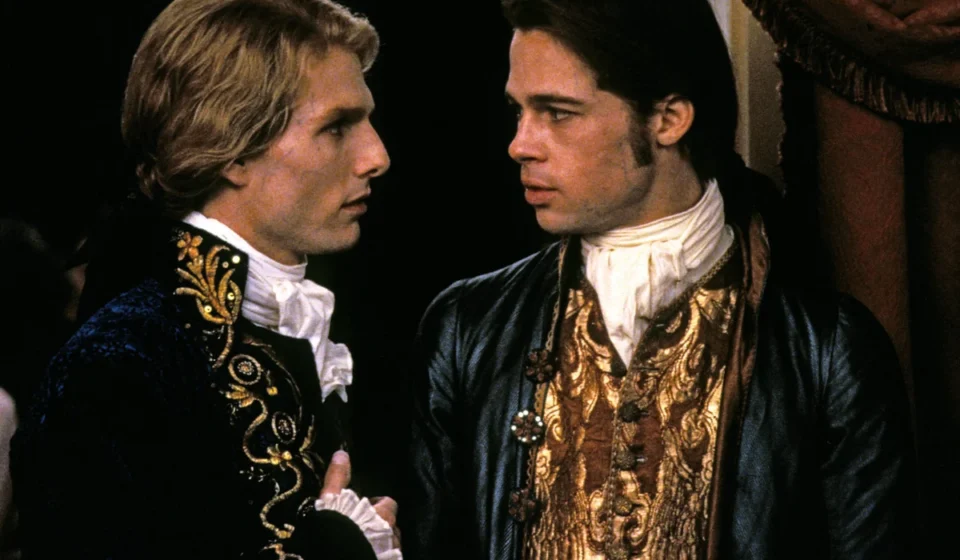
One of the most defining decisions of the production was the choice to shoot almost exclusively at night. For Jordan, this was not merely a scheduling necessity; it was a stylistic philosophy. "We just wanted to turn the whole world into a tomb," Jordan explained. By controlling the light in every frame, he could impose a specific, suffocating beauty on the film’s New Orleans, London, and Paris settings.
For cinematographer Philippe Rousselot and production designer Dante Ferretti, the directive was clear: every shadow and every flicker of light had to serve the narrative of immortal isolation. This nocturnal production schedule also served a tactical purpose, providing a natural, albeit involuntary, barrier against the swarms of paparazzi drawn to the set by the intense public interest—and controversy—surrounding the film’s casting.
The Casting Crucible
Few casting decisions have sparked as much public debate as the selection of Tom Cruise as the flamboyant, centuries-old vampire Lestat. When news of the casting broke, it was met with immediate backlash from the novel’s die-hard fanbase, including a vocal initial protest from author Anne Rice herself.
Jordan, however, remained unfazed. He saw in Cruise an "eerie sense of control" that he believed was essential to capturing the character’s predatory magnetism. To protect his cast from the external noise, Jordan fostered a "bubble" on set, allowing the actors to focus on the nuance of their performances rather than the headlines.

Equally challenging was the casting of Kirsten Dunst as Claudia, the child vampire trapped in a state of eternal youth. It was a role that demanded profound emotional maturity from a young performer. Jordan recalls being struck by her innate intelligence and gravitas, noting, "It was immediately obvious to me with Kirsten that she was an actress… I didn’t have the same qualms that you normally have casting a child." His intuition proved correct; the film launched a legendary career that would later see Dunst earn acclaim in works like Lars von Trier’s Melancholia.
Supporting Data: The Anatomy of a Gothic Epic
The success of Interview with the Vampire was not just a result of its aesthetic, but of its daring narrative structure. The film moved through roughly 200 years of history, presenting the vampires not as typical cinematic monsters, but as protagonists defined by their existential ennui and moral ambiguity.
- The Power Dynamic: The film’s core—a man (Lestat) turning a young girl (Claudia) into a vampire specifically to prevent his partner (Louis) from leaving him—was a bold narrative choice for a studio project.
- The Ensemble’s Fearlessness: The chemistry between Tom Cruise, Brad Pitt, and Antonio Banderas was anchored in their total lack of trepidation. As Jordan noted, these were actors comfortable with the "object of desire" archetype. Banderas brought experience from his collaborations with Almodóvar, while Pitt and Cruise leaned into the inherent sensuality of the material.
- The Studio Paradox: Despite the "eccentric" nature of the story, the film successfully bridged the gap between niche gothic literature and blockbuster cinema.
The Implications of an Auteur-Driven Blockbuster
Reflecting on the film decades later, it becomes clear that Interview with the Vampire represents a vanishing breed of studio filmmaking. In today’s landscape, where franchise reliability often dictates creative choices, the idea of a major studio bankrolling a deeply personal, character-driven, and overtly queer-coded period piece is rare.
Jordan’s success lay in his ability to reconcile the conflicting demands of high-budget production and artistic intimacy. He managed to satisfy the studio’s need for a high-profile, star-studded event film while delivering a meditation on grief, immortality, and the toxic nature of eternal companionship.
The lasting impact of the film is found in its tone. It remains a benchmark for the genre, proving that when a director is given the keys to the kingdom—and the freedom to "turn the world into a tomb"—the result is not merely entertainment, but a haunting, permanent fixture in the cinematic canon.

Looking Forward: A Legacy Preserved
The recent release of Interview with the Vampire in a new 4K UHD edition by Warner Home Video offers a chance for a new generation to appreciate the precision of Jordan’s vision. Looking back at his work, Jordan remains humble about the challenges he faced. He acknowledges that the film was, by all conventional metrics, a risky proposition for the studio.
"It’s about a kind of gay relationship where one man creates a child vampire so another man won’t leave him," Jordan mused. "That’s eccentric shit for a studio, isn’t it?"
Perhaps it was. But it was that very eccentricity that allowed the film to transcend its genre and remain, thirty years later, one of the most compelling and sensual explorations of the vampire mythos ever committed to celluloid. Neil Jordan didn’t just adapt a book; he created an atmospheric, timeless world that continues to demand our attention, reminding us of a time when the biggest studios in the world were willing to bet on a vision that was, above all else, uncompromisingly, beautifully strange.