


Robert Pattinson’s career trajectory has long been the subject of fascination for cinephiles and industry analysts alike. From the shimmering, teen-centric stratosphere of Twilight to the gritty, claustrophobic intensity of the Safdie Brothers’ Good Time, Pattinson has meticulously dismantled his heartthrob image to rebuild himself as a chameleon of high-concept cinema. Yet, even by his eclectic standards, his latest transformation—stepping into the loafers of To Catch a Predator host Chris Hansen for A24’s Primetime—is a jarring, high-wire act.
Directed by Lance Oppenheim, known for the idiosyncratic documentary sensibilities of Some Kind of Heaven and Spermworld, Primetime attempts to bridge the gap between true-crime exploitation and narrative prestige. While the film is currently boasting an impressive 94% approval rating on Rotten Tomatoes, the critical consensus reveals a profound, uncomfortable schism: the movie is a masterclass in acting, but perhaps a failure in moral inquiry.
The Genesis of a Cultural Reckoning
To understand the weight of Primetime, one must first acknowledge the shadow it lives in. To Catch a Predator (2004–2007) was not merely a television show; it was a cultural phenomenon that fundamentally altered how American society viewed internet safety, vigilante justice, and the intersection of journalism and performance.
The production of Primetime marks a significant departure for director Lance Oppenheim. Having spent his career documenting the fringes of human behavior through a factual lens, Oppenheim now pivots to the scripted dramatization of the very apparatus that brought the "predator" sting operation into every suburban living room. The film tracks the rise and eventual tragic collapse of the production, serving as a dark, stylized meditation on the cost of media ambition.
A Performance of Uncanny Precision
If the film’s narrative thesis is debated, its central performance is not. Critics have been nearly unanimous in their praise for Robert Pattinson, who has been described as delivering a "darkly mesmerising" turn that rivals his most transformative work.

The "Christian Bale" Comparison
Industry analysts at Deadline have gone as far as to suggest that Pattinson is entering his "Christian Bale period"—a stage of a career defined by extreme physical and psychological immersion. Pattinson does not simply play Chris Hansen; he inhabits the cadence, the smug self-righteousness, and the hollow authority that characterized the real-life host.
Bilge Ebiri, writing for Vulture, highlighted the shock value of the performance, noting that he was wholly unprepared for the sheer range on display. Similarly, Hannah Strong of Little White Lies observed that Pattinson wears the persona of Chris Hansen "like a suit," suggesting that the actor has achieved a level of technical precision that allows him to disappear entirely into the role.
The Missing Moral Compass: A Critical Divide
Despite the accolades showered upon the lead, Primetime faces a significant hurdle: its refusal to engage with the ethical quagmire it presents. The film arrives only a year after the 2025 documentary Predators, directed by David Osit, which offered a searing, clinical analysis of the real-world destruction caused by sting operations.
In Predators, ethnographer Mark de Rond famously remarked that the moment of confrontation on these shows is the moment where "someone else’s life ends." While Predators interrogated the viewers’ complicity in consuming this suffering, Primetime seems content to hover in the aesthetic of the era.
The "Overwrought" Critique
Peter Bradshaw of The Guardian offered a more biting assessment, labeling the film a "strangely overwrought and heavy-footed drama-thriller" that ultimately lacks a coherent stance on media morality. This sentiment is echoed by David Rooney of The Hollywood Reporter, who argued that the film lacks the "intellectual or psychological curiosity" required to elevate it above a standard biopic.

The most damning critique comes from Variety’s Jessica Kiang, who suggests that the film "never swings its ravenous camera back on us." Kiang posits that Oppenheim might be avoiding a deeper critique because the audience, and perhaps the industry at large, is not yet prepared to face the implications of the "Predator" era—a period where public shaming was rebranded as public service.
Supporting Data: Why the 94% Score Is Deceptive
In the current era of film criticism, Rotten Tomatoes scores often act as a binary "fresh/rotten" metric that masks nuanced frustration. A 94% score suggests an overwhelming masterpiece, but a deep dive into the text of these reviews paints a different picture.
Many of the "Fresh" reviews are essentially "Pattinson-positive" rather than "Film-positive." Critics are separating the performance from the product. When a film is carried so heavily by one actor that even the most disappointed critics feel compelled to recommend it based solely on the lead, the resulting high score creates a "halo effect." Audiences heading to the theaters on September 25, 2026, should be aware that they are paying for a character study, not necessarily a cohesive or insightful critique of the media cycle that spawned the Chris Hansen archetype.
Implications: The Future of "Prestige" True Crime
The success of Primetime signals a shift in how Hollywood approaches the true-crime genre. There is a hunger for "prestige" adaptations of real-life media scandals, but Primetime proves that high-budget, A-list talent is not a substitute for thematic clarity.
If Primetime is to be viewed as the definitive word on the To Catch a Predator phenomenon, it falls short. However, if it is viewed as a companion piece to more analytical works like Predators, it functions as a stylistic exploration of the psychological toll taken on those who become the face of national moral panics.
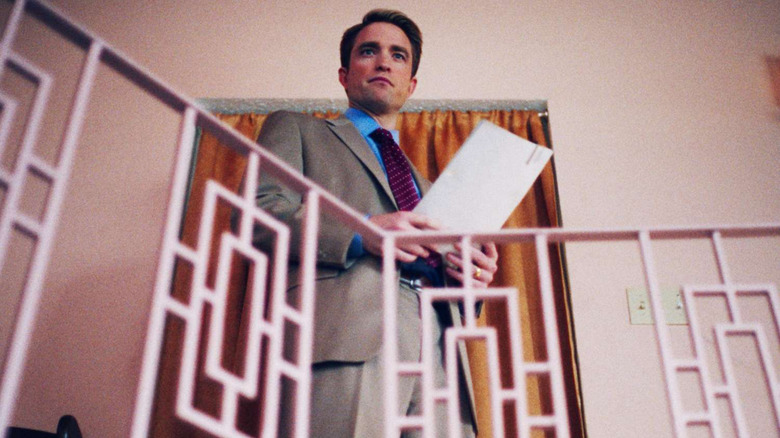
Lance Oppenheim has proven he can command a narrative set with the same finesse he applied to his documentary subjects. His next steps will be highly anticipated, particularly to see if he continues to explore the intersection of documentary ethics and narrative fiction. For now, he has provided a vessel for Robert Pattinson to remind the world why he remains the most vital actor of his generation.
Final Verdict: Is It Worth Watching?
For fans of Robert Pattinson, Primetime is an absolute necessity. It is a masterclass in mimicry and emotional suppression. For those seeking a deeper, more intellectually rigorous examination of the ethical decay of the mid-2000s, Primetime may leave you wanting.
The film stands as a testament to the idea that a movie can be technically brilliant and conceptually hollow simultaneously. It is a "stylish, Shakespearean meditation" on ambition, as noted by Deadline, but it is a meditation that perhaps avoids the most important question: Why did we enjoy watching the destruction of those lives?
As we approach the theatrical release on September 25, the conversation surrounding the film will likely center on this very question. Whether the film provides an answer or simply asks us to look away is for the audience to decide. Ultimately, Primetime is a mirror—and as some critics have pointed out, we may not be ready for what it reflects back.