
At the heart of the Venice Film Festival this week lies a cinematic project that is already shaping up to be one of the most controversial portraits of the digital age. Musk, the latest documentary from Academy Award-winning filmmaker Alex Gibney, seeks to peel back the layers of myth surrounding the world’s wealthiest individual. Among the film’s most explosive revelations is the testimony of Ashley St. Clair, who alleges she was offered a staggering $40 million non-disclosure agreement (NDA) to remain silent following the birth of her child—who, according to the film, is Musk’s 13th.
By rejecting the payout, St. Clair has positioned herself as a central figure in a film that characterizes the tech mogul not as a "visionary genius," but as a 21st-century iteration of a confidence man. The documentary, which stretches to nearly four hours, arrives at a moment when Musk’s influence over global politics, technology, and discourse has reached an unprecedented—and some argue, dangerous—apex.
The Cost of Transparency: Ashley St. Clair’s Choice
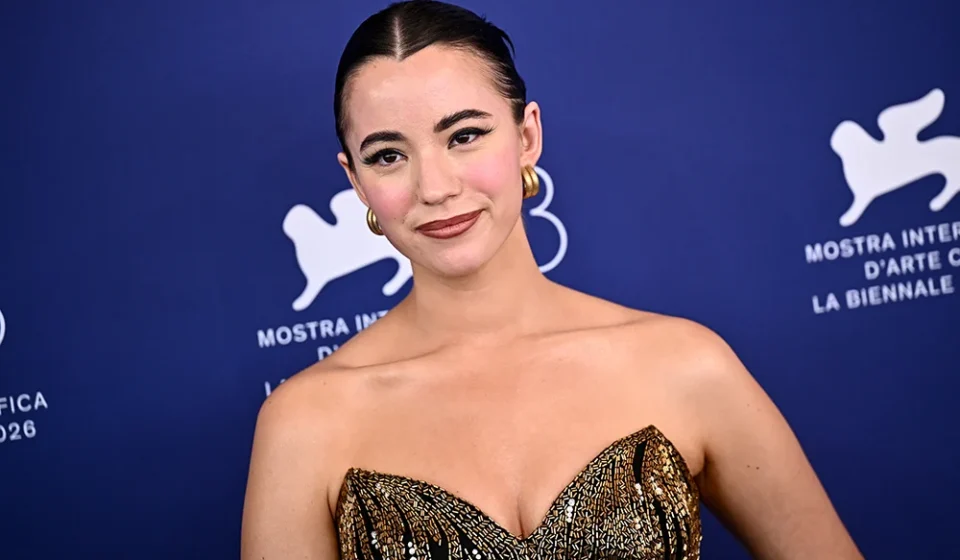
For Ashley St. Clair, the decision to participate in Musk was rooted in a desire to move beyond the material security that has defined her recent years. During a press conference at the Venice Film Festival, St. Clair addressed the moral calculus involved in rejecting an eight-figure sum.
"When you are offered something like that, it creates a debate about what your speech means and how valuable that is," St. Clair told the audience. "Why do they want to offer me this amount of money to not speak?"
St. Clair, who rose to prominence as a right-wing commentator known for her staunch advocacy of conservative and anti-trans policies, described her participation in the film as an act of atonement. Now 28, she reflects on her early career with a sense of regret, characterizing her past ideological positions as a byproduct of youth and toxic circles of influence.
"I got involved with Republican politics when I was 18 after I met Charlie Kirk, and there was an air of ignorance," she explained. "But that ignorance does not excuse any role in that. I hope the risk that I’m taking now in speaking out and trying to fight back at least helps a little bit."
For St. Clair, the documentary is a way to set an example for her children: that personal integrity is not for sale, and that comfort should never be the primary motivator for one’s public voice.
A Chronology of Influence: From PayPal to the Presidency
To understand the scope of Gibney’s inquiry, one must look at the meteoric rise of Elon Musk, a trajectory that has shifted from the fringes of Silicon Valley to the center of global power.
- The Early Years (2000s): Musk first gained notoriety as a co-founder of PayPal, followed by his visionary, if volatile, early days at SpaceX and Tesla. During this period, he was widely regarded as a misunderstood genius tasked with saving humanity from extinction.
- The Expansion Era (2010s): As Tesla’s market cap soared, Musk’s public persona began to shift. His ventures—including the Boring Company and Neuralink—solidified his status as a titan of industry.
- The Turning Point (2020–2022): The pandemic and his acquisition of Twitter (now X) marked a definitive shift. Musk’s politics drifted sharply to the right, and he became an increasingly central figure in the culture wars.
- The Present (2023–2024): As documented by Gibney, Musk is no longer just a CEO; he is a geopolitical actor. His involvement in global conflicts, his partnership with political movements, and the establishment of xAI have placed him in a unique position of unchecked power.
Gibney’s documentary was originally intended to be a shorter, more focused look at the tech titan. However, as Musk became increasingly entwined with the political machinery of the United States—most notably the orbit of Donald Trump—the scope of the film expanded.
The Architecture of Illusion: Gibney’s Investigative Lens
Alex Gibney is no stranger to dismantling powerful institutions. His resume includes Enron: The Smartest Guys in the Room, which exposed corporate rot; Going Clear, which scrutinized the predatory nature of Scientology; and Agents of Chaos, which dissected Russian interference in American democracy.
In Musk, Gibney applies his investigative rigor to a man who, he argues, has built a legacy on "illusion and misdirection." According to the film’s synopsis, the documentary frames Musk as a master of the "confidence game," noting that even his most celebrated technological breakthroughs are, at their core, rife with theatricality.
"The thing that struck me most, particularly early on, was a tremendous sense of fear of talking—both among people who were his critics, colleagues, and friends," Gibney noted. "I talked to many, many, many people. Many declined to speak."
This culture of fear, according to Gibney, is the hallmark of Musk’s management style. The filmmaker argues that Musk’s inability to grasp the humanity of those around him is the root of his volatility. "I would say he has a very difficult time with empathy, especially cognitive empathy, which is putting himself in the shoes of others," Gibney observed. "He seems incapable of doing that."
St. Clair echoed this sentiment, adding that Musk’s behavior is not a character flaw, but a "deliberate rejection of empathy."
Data and Disparity: The Musk Empire
The statistics behind the man are as staggering as the controversy surrounding him. With an estimated net worth hovering near $900 billion, Musk’s wealth exceeds the GDP of many mid-sized nations. His ventures—SpaceX, Tesla, xAI, and X—collectively represent the most significant concentration of private power in human history.
However, the documentary raises uncomfortable questions about the cost of this growth. Throughout the film, Gibney highlights:
- The Lack of Oversight: Despite his role in national infrastructure, Musk operates with minimal regulatory oversight.
- Workplace Culture: The film touches on the reported high-pressure environments at his companies, where dissent is often met with termination or legal threats.
- The Echo Chamber: Through his ownership of X, Musk has created a digital town square that he can influence in real-time, effectively creating his own reality.
Official Responses and The "Hit Piece" Narrative
Elon Musk has made no secret of his disdain for the project. Long before the film’s premiere, he labeled it a "hit piece," a term he frequently uses to deflect criticism from mainstream media.
Gibney confirms that he reached out to Musk during the production process, providing the subject with an opportunity to participate and offer his own narrative. Musk declined. The filmmaker suggests that this refusal is consistent with Musk’s broader approach to public relations: he prefers to control the narrative entirely, whether through his own social media platform or by attempting to silence those who might offer a dissenting view.
Implications for the Future
The release of Musk is likely to spark a broader conversation about the accountability of billionaires in the 21st century. As society becomes increasingly dependent on private technology for communication, space travel, and artificial intelligence, the question of whether one person should have such absolute control becomes critical.
Gibney’s documentary does not merely criticize a man; it critiques a system that allows such a person to thrive. By highlighting the stories of individuals like St. Clair—who risked their own comfort to expose the inner workings of Musk’s world—the film poses a challenge to the public: are we content to live in a reality curated by a man who seemingly lacks the capacity for empathy?
As the film makes its rounds at film festivals and eventually reaches a wider audience, its impact will be measured not just by the controversy it stirs, but by whether it forces a reckoning with the power structures that have allowed Elon Musk to become, in the words of his critics, a "very dangerous" man. For now, the takeaway is clear: the price of silence is high, but the price of speaking out may be the only thing that preserves our collective reality.