The Trial of the Century: Deconstructing the Lasting Legacy of the O.J. Simpson Case

Nearly 31 years have passed since the "Trial of the Century" concluded with a verdict that fractured the American public and redefined the relationship between celebrity, media, and the justice system. When the jury acquitted O.J. Simpson on October 3, 1995, for the brutal murders of Nicole Brown Simpson and Ronald Goldman, the legal proceedings technically ended—but the cultural obsession, the questions of systemic failure, and the trauma of those involved have never truly faded.
From the infamous low-speed Ford Bronco chase that captivated 95 million viewers to the eventual civil liability that followed, the saga of The People of the State of California v. Orenthal James Simpson remains a haunting case study in how fame and legal strategy can alter the perception of truth.
The Foundation of a Tragedy: A Chronology of Violence
The narrative that culminated in the 1995 acquittal began long before the night of June 12, 1994. The relationship between O.J. Simpson and Nicole Brown was marked by a documented history of domestic discord. On New Year’s Day 1989, police responded to a domestic violence call at the couple’s Brentwood estate. Nicole’s plea to responding officers—"You’ve been here eight times. And you never do anything about him"—underscored a failure in protective intervention.
Following a no-contest plea to misdemeanor domestic violence, Simpson was sentenced to probation and counseling. The couple eventually divorced in 1992. However, the harassment continued. According to diary entries later presented in court, Nicole reported stalking and threats, culminating in a final, frantic call to a battered women’s shelter just five days before her death.
On the night of June 12, 1994, the discovery of the bodies at 875 S. Bundy Drive set the stage for a media spectacle. The following morning, the world watched as a white Ford Bronco led police on a 50-mile freeway chase, transforming a murder investigation into a national reality show.
The Legal Theater: A "Dream Team" and the Prosecution’s Struggle
The trial itself was a collision of high-stakes litigation and unprecedented public scrutiny. The prosecution, led by Marcia Clark and Christopher Darden, faced a mountain of physical evidence: blood samples, the infamous Bruno Magli shoeprints, and the discarded leather gloves.
Yet, the defense—a high-powered collective known as the "Dream Team"—executed a brilliant, if controversial, strategy. By shifting the focus toward the LAPD’s history of racism and corruption, they successfully framed the trial as a referendum on systemic injustice. The discovery of Detective Mark Fuhrman’s taped use of racial slurs became the turning point. As defense attorney F. Lee Bailey later noted, the prosecution’s reliance on Fuhrman provided the defense with the perfect wedge to introduce reasonable doubt regarding the entire evidence-gathering process.
The "Glove Debacle"
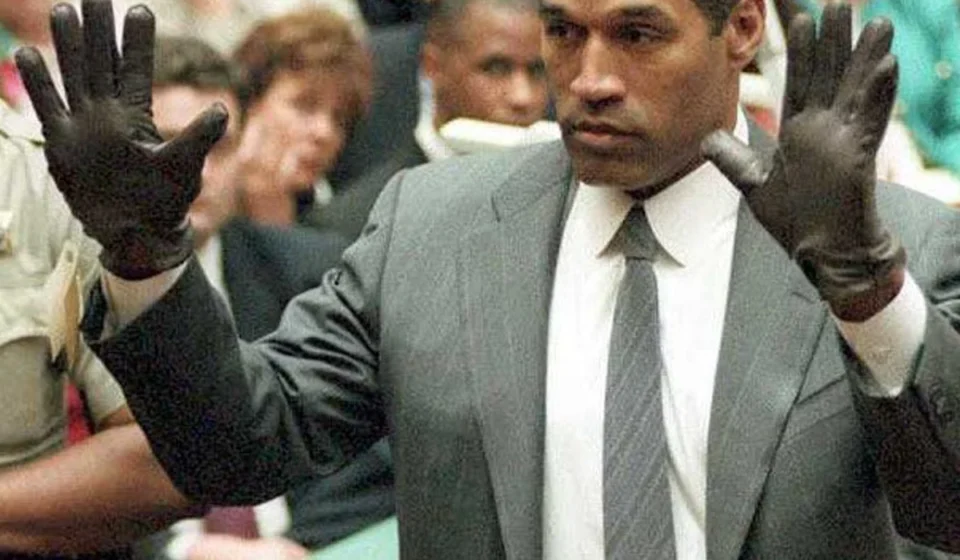
Perhaps no moment in American courtroom history is as etched in the collective memory as the glove demonstration. At the insistence of Christopher Darden, Simpson attempted to put on the blood-stained gloves found at the crime scene and his estate. They did not fit. Johnnie Cochran’s subsequent rhyming refrain, "If it doesn’t fit, you must acquit," became the rallying cry of the defense. Whether the gloves had shrunk due to moisture or were simply chosen to fail, the visual impact on the jury was absolute.
The Media Circus and Cultural Shift
The O.J. Simpson trial was the first major event where cable news and tabloid journalism intersected with a live, televised criminal proceeding. Judge Lance Ito, cognizant of the cameras, allowed the proceedings to become "must-see TV."
This coverage had profound, and often dark, consequences. Journalists, late-night comedians, and even the judge himself participated in a cycle of sensationalism that minimized the gruesome nature of the double homicide. The trial preempted major sporting events and dominated the airwaves, creating a "who’s who" of secondary characters—Kato Kaelin, the "houseguest" whose testimony became fodder for late-night talk shows; Faye Resnick, whose salacious books hit shelves before the trial even ended; and the various lawyers who became household names.
The media’s influence even reached the magazine covers. TIME magazine famously darkened Simpson’s mug shot, a decision that sparked intense backlash regarding racial stereotyping. It was a clear indicator that the trial was never just about a crime; it was about the racial, class, and social tensions of 1990s America.
Implications: The Lingering Questions
The repercussions of the acquittal remain multifaceted. While Simpson walked free, the case was far from over. A 1997 civil court judgment found Simpson liable for the wrongful deaths of Brown and Goldman, ordering him to pay $33.5 million—a debt that remained largely unpaid until his death in 2024 at age 76.
The Erosion of Public Trust
The trial highlighted a deep divide in how different demographics viewed the American justice system. For many, the acquittal was a necessary corrective to a biased police force; for others, it was a catastrophic failure of the law. The "Fuhrman Tapes" and the defense’s successful argument that the LAPD had engaged in a cover-up left a permanent scar on the integrity of law enforcement in Los Angeles.
The Professional Toll
The attorneys involved saw their lives and careers irrevocably changed. Marcia Clark, who endured relentless media attacks on her personal life and appearance, eventually left the D.A.’s office. The "Dream Team" members, such as Alan Dershowitz and the late Johnnie Cochran, moved on to become central figures in subsequent national debates, from the Jeffrey Epstein case to civil rights litigation. F. Lee Bailey, however, found his career marred by the trial, eventually losing his license to practice law in multiple states.
The "Unseen" Reality: Looking Back
Even decades later, the trial is subject to constant re-examination through documentaries and limited series. The upcoming four-part docuseries O.J. Unseen: Exploitation of Evil revisits the 2004 prank show Juiced, a bizarre post-trial project that never aired. This serves as a reminder that Simpson, until his final days, was a figure perpetually trying to manipulate his own narrative.
The trial proved that in the age of television, the truth is often secondary to the performance. The 473-day ordeal, which cost the city of Los Angeles over $10 million, left behind no resolution for the victims’ families, who were left to watch the perpetrator continue to live in the public eye.
Final Reflections
The Simpson trial serves as a cautionary tale of how the machinery of justice can be stalled by celebrity, race, and media intrusion. It changed the way we consume news, the way we perceive lawyers, and the way we debate the fairness of the courts. While we may never have a definitive, universally accepted version of what occurred on that night in Brentwood, we have a clear record of how the aftermath forever altered the American landscape.
The case of O.J. Simpson was not just a trial about a man; it was a mirror held up to society, reflecting a nation that remains, even 31 years later, profoundly divided by the very issues that dominated the courtroom in 1995.