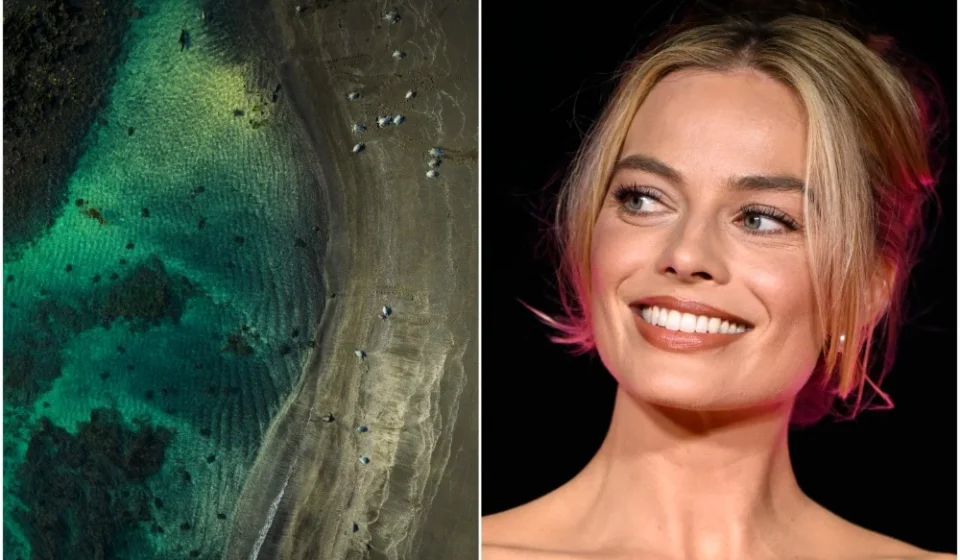
Into the Heart of the Archipelago: Margot Robbie Narrates Groundbreaking VR Experience ‘Galapagos: The Last Eden’

The Venice Film Festival has long served as a bastion for traditional cinematic excellence, yet this year, the festival’s Immersive strand is poised to steal the spotlight with a project that bridges the gap between scientific documentary and interactive digital art. Galapagos: The Last Eden, a state-of-the-art immersive experience narrated by Academy Award-nominated actress Margot Robbie, has unveiled its official trailer, offering a tantalizing glimpse into a world where viewers are no longer mere spectators, but active participants in the evolution of the Earth’s most storied islands.
Directed by Anthony Geffen and produced by the U.K.-based Atlantic Studios, the project represents a significant leap forward in Extended Reality (XR) storytelling. By blending cutting-edge 3D camera technology with interactive AI, the production promises to transport audiences to the volcanic heart of the Pacific, fostering an intimate, visceral connection with the Galapagos’ fragile, prehistoric beauty.
The Genesis of an Immersive Masterpiece
The development of Galapagos: The Last Eden was not a simple production exercise but a multi-year technological endeavor. Anthony Geffen, a veteran of high-end factual filmmaking, sought to solve the "distance problem"—the inherent barrier between a viewer sitting in a living room and the remote, inaccessible terrains of the archipelago.
"We use a new kind of 3D camera technology and shooting techniques to capture the Galapagos in a way that has never been possible before," Geffen explained during the project’s announcement. The objective was to create a sense of presence—the feeling that one is truly standing on the black lava rocks of Fernandina or swimming alongside a Galapagos penguin.
The production team spent months navigating the logistical nightmare of filming in one of the most protected environments on the planet. The resulting footage, however, is not a standard 360-degree video. Instead, it utilizes spatial computing to allow users to interact with their environment. Viewers can "reach out" to touch the flora and fauna, witnessing firsthand the volcanic processes that birthed these islands millions of years ago and the subsequent evolutionary wonders that inspired Charles Darwin’s theory of natural selection.
Chronology: From Darwin’s Notes to Digital Interaction
The historical weight of the Galapagos is central to the experience. The project’s most innovative feature—a conversational interface with a digital incarnation of Charles Darwin—marks a paradigm shift in educational media.
- The 19th Century: The historical foundation, based on the HMS Beagle voyage and Darwin’s personal journals.
- Production Phase (2022–2024): Atlantic Studios deployed specialized teams to capture the islands during various seasonal shifts, ensuring that the visual data reflected the current state of the ecosystem.
- The AI Integration: Researchers and technologists synthesized Darwin’s writings into a generative AI model, allowing users to engage in a dynamic, spoken-word dialogue with the naturalist, who provides context to the species and geological features encountered during the journey.
- The Premiere (September 2024): The project debuts at the Venice Film Festival’s Immersive section, a prestigious platform dedicated to the future of digital storytelling.
This chronology underscores a shift from static narration to responsive, user-led discovery. Rather than being told a linear story, the user dictates the flow of information, mirroring the curiosity that drove Darwin himself.
Supporting Data: The Fragility of a Living Laboratory
The impetus for Galapagos: The Last Eden is not merely aesthetic; it is an urgent plea for conservation. The Galapagos Islands are currently facing one of the most volatile periods in their recorded history.
Scientific data from the Galapagos National Park Directorate and international climate monitoring agencies indicate that the islands are highly susceptible to the periodic climate pattern known as El Niño. During an El Niño year, the warming of the Pacific waters disrupts the nutrient-rich currents that sustain the marine food chain. This leads to a cascading effect:
- Marine Life Decline: Primary producers like algae and plankton decrease, leading to food shortages for fish and, by extension, marine iguanas and sea lions.
- Reproductive Failure: Bird populations, such as the famous blue-footed boobies, often abandon nesting sites during these periods of resource scarcity.
- Habitat Alteration: Increased rainfall and temperature fluctuations change the island vegetation, impacting endemic species that have evolved for thousands of years in highly specific niches.
The immersive experience highlights these specific threats. By visualizing the impact of climate change through data-driven simulations, Geffen’s team aims to translate abstract climate reports into tangible realities for the viewer.
Official Responses: A Personal Mission
Margot Robbie’s involvement in the project was born from a deep, long-standing affinity for the archipelago. Having first visited the islands at the age of 18, Robbie describes the experience as a transformative moment in her life.
"I was completely captivated," Robbie remarked in a recent press statement. "When I was introduced to the XR technology behind the project, the potential for a fresh kind of storytelling was clear to me right away. It offers audiences a new way to experience the Galapagos while building a personal bond with the wildlife and fragile ecosystem."
For Robbie, the role of narrator is an extension of her commitment to environmental advocacy. She emphasizes that the project is designed to bridge the emotional gap between the general public and the science of conservation. "As climate change, particularly El Niño, continues to threaten this remarkable environment, it’s more important than ever to understand the vital role conservation plays in protecting one of the world’s most important ecosystems. I’m proud to be part of a project that brings that story to life and inspires people to care about its future."
Anthony Geffen echoed these sentiments, noting that the choice of Robbie was deliberate. "We needed a voice that could carry the wonder of the natural world, but also the gravity of the conservation challenges we face. Margot brought a genuine passion to the studio that transformed the final edit."
Implications: The Future of Documentary and XR
The inclusion of Galapagos: The Last Eden in the Venice Immersive section is a testament to the maturation of Virtual Reality as a medium. Historically, VR was dismissed as a gimmick, often plagued by low-resolution visuals and disjointed narratives. Projects like this are setting a new "Gold Standard" for what critics call "Immersive Factuals."
The Educational Potential
The implications for education are profound. Schools and research institutions could eventually utilize such technology to allow students to "walk" through environments that are otherwise inaccessible due to geography or the need for extreme environmental protection. By allowing users to converse with a virtual Darwin, the project democratizes access to expert-level information, turning a passive documentary into an interactive seminar.
Conservation through Empathy
Conservationists have long struggled with the "out of sight, out of mind" phenomenon. By using technology to foster a sense of physical closeness with the animals, Galapagos: The Last Eden utilizes the psychology of presence to drive advocacy. When a user feels they have shared a space with a giant tortoise or an albatross, the desire to protect that species shifts from an intellectual obligation to a personal desire.
The Venice Benchmark
As the project premieres in Venice, it serves as a harbinger for the future of film festivals. The industry is clearly moving toward a hybrid model where traditional cinema and interactive immersive experiences exist side-by-side. The success of this project could determine how much funding is funneled into future XR documentaries. If Galapagos: The Last Eden succeeds in both critical acclaim and public engagement, it will likely pave the way for a new genre of "Interactive Environmental Cinema."
Conclusion: A Window into the Future
Galapagos: The Last Eden stands at the intersection of technological ambition and environmental necessity. By leveraging the star power of Margot Robbie, the technical prowess of Atlantic Studios, and the timeless intellectual legacy of Charles Darwin, the project transforms the story of a remote island chain into a global call to action.
As we move deeper into an era defined by rapid environmental shifts, the need for new, empathetic ways to understand our planet has never been greater. Whether one views it as a technological marvel or a piece of conservation advocacy, the experience is, above all, a reminder that the wonders of our world are finite—and that the future of the "Last Eden" may well depend on our ability to see it, understand it, and care for it before it is lost.
As the trailer fades to black, leaving the viewer with the haunting, beautiful silence of the Galapagos, the message remains clear: the islands are watching, and for the first time, we have the technology to truly listen.