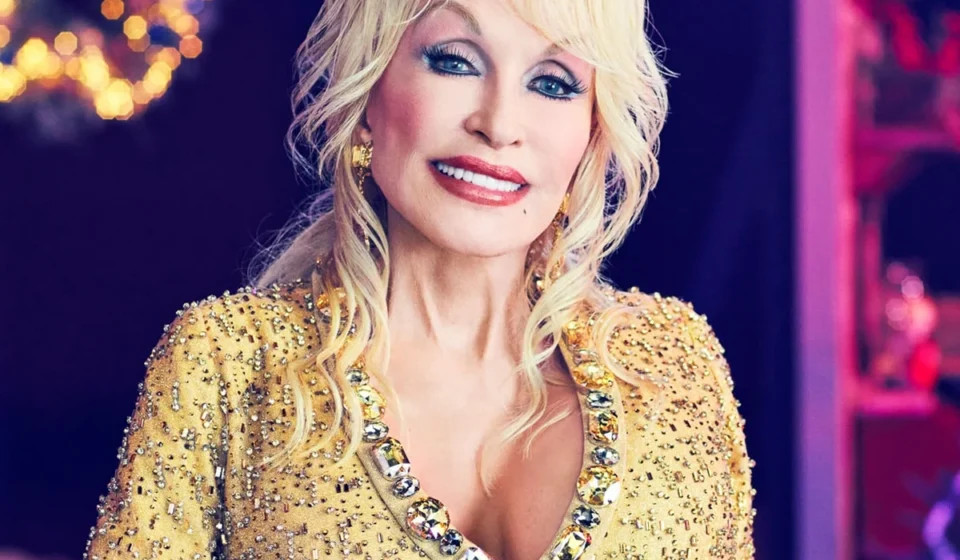

The world lost a singular force of nature on August 25, when country music icon and cultural pillar Dolly Parton passed away at the age of 80 following a brief battle with cancer. An artist whose influence transcended the boundaries of genre, geography, and generation, Parton’s death marks the end of a prolific era in American music. On August 28, the "Jolene" singer was laid to rest in a private, intimate ceremony at the Woodlawn Memorial Park and Mausoleum in Nashville, Tennessee—a final resting place she chose to share with her late husband of nearly 60 years, Carl Dean, who preceded her in death in March 2025.
A Final Rest Amidst the "Plush Cotton"
Known for her elaborate, rhinestone-studded costumes and larger-than-life persona, Parton’s final requests were characterized by a desire for comfort and humility. Her nephew, Brian Seaver, shared a poignant insight into her final wishes in a video released on the singer’s Instagram account shortly after her passing.
"Dolly was a farmer, just like her daddy," Seaver explained. "He farmed the soil; she farmed songs and happiness. Dolly called me and said she wants to rest in a beautiful bed of plush cotton because after a life wearing heavy rhinestones, she finally deserves to be comfortable and have some rest."
This desire for simplicity extended to her funeral, which was held exclusively for immediate family members. While the public outpouring of grief has been immense, the Parton family has encouraged fans to honor the singer’s memory through charitable acts and personal tributes rather than public displays, adhering to the icon’s own preference for privacy in her final hours.
Chronology: From the Smoky Mountains to Global Stardom
To understand the magnitude of the loss, one must look back at the humble origins of the girl from the Great Smoky Mountains. Born the fourth of twelve children to Robert Lee Parton and Avie Lee, Dolly was raised in a one-room cabin with no running water. Her early life was a masterclass in resilience; she famously noted that her father paid the doctor who delivered her with a bag of cornmeal.
The Rise of a Legend
- Early Beginnings: By age six, she was performing in the Pentecostal church where her grandfather served as pastor. At seven, she was playing a homemade guitar, and by thirteen, she had already released her first single and graced the stage of the Grand Ole Opry.
- The Nashville Dream: In 1964, the day after becoming the first member of her family to graduate high school, Parton boarded a bus to Nashville. It was there, at a local laundromat, that she met Carl Dean. Their marriage, which lasted nearly six decades, was defined by Dean’s preference for a quiet life away from the spotlight—a testament to the balance Parton maintained between her meteoric fame and her grounded private life.
- Business and Media Mogul: Beyond her music, Parton’s influence stretched into the film industry, including her role in Steel Magnolias, and the production of cult classics like Buffy the Vampire Slayer through her company, Sandollar Productions.
Supporting Data: A Life Defined by Service and Storytelling
Parton’s legacy is not merely one of chart-topping hits; it is a legacy of intentional philanthropy and personal authenticity. Her "Imagination Library," a program providing free books to children from birth to age five, stands as her proudest professional achievement. In her 2020 documentary, The Library That Dolly Built, she reflected on her father’s illiteracy and the profound impact of the program, stating, "Of all the things I’ve done in my life… this is one of the most precious things."
The "9 to 5" Work Ethic
Parton’s commitment to her craft was legendary. Her former co-star Shirley MacLaine once recounted the intense heat during the filming of Steel Magnolias, where Parton remained in a 16-inch waist cincher and heavy wigs for hours without a single complaint. This unwavering professionalism was the bedrock of a career that saw her transition from a country darling to a global crossover icon.
A Modern Approach to Tradition
Parton was famously a "low-tech girl in a high-tech world." Her preference for communicating via fax—a detail confirmed by fellow country stars like Reba McEntire—became a humorous hallmark of her brand. It underscored a woman who chose her interactions carefully, prioritizing the quality of her connections over the speed of modern technology.
Official Responses and Emotional Tributes
The confirmation of her burial was provided by her niece, Lainey Mae Parton, who posted a heartfelt tribute on Instagram on August 29. "This is a really hard post for me to make," she wrote. "I wanted to wait until after my granny was laid to rest yesterday before I tried to put any of this into words."
The public, while mourning, has turned to the music Parton left behind. Specifically, the song "If We Never Meet Again"—an old country-gospel hymn she once expressed a desire to have played at her funeral—has seen a resurgence in popularity. Parton noted in 2014 that the song, a favorite of her father’s, represented her belief in a "beautiful shore" where separations come to an end.
The Future of Her Legacy: The 2045 Time Capsule
Perhaps the most intriguing aspect of Parton’s final planning is the secret song currently stored in a time capsule at Dollywood. Set to be revealed in January 2045—which would have marked her 99th birthday—the track serves as a bridge between her past and a future generation of fans.
"I had to write this song that nobody was going to hear ’til then," Parton told Kelly Clarkson in 2022. "I want to go dig that up so bad." This final act of mystery serves as a poignant reminder of her enduring connection to her audience; she remains, even in death, a storyteller who keeps the world waiting with bated breath for her next chapter.
Implications: A Cultural Void and a Lasting Template
The passing of Dolly Parton leaves a void in the entertainment industry that is, by all accounts, unfillable. She was more than a singer; she was a cultural touchstone who normalized plastic surgery, advocated for literacy, and redefined the role of women in the music industry.
Her life provides a template for success that does not require the sacrifice of one’s identity. From her "pastel" tattoos hidden beneath her sleeves to her refusal to perform at the Super Bowl due to the scale of the production, Parton’s career was defined by her ability to say "no" as much as her ability to say "yes."
As the world continues to process the loss, the focus shifts to the preservation of her extensive catalog and the continued growth of her philanthropic initiatives. The "Dolly Parton Experience" and her various production ventures ensure that while she may have retired to her bed of "plush cotton," her voice, her humor, and her kindness will continue to resonate through the lives she touched—from the children receiving their first books to the fans who found comfort in her ballads of love and loss.
Dolly Parton lived as she performed: with courage, grace, and an unapologetic commitment to being herself. She taught the world that a girl from the mountains could conquer the world without ever losing her way home, and in doing so, she ensured that while she may be gone, she will, in every sense of the word, always be loved.