
The landscape of modern streaming has become a sanctuary for a specific kind of cinematic experience that was once the bread and butter of the Hollywood multiplex: the mid-budget, star-studded psychological thriller. The latest entry into this revitalized genre is The Whisper Man, a chilling procedural that serves as the first—though certainly not the last—adaptation of the "airport oeuvre" of British crime novelist Steve Mosby. Writing under the pseudonym Alex North since 2019, Mosby has carved out a niche for unsettling, high-concept mysteries that bridge the gap between police procedurals and gothic horror.
With a cast led by Academy Award winner Robert De Niro, Michelle Monaghan, and Adam Scott, The Whisper Man represents Netflix’s continued investment in "serviceable" prestige—films that may not reinvent the wheel but provide a high-caliber, two-hour diversion for audiences hungry for the "Nineties potboiler" aesthetic.
Main Facts: A Star-Studded Descent into Small-Town Dread
The Whisper Man centers on a grieving father, Tom Kennedy (played by Adam Scott), who moves to the quiet town of Featherbank (relocated to New Jersey for the film) with his young son, Jake (Acston Luca Porto), following the sudden death of his wife. Their hope for a fresh start is quickly incinerated when Jake begins exhibiting disturbing behavior, claiming to hear a "whisperer" at his window.
The narrative quickly expands into a wider police investigation led by Detective Amanda Beck (Michelle Monaghan). Beck realizes that Jake’s experiences mirror the MO of a notorious serial killer from twenty years prior: Frank Carter (Michael Keaton), a predator who lured children by whispering to them through their windows. Because Carter is currently incarcerated, the police are forced to consider the possibility of a copycat or an accomplice who remained undetected.
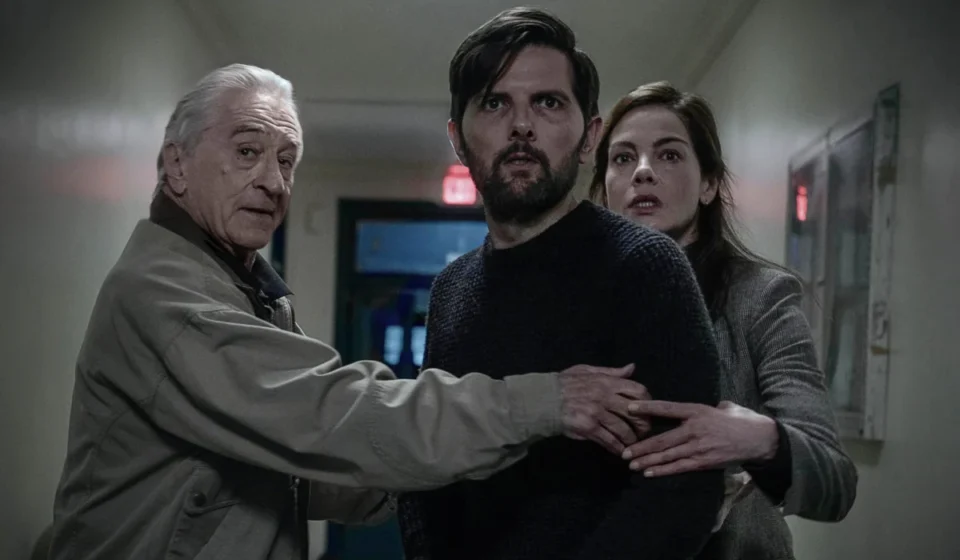
To solve the mystery, Beck enlists the help of Pete Willis (Robert De Niro), the now-retired detective who originally caught Carter. The film’s emotional core, however, lies in the revelation that Willis is the estranged father of Tom Kennedy—a man from whom Tom is so alienated that he changed his last name to sever all ties.
Chronology: From Bestselling Page-Turner to Streaming Event
2019: The Literary Phenomenon
The journey of The Whisper Man began in 2019 with the publication of the novel by Alex North. The book became an instant sensation, lauded for its blend of domestic drama and supernatural-tinged suspense. Critics noted that the "Alex North" pseudonym was likely a nod to James Patterson’s Alex Cross series, signaling a commitment to the "unputdownable" thriller format.
2021-2022: Development and Casting
Following the book’s success, production companies moved quickly to secure the rights. The project gained significant momentum when James Ashcroft, the New Zealand director behind the visceral Sundance hit Coming Home in the Dark, signed on to direct. The casting of Robert De Niro and Michael Keaton—two titans of cinema—elevated the project from a standard adaptation to a high-profile "event" film for Netflix.
2023: Production and Aesthetic Choices
Filming took place with a focus on capturing a specific "teal and brown" palette, moving away from the lush English countryside of the novel to the more industrial, damp shadows of the American Northeast. Veteran cinematographer Peter Deming, known for his work with David Lynch on Mulholland Drive and Twin Peaks: The Return, was brought on to ensure the film maintained an atmosphere of "stark-shadowed dread."
Supporting Data: The Craft Behind the Menace
The effectiveness of The Whisper Man relies heavily on its technical pedigree and the seasoned performances of its ensemble.
The Directorial Vision of James Ashcroft
James Ashcroft brought a reputation for "characterful, ambiguous" storytelling to the project. While Coming Home in the Dark was a brutal, minimalist road-trip thriller, The Whisper Man required him to manage a much larger scale and a more conventional script. Ashcroft’s influence is most felt in the film’s pacing; he resists the urge to jump-scare, instead allowing the atmosphere of the "creaky, leaky Craftsman home" to build a sense of architectural anxiety.
The Cinematography of Peter Deming
The choice of Peter Deming as Director of Photography (DP) is perhaps the film’s greatest asset. Deming’s history with David Lynch is evident in how he treats the "letterbox" and the "window"—the thresholds through which the killer whispers. The film utilizes damp, desaturated tones that evoke a sense of perpetual autumn, grounding the potentially fantastical elements of the "whispers" in a gritty, tactile reality.
The "Hannibal" Parallel: Michael Keaton’s Performance
A critical data point in the film’s structure is the role of Frank Carter. Much like Anthony Hopkins’ Hannibal Lecter in The Silence of the Lambs, Keaton’s character is a caged monster who holds the key to the current mystery. Keaton avoids "going full Lecter," opting instead for a "cool compliance" and "wire-rimmed" intelligence that makes his scenes with Monaghan and De Niro the most electric in the film.
Official Responses: Critical Reception and Genre Placement
The critical response to The Whisper Man has been largely positive, though tempered by the recognition that it adheres strictly to genre tropes.
The "90s Potboiler" Comparison
Many critics have noted that The Whisper Man feels like a spiritual successor to films like Kiss the Girls or Along Came a Spider. Variety’s review suggests that the film is "pretty entertaining Netflix fodder," noting that while it doesn’t subvert expectations, it carries a "grizzled gravitas" thanks to De Niro.
The Performance Consensus
- Robert De Niro: Critics have described his performance as "crumpled autopilot paternalism." While not his most transformative role, his presence provides a "warm asset" to the film, lending weight to the dysfunctional family dynamics.
- Adam Scott: Scott is increasingly becoming the go-to actor for "anxious, grief-stricken fathers." His performance is noted for its vulnerability, particularly in scenes involving his son’s disappearance.
- Michelle Monaghan: Monaghan is praised as "ever doughty and determined," fulfilling the role of the earnest detective with professional precision.
Scripting and Adaptation
The screenplay by Ben Jacoby (The First Omen) and Chase Palmer (It) has been cited for its "comfortingly conventional" dialogue. While some found the "daddy issues" plotline a bit heavy-handed—specifically the "original sin of fathers" monologue—the script is credited with successfully translating the British sensibilities of the novel into an American context without losing the core "Whisper Man" lore.
Implications: The Future of the "Airport Oeuvre" on Streaming
The release and projected success of The Whisper Man have several implications for the film industry and the streaming landscape.
1. The Rise of the "Mid-List" Adaptation
Steve Mosby (Alex North) has written four books in this vein since 2019. The success of The Whisper Man almost guarantees that his other works, such as The Shadow Friend or The Angel Maker, will receive similar high-budget treatments. We are seeing a trend where "airport thrillers"—once relegated to mass-market paperbacks—are becoming the primary source material for streaming "A-list" content.
2. The "Netflix-ification" of the Thriller
As multiplexes become increasingly dominated by superheroes and established franchises, the "psychological thriller for adults" has moved almost entirely to platforms like Netflix, Apple TV+, and Amazon Prime. The Whisper Man serves as a blueprint for this transition: take a proven bestseller, cast legacy stars (De Niro/Keaton) alongside modern TV favorites (Scott/Monaghan), and hire a "prestige" technical crew (Ashcroft/Deming).
3. Generational Trauma as a Narrative Engine
The film’s focus on the "sins of the father" and the inability of parents to protect their children reflects a broader trend in horror and thriller writing. By grounding the "bogeyman" of the Whisper Man in the very real trauma of an estranged father and son, the film attempts to offer more than just scares; it offers a meditation on the fragility of the nuclear family.
4. The Enduring Appeal of the Serial Killer Mythos
Despite decades of "true crime" saturation, The Whisper Man proves that the "genius serial killer" trope—when handled by an actor of Michael Keaton’s caliber—still has significant drawing power. It suggests that audiences remain fascinated by the "perversity" of the monster in the cell, especially when that monster is used to reflect the failures of the protagonists.
In conclusion, The Whisper Man may not be a cinematic masterpiece that lingers "for life," but it is a masterclass in professional, atmospheric filmmaking. It fulfills its promise to "chill your bones for a night," proving that in the age of streaming, there is still a profound appetite for the well-told, darkly-whispered tale.