Beyond the Podium: How Olympic Power Couples Are Redefining Partnership and Resilience

In the high-stakes world of elite athletics, the pursuit of gold is often portrayed as a solitary endeavor—a lonely grind defined by early mornings, grueling repetitions, and the crushing weight of public expectation. However, for a growing cohort of Olympic power couples, the path to the podium is paved not just with discipline, but with the profound emotional support of a partner who truly understands the unique pressures of professional sports. From track and field stars to ice dancers and hockey icons, these athletes are proving that love and competition are not mutually exclusive; rather, they are symbiotic forces that drive them toward excellence.
The Woodhall Philosophy: Love, Empathy, and the Four-Legged Motivation
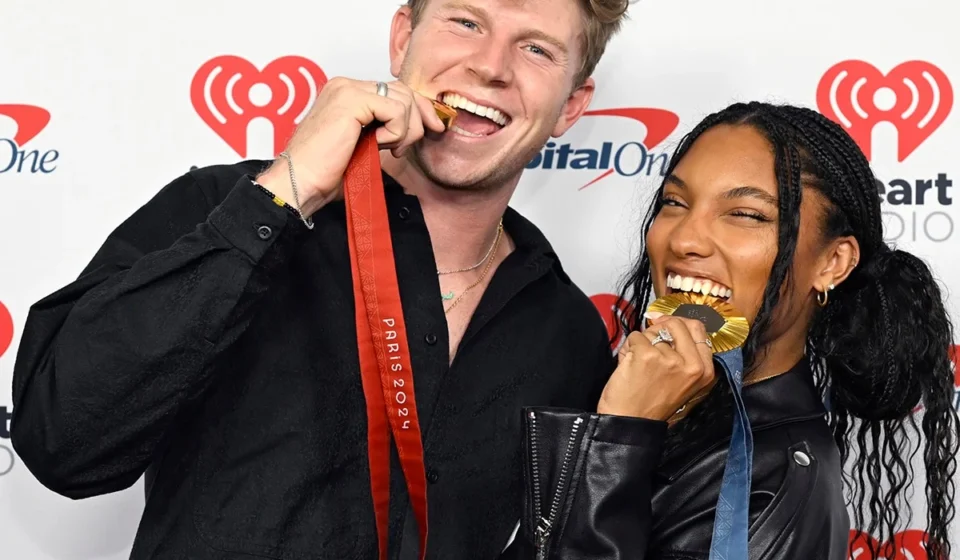
At the center of this cultural shift are Paralympian Hunter Woodhall and his wife, track star Tara Davis-Woodhall. Since meeting at a high school track meet in Idaho and marrying in 2022, the pair has become a beacon for modern athletic relationships. With six combined Olympic medals between them, their partnership is built on a foundation of mutual accountability and, surprisingly, a bit of playful bribery.
"Her whole entire life, from when her dad was coaching her, and her grandma was watching, to now me, if you incentivize Tara with something, she’s most likely to get it done," Hunter noted in an exclusive interview with E! News. While the rewards have evolved from childhood gaming stations or small cash incentives to the prospect of a dream car should she strike gold at the Olympics, the core principle remains: motivation is a shared responsibility.
This dynamic extends to their training sessions, where "little cues" and empathetic communication serve as the lifeblood of their routine. When the inevitable disappointments of professional sport arise, the Woodhalls prioritize emotional support. "Hunter has always taught us in our relationship to lead with empathy and love and kindness first," Tara explained.
Currently, the couple is leveraging this partnership for the IAMS "Dog Run Marathon," a month-long Strava challenge encouraging fans to complete 26.2 miles with their pets. For the Woodhalls, their dogs, Milo and Winnie, are more than just companions; they are an essential part of the training cycle. "It’s a blessing to be able to be active and go outside and run and use your body," Hunter said, noting that the dogs remind them to keep the joy in the sport.
A Chronology of Olympic Romances
The trend of "power couples" competing on the global stage is not new, but it has gained significant visibility in recent years. Looking back at the evolution of these relationships, we see a recurring theme: the ability to navigate high-pressure environments together.
The Curling Connection: Peterman and Gallant
Jocelyn Peterman and Brett Gallant, world champion curlers for Team Canada, represent the "wired the same" archetype. Their journey began in 2016 when a professional inquiry about curling ability blossomed into a partnership that led to a 2022 Olympic debut and an engagement. Today, as they prepare for the 2026 Games with their son, Luke, they embody the transition from individual competitors to a cohesive family unit.
The Luge Legacy: Sweeney and Fischnaller
Emily Sweeney and Dominik Fischnaller serve as a testament to the endurance of love in the face of physical peril. After 15 years together, the couple—who married in Italy in 2025—have navigated the emotional toll of the sport, particularly following Sweeney’s harrowing 2018 crash. For Fischnaller, the anxiety of watching his spouse perform is a unique burden, yet their shared commitment to the sport provides a necessary, stabilizing anchor.
The Ice Dance Synergy: Chock and Bates
Madison Chock and Evan Bates represent the pinnacle of professional and romantic integration. Having teamed up in 2011, their romance blossomed after a decade of skating together. Their 2024 marriage served as a formal solidification of their professional bond. "Since we’ve been married, I really feel like we just take everything on as partners and champion each other on and off the ice," Chock noted.
Supporting Data: The Impact of Shared Athleticism
The success of these couples is supported by the psychological benefits of having a partner who understands the "athlete’s life." Research suggests that for elite competitors, the greatest challenge is often not the physical training, but the mental recovery between events.
- Shared Experience: Partners who are also athletes bypass the "explaining phase." They intuitively understand the necessity of recovery, the impact of nutrition, and the psychological weight of a loss.
- Emotional Regulation: As evidenced by the Woodhalls, the ability to "lead with empathy" acts as a buffer against burnout. By having a "safe space" within the high-pressure bubble, athletes can process failure more efficiently.
- Mutual Goal Setting: Relationships like those of Kaysha Love and Hunter Powell demonstrate how wedding planning or shared fitness challenges (like the IAMS Strava project) act as "mental distractions," providing a sense of normalcy and balance amidst the intense focus required for Olympic qualification.
Official Perspectives on the "Power Couple" Phenomenon
The International Olympic Committee (IOC) and various sports governing bodies have increasingly recognized the stability that these partnerships bring to their athletes. In recent years, interviews with couples like Kim Meylemans and Nicole Silveira have highlighted the importance of representation. By competing as a married couple, they are not only focusing on their performance but also shining a light on marriage equality, framing their participation as both a personal and a political milestone.
Furthermore, veteran athletes like Brittany Bowe and Hilary Knight have emphasized that the Olympic environment itself can be a catalyst for meaningful connection. Their story—beginning with walks during the 2022 Beijing Games—underscores the idea that even in the most restricted, high-performance environments, human connection remains the most valuable prize.
Future Implications: Life After the Podium
What happens when the spikes are hung up and the blades are put away? For many of these couples, the transition away from competitive sport is a hurdle they intend to clear together.
Hunter Woodhall has already spoken publicly about his desire to run a marathon once he retires, prioritizing the act of completion over a specific time. Similarly, Bowe and Knight are looking toward a future in Salt Lake City, trading the intensity of the ice for the community-focused activities of gardening and pickleball.
The overarching implication is that these relationships are designed to be "future-proof." As Emily Sweeney noted, being married changes the perspective from "living in the present" to "setting up a future." This shift is vital for athletes who have spent their formative years defined solely by their Olympic status.
Conclusion: A New Paradigm for Athletic Success
The narrative of the suffering, solitary athlete is being rewritten. In its place is a model of collaborative excellence, where vulnerability is not seen as a weakness, but as the secret ingredient to longevity. Whether they are training for a marathon with their dogs, navigating the high-speed turns of a luge track, or balancing world championship titles with the demands of parenthood, these couples are proving that the most important medal is the one that stays with them long after the cameras turn off.
As we look toward the next cycle of Olympic Games, the focus will undoubtedly remain on the scoreboard. However, for those watching closely, the real story will be found in the sidelines—the quick look between partners, the shared nod of understanding, and the quiet, steady support that proves that even in a world obsessed with winning, the greatest victories are the ones shared with the person you love.