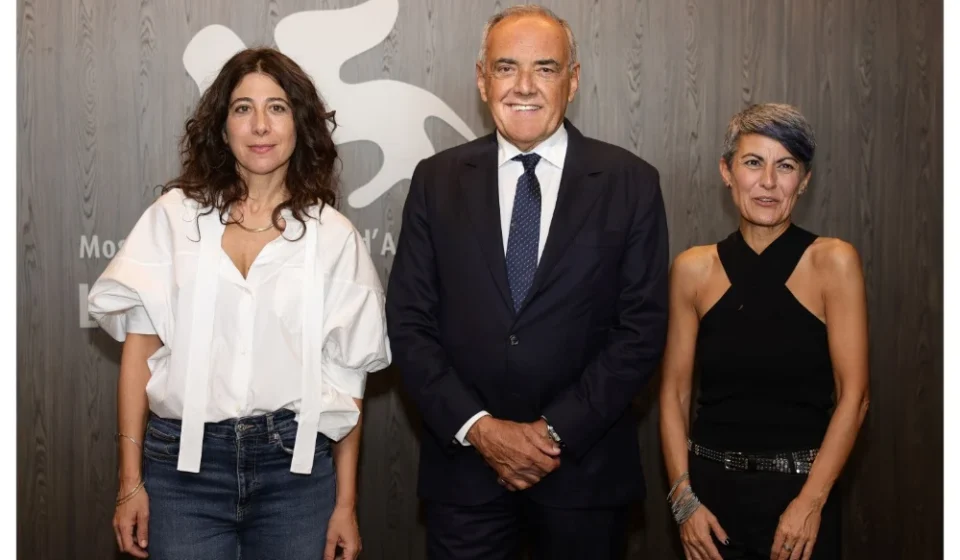
The Venice Crisis: Artistic Integrity or Systemic Bias? The Controversy Over Female Representation

As the cinematic world turns its gaze toward the Lido for the upcoming Venice Film Festival, the glitz and glamour are being overshadowed by a simmering, high-stakes debate. Artistic director Alberto Barbera has found himself at the center of a firestorm following the unveiling of this year’s competition lineup, which features a stark, statistically significant decline in female representation. With only one woman-helmed film competing for the prestigious Golden Lion out of 20 titles, major Italian film organizations are challenging the very definition of "quality" in contemporary cinema.
The State of the Lido: A Sharp Departure from Progress
The 2026 Venice Film Festival lineup has ignited a fierce backlash from advocacy groups, including Women in Film Television and Media (WIFT) Italia, the directors’ associations ANAC and 100autori, the European Women’s Audiovisual network, and the documentary collective Doc/it. The core of their grievance lies in the "one-dimensional" nature of the selection, particularly regarding Italian cinema.
"Seven male directors represent Italian cinema in competition and out of competition at the Venice Film Festival, on the festival’s main stage," the coalition noted in an impassioned appeal published in La Repubblica. "It is a one-dimensional selection: entirely male."
The figures are indeed stark. While the festival previously showed signs of progress—boasting a 29% female-directed competition slate last year (6 out of 21 films)—the current iteration has plummeted to a mere 5%. The sole film directed by a woman in the main competition is Woman Unknown, a drama by Danish-Egyptian filmmaker May El-Toukhy. This dramatic contraction has prompted a fundamental interrogation of how the "cultural canon" is curated at one of the world’s oldest and most influential festivals.
Anatomy of an Appeal: Questioning the "Divine" Quality
The controversy extends far beyond raw percentages. In a manifesto released on social media and in the press, the coalition of organizations issued a stinging critique of the festival’s reliance on the term "quality" as a neutral, objective metric.
"Quality is not a divine, neutral, objective category suspended above history," the statement argued. "We know full well that it is a concept that moves and evolves, and that art is a battlefield made of bodies, tears, blood, and power. It is not a pure heavenly sphere where the angels of quality flutter asexually."
The signatories contend that every selection process is inherently subjective, reflecting the specific culture, imagination, and limitations of those who curate the slate. By shielding the selection process behind the nebulous banner of "quality," the festival’s leadership is accused of ignoring how artistic merit is socially constructed. The groups argue that if a selection results in a heavily unbalanced outcome year after year, it is no longer sufficient to dismiss the absence of women by claiming they "are not good enough." Instead, they demand that the tools of selection themselves be scrutinized to determine if they remain fit for a modern, diverse cinematic landscape.
Chronology of the Dispute
- Late July 2026: The Venice Film Festival officially announces its 2026 competition lineup, revealing a significant drop in female directors compared to previous years.
- August 2026: Artistic director Alberto Barbera defends the selection in interviews with Variety and other outlets, citing a lower volume of female-led submissions and his personal commitment to prioritizing artistic merit over gender quotas.
- Mid-August 2026: A collective of Italian film organizations, led by WIFT Italia, ANAC, and 100autori, issues an open letter in La Repubblica, framing the selection as a failure of institutional vision.
- Pre-Festival Period: Tensions remain high as the festival prepares to run from Sept. 2–12, with the debate expected to serve as the defining narrative of the 83rd edition.
Data and Disparities: Beyond the Main Competition
While the main competition is undeniably dominated by men, the festival’s other sections offer a more nuanced picture of current industry trends. The Venice Horizons section, which serves as a platform for emerging voices and experimental works, has fared significantly better, with eight of its 19 films (roughly 42%) directed by women.
Furthermore, the independently-run "Venice Days" (Giornate Degli Autori) sidebar, curated by Gaia Furrer, presents a starkly different demographic profile. The section boasts a lineup where 14 out of 25 films are directed by women—a figure that directly challenges the notion that there is a global shortage of high-quality, female-led projects. The Critics’ Week section also provides some representation, though it remains modest, with two female directors out of seven selected features in competition.
The Official Defense: Barbera’s Stance
Alberto Barbera, who has helmed the festival for years, has staunchly defended his selection process. His defense rests on three pillars: historical track record, the composition of the juries, and the raw statistics of submissions.
"I don’t think we can be accused of bias against women directors because, since 2000, Venice has awarded top prizes to more female directors than Cannes, Berlin, or other festivals," Barbera told Variety. He highlighted the success of recent years, citing Chloé Zhao’s Nomadland (2020), Audrey Diwan’s Happening (2021), and Laura Poitras’ All the Beauty and the Bloodshed (2022) as proof of the festival’s commitment to female visionaries. He also noted the 2024 success of Italian director Maura Delpero, who won the Silver Lion for Vermiglio.
Regarding the accusation of gender bias, Barbera countered that the festival has actively empowered women by placing them at the helm of the judging process. The three main juries for this year’s festival are chaired by women: Maggie Gyllenhaal for the competition, Valérie Donzelli for Horizons, and Carolina Cavalli for the Luigi De Laurentiis Venice Award.
"We were hoping to find more female-directed films for competition, but fewer were submitted," Barbera explained. According to his data, women-directed fiction films accounted for 24% of submissions this year, a decrease from 30% in 2025. "Unfortunately, we also found them to be of lower quality, so we weren’t able to include more in competition. That’s a great disappointment, but there should be no suspicion of any bias on our part. The only rigid criterion we follow is the quality of the films."
Barbera went further, expressing his personal disdain for gender-based selection criteria. "We are absolutely opposed to selecting films based on gender because we don’t believe it’s beneficial. It’s humiliating for women if they’re thought to have been chosen because they’re women rather than because they made a good film."
Implications for the Future of Film Festivals
The debate at Venice touches upon a larger, existential crisis for major international film festivals. In an era where diversity and inclusion have become central to the social contract, how can institutions balance traditional notions of "excellence" with the need to reflect the breadth of human experience?
The critics of the current Venice selection argue that by ignoring systemic hurdles—such as financing disparities, lack of distribution for female-led projects, and historical male-centricity in the film industry—the festival is inadvertently reinforcing the very status quo it claims to transcend. If "quality" is defined by a narrow set of criteria rooted in historical, male-dominated filmmaking, then women will always face a steeper climb to recognition.
Conversely, supporters of Barbera’s approach argue that festivals must remain meritocracies. They fear that the implementation of quotas or gender-conscious selection could diminish the prestige of the films themselves, turning art into a political commodity rather than a purely aesthetic achievement.
Conclusion: A Battlefield of Art
As the lights dim on the Lido this September, the films themselves will be subject to a scrutiny that goes far beyond the screen. The conflict between the Venice leadership and the Italian film organizations represents a broader, necessary reckoning within the arts.
Is cinema a "pure heavenly sphere," as the critics sarcastically suggest, or is it, as they contend, a "battlefield made of bodies, tears, blood, and power"? The outcome of this year’s Venice Film Festival will likely not provide a definitive answer, but it has succeeded in forcing a conversation that can no longer be ignored. Whether through a shift in submission numbers, a change in selection criteria, or a broader industry-wide policy change, the pressure on Venice suggests that the era of "quality" being used as an unexamined shield is rapidly coming to an end.
The festival, and indeed the entire industry, now faces the challenge of proving that their commitment to artistic excellence can exist in tandem with a commitment to a truly representative, diverse, and equitable future.