
The Wall-Crawler’s Resurrection: Why ‘Spider-Man: Brand New Day’ Shattered Box Office Records

The theater industry has witnessed a historic paradigm shift this weekend. Spider-Man: Brand New Day, the latest installment in the Marvel Cinematic Universe (MCU) and Sony Pictures’ flagship franchise, has not just performed well—it has fundamentally rewritten the record books. With a staggering $360 million domestic opening, director Destin Daniel Cretton’s vision has successfully dethroned the cultural juggernaut that was 2019’s Avengers: Endgame.
This performance is more than just a win for a studio; it is a vital injection of adrenaline into a global theatrical market that had been showing signs of fatigue. By managing to secure a massive opening in an era of franchise uncertainty, Brand New Day has proven that the appetite for high-quality, character-driven superhero cinema remains insatiable when executed with precision.
The Anatomy of a Record-Breaking Weekend
The sheer scale of the opening weekend figures is difficult to overstate. While industry analysts had projected a robust $220 million domestic start, the film obliterated those expectations, landing at $360 million. This figure narrowly edges out the $357.1 million benchmark set by Avengers: Endgame, a feat many considered impossible in a post-pandemic, streaming-saturated landscape.

Globally, the film debuted to $932 million, with a massive $572 million haul from international territories. With a production budget of $225 million, the film is already deeply profitable, effectively securing its status as the year’s most significant financial success. As it hurtles toward the $1 billion threshold—likely to be crossed within its first week—analysts are already recalibrating their long-term projections, with some suggesting a total global gross exceeding $2 billion.
The broader implications for the industry were felt on a macro level. The combined success of Brand New Day and the continued strength of Christopher Nolan’s The Odyssey (which added $51 million in its third weekend) resulted in a collective domestic weekend gross of $434 million. This stands as the single largest weekend in domestic box office history, signaling that audiences are still willing to show up in droves for event-level cinema.
A Chronology of Anticipation and Execution
The road to this record-breaking weekend was carefully paved by Sony and Marvel. Following the 2021 triumph of Spider-Man: No Way Home, the studio faced a "what next?" dilemma. The pressure was compounded by a lackluster year for the MCU in 2025, where titles like Captain America: Brave New World and Thunderbolts underperformed, leading critics to question if the "Multiverse Saga" had lost its luster.

- Pre-Production Phase: Sony and Marvel opted to pivot away from the high-concept multiverse narratives that had dominated the conversation, focusing instead on a grounded, "street-level" story.
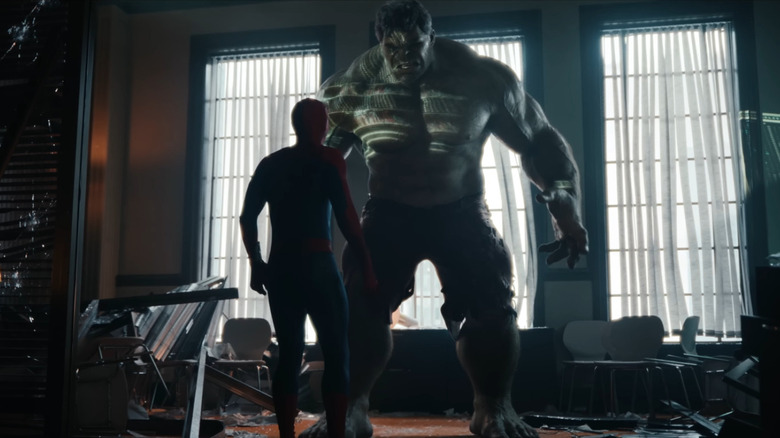
- The Campaign: Marketing emphasized the emotional toll on Peter Parker four years after his identity was erased from the world’s memory. The inclusion of heavy hitters like Jon Bernthal’s Punisher and Mark Ruffalo’s Hulk kept the "event" feel alive without relying on multiversal cameos.
- Opening Weekend: August 7th was strategically chosen to anchor the film in a window devoid of major direct competition, allowing it to dominate the conversation for the remainder of the month.
- Critical Reception: The film’s 90% Rotten Tomatoes critic score and 98% audience approval rating provided the necessary momentum to turn casual viewers into repeat theater-goers.
Supporting Data: The Power of the Brand
When analyzing the "why" behind the numbers, one cannot ignore the historical weight of the Spider-Man franchise. Since Sam Raimi’s 2002 inception, the property has accrued nearly $10 billion globally. However, the Tom Holland era has elevated this to a new tier of consistency.
Holland now holds the distinction of having starred in the four highest-grossing opening weekends in history. This is not merely a result of being in the right place at the right time; it reflects a unique symbiosis between a star and his character. Audiences have grown with Holland’s Peter Parker, and the decision to keep the narrative intimate has resonated with fans tired of the increasingly complex and often alienating multiversal lore.
Furthermore, the "A" CinemaScore indicates that the film is not just being watched, but being championed. Strong word-of-mouth is the ultimate driver for longevity, and with a lack of competition in the coming weeks, Brand New Day is positioned to enjoy a long, healthy run.

Official Responses and Industry Sentiment
While Sony Pictures and Marvel Studios have maintained a professional, somewhat restrained victory lap, the sentiment within the broader industry is one of relief.
"We needed a win," says one veteran exhibitor. "The industry has been on a roller coaster for three years. Brand New Day reminds us that when you pair a beloved character with a clear, focused, and emotional story, the audience will follow. It’s not just about the spectacle; it’s about the stakes."
Director Destin Daniel Cretton’s approach has been lauded for its restraint. By focusing on the emotional isolation of Peter Parker, the film successfully avoids the "superhero fatigue" that has plagued recent entries in the genre. This creative choice—prioritizing character depth over CGI-heavy spectacle—has been validated by the box office, suggesting a shift in how studios might approach future tentpoles.

The Implications for Future Blockbusters
The success of Spider-Man: Brand New Day carries significant implications for the future of the Marvel Cinematic Universe and the Hollywood blockbuster model:
1. The Death of the "Multiverse" Crutch?
The market has signaled a clear preference for stories that feel manageable. The "everything everywhere all at once" approach of the last few years has served its purpose, but the massive success of a more traditional narrative suggests that studios should pivot back to character-centric storytelling.
2. The Power of "Street-Level" Stakes
By moving away from global or universal threats, Brand New Day proved that smaller, more personal stakes can feel just as important to audiences. This is a blueprint that could benefit upcoming projects that have been struggling to find their footing.
3. Star Power Still Matters
The tactical use of fan-favorite supporting characters—such as the return of Jon Bernthal’s Punisher and the inclusion of Sadie Sink—provided just enough "added value" to entice the casual viewer without overwhelming the narrative. This is a masterclass in how to build a shared universe without forcing an ensemble dynamic.
4. Strategic Scheduling
Sony’s choice of the August window proved to be a masterstroke. By avoiding the cluttered landscape of May and June, Brand New Day captured the end-of-summer market share entirely. This serves as a reminder that the release date is often as important as the film itself.
Conclusion
Spider-Man: Brand New Day is more than a commercial success; it is a course correction for the superhero genre. It has demonstrated that the audience is not tired of superheroes—they are tired of predictability and bloated, over-complicated narratives. By stripping away the noise and focusing on the humanity of its lead, Sony and Marvel have set a new gold standard.
As the film continues its climb toward the $2 billion mark, the message to Hollywood is clear: invest in the character, honor the audience’s intelligence, and provide a story that feels like it matters. If Brand New Day is any indication, the future of the cinema is not in the multiverse—it’s back on the streets, with your friendly neighborhood Spider-Man.