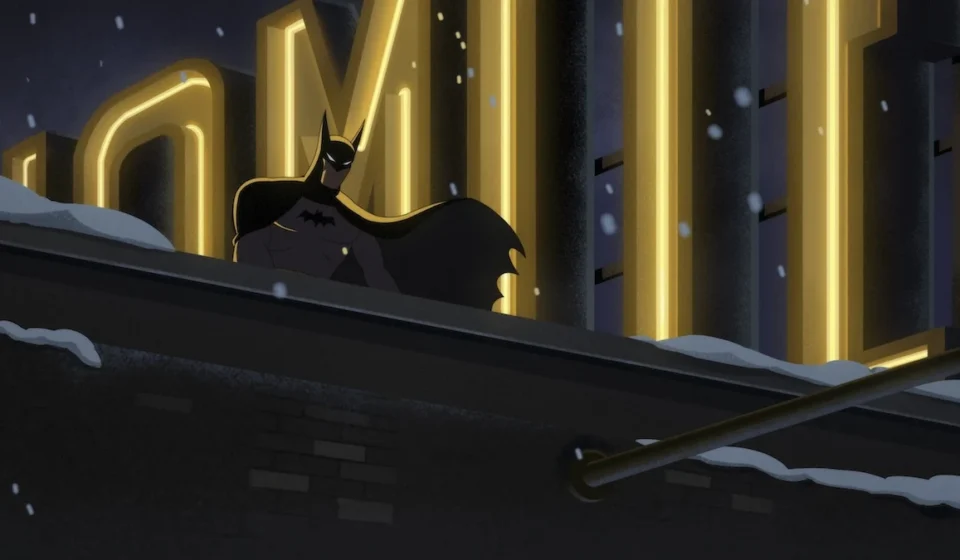
A Darker Knight, A Deeper Humanity: Reviewing ‘Batman: Caped Crusader’ Season 2

Editor’s Note: The following review contains mild spoilers for the second season of “Batman: Caped Crusader.”
In the shadow-drenched streets of Gotham City, justice has always been a rare commodity. Yet, as Batman: Caped Crusader returns for its sophomore season on Amazon Prime Video, the series dares to ask a more uncomfortable question: What happens when the hero realizes the game is rigged?
The second season of the critically acclaimed animated noir doesn’t just offer more of the same; it deepens the philosophical crisis of its protagonist, transforming the Batman from a solitary avenger into a reluctant leader navigating a broken world.
The Illusion of Justice: A Season 2 Kickoff
The season opens with an absurd, if entirely foreseeable, setback that sets the tone for the episodes to follow. After a grueling campaign to bring Gotham’s untouchable crime boss, Rupert Thorne (voiced by Cedric Yarbrough), to justice, the city’s few remaining stalwart do-gooders find themselves hitting a brick wall. Local news pundits dismiss the charges as a political farce, and Thorne himself remains suspiciously unshaken, confident that his influence transcends the courtroom.
The prosecution’s case hinges on a single, fragile thread: the testimony of Thorne’s surprisingly honest accountant. This setup serves as a microcosm for the series’ broader exploration of institutional rot. While Batman (Hamish Linklater) manages to protect the witness through a gauntlet of attacks—aided by an expanding roster of allies including Commissioner James Gordon (Eric Morgan Stuart), public defender Barbara Gordon (Krystal Joy Brown), and detective Renee Montoya (Michelle C. Bonilla)—the ultimate victory is pyrrhic.

When the accountant finally takes the stand, the "truth" is weaponized against the city. The case is summarily dismissed, and Thorne walks free. The judge’s reasoning—that the law is merely a tool for the powerful to dictate their own reality—leaves Batman to confront the reality that playing by the book in a corrupt system is a losing game.
Chronology of a Darkening Knight
The trajectory of Batman: Caped Crusader is one of profound, incremental change. In the first season, the series established a Bruce Wayne still reeling from the shock of his parents’ death and the subsequent discovery that Gotham’s foundations were built on deceit.
Season 2 accelerates this descent into cynicism, yet simultaneously pushes back against it with a newfound sense of compassion. The show charts a fascinating evolution:
- The Early Episodes: Focus on the mechanical failure of justice, where Batman learns that the legal system is often an impediment to safety.
- The Mid-Season Pivot: Features the pivotal "Deep Cover" episode, where Bruce adopts the guise of "Matches Malone" to infiltrate the prison system. This serves as the emotional turning point, forcing him to view his targets not as monolithic evils, but as exploited human beings.
- The Climax: Moves toward a confrontation with a classic, unfeeling agent of chaos, testing whether the lessons of empathy can survive the fires of pure malice.
Supporting Data: The Anatomy of a Modern Noir
The brilliance of Caped Crusader lies in its "case-of-the-week" structure, which allows the show to hold a mirror up to contemporary societal anxieties. Each episode serves as a thematic building block for Batman’s evolving moral code:
- "Rocket’s Red Glare": Explores the human cost of corporate exploitation, as a brilliant Black scientist is driven to terrorism after her life’s work is discarded by her employer.
- "The Devil’s Due": Acts as a scathing critique of modern media consumption, drawing uncomfortable parallels between cable news obsession and the fervor of cult followings.
- "The Spectral Hand": Deepens the emotional stakes for the Gordon family, exploring the weight of accidental death and the moral ambiguity of resurrection.
These stories function as more than just filler; they are the crucible in which Batman’s character is forged. By grounding the "Dark Knight" in the lives of average citizens—the "working stiffs" who find themselves trapped between corporate indifference and street-level violence—the series forces Bruce Wayne to realize that his crusade cannot simply be about punching criminals. It must be about protecting the vulnerable from the systems that turn them into desperate people in the first place.

Official Perspectives and Creative Direction
The creative team behind Caped Crusader has been vocal about the necessity of evolving the Batman mythos. By moving away from the "judge, jury, and executioner" archetype, the show aligns itself with a more modern, empathetic interpretation of the character.
As noted in various production briefings, the series avoids the temptation to make Bruce a one-note vigilante. Instead, he is a man who is actively unlearning the rigid, black-and-white thinking of his youth. The inclusion of Alfred (Jason Watkins) as a moral compass remains a cornerstone of the series. The surrogate father-son dynamic is given more weight this season, as Bruce leans on Alfred not just for tactical support, but for emotional guidance—a rare sight for a character often depicted as a stoic island.
Implications: The Burden of the Symbol
The most significant implication of Season 2 is the shifting definition of what it means to be a hero. The show suggests that heroes do not have to put themselves above the populace to lead. In fact, they must do the opposite: they must be more in touch with the "flesh and blood" of humanity.
When Batman burns the plans for a potentially world-changing "miracle element" because he cannot trust the hands it would fall into, he isn’t acting out of arrogance, but out of a tragic, hard-won wisdom. He recognizes that, in a city as broken as Gotham, even the most noble tools can be corrupted.
This leads to a more nuanced, albeit exhausting, mission. The "righteous crusade" is no longer about a single, final victory over a "Big Bad." It is a long-term commitment to a community, a campaign that will be defined by setbacks, slow progress, and the recognition that the lines between "hero" and "villain" are often drawn by circumstance rather than intent.

Conclusion: A Grade of B+
Batman: Caped Crusader Season 2 is a triumph of animated storytelling. It manages to retain the moody, atmospheric aesthetic of classic noir while daring to challenge the core tenets of the superhero genre.
It does not offer easy answers. It suggests that while the city is filled with millions of souls—both lost and malicious—the only way forward is through a shared, painful commitment to one another. By the time the season reaches its final frames, Batman has ceased to be just a man or just a symbol. He has become a leader who understands that he is part of the city, not its master. For fans of the character, it is a rewarding, complex, and deeply human journey.
Grade: B+
“Batman: Caped Crusader” Season 2 premiered Friday, July 31, on Amazon Prime Video. All 10 episodes are currently available for streaming.