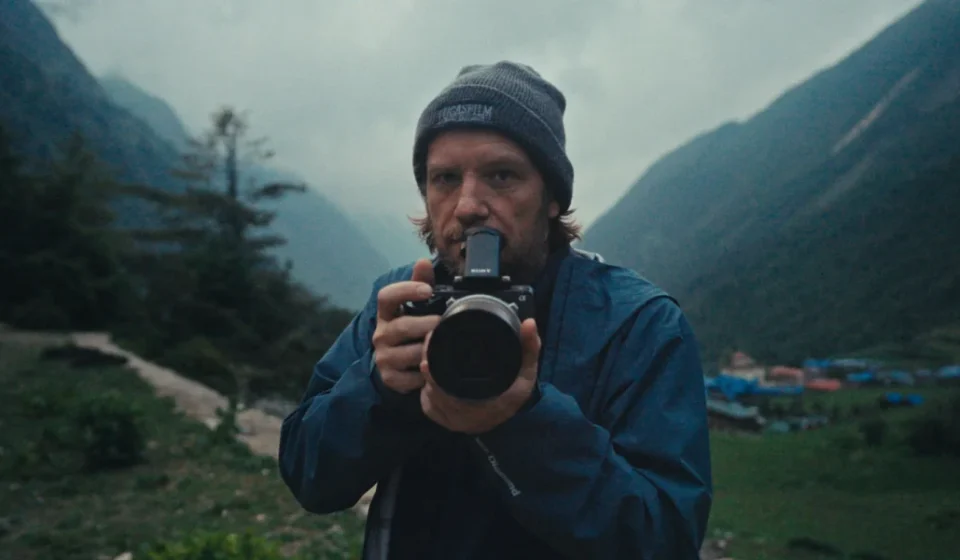

In the world of high-end motion picture production, the transition from heavy, cumbersome rigs to agile, lightweight systems has been the defining trend of the decade. Sony has now pushed this envelope to its logical extreme with the launch of the FX5, a compact full-frame Cinema Line camera that promises to bridge the gap between "run-and-gun" convenience and the rigorous demands of theatrical-grade cinematography.
With 5K Open Gate acquisition, internal 16-bit X-OCN recording, and an AI-driven architecture, the FX5 represents a paradigm shift. To demonstrate its capabilities, Sony enlisted the help of Gareth Edwards—the visionary director behind The Creator, Rogue One: A Star Wars Story, and the upcoming Jurassic World: Rebirth—to field-test the unit in the challenging environments of Cambodia, Thailand, and Nepal.
The Main Facts: A Technical Powerhouse in a Compact Frame
The FX5 is built around a newly engineered, fully stacked Exmor RS CMOS full-frame sensor. It is paired with the latest high-speed BIONZ XR2 image processing engine and a dedicated AI processing unit, which together allow for an extraordinary degree of flexibility.
Key technical specifications include:
- Resolution and Frame Rates: 5K at up to 60 fps, 4K at 120 fps, and Full HD at a staggering 240 fps.
- Dynamic Range: Rated at over 15 stops in S-Log3, providing a cinematic roll-off that handles high-contrast scenes with ease.
- Base ISOs: A triple-base ISO structure (800, 4,000, and 12,800) allows the camera to perform in virtually any lighting condition without excessive noise.
- Internal Recording: For the first time in the FX series, the camera records 16-bit scene-linear X-OCN internally, offering RAW-level quality without the bulk of external recorders.
- Open Gate Recording: The camera provides 3:2 full-sensor Open Gate recording, alongside standard 17:9, 16:9, and Super 35mm scan modes.
Perhaps most notably for purists, the FX5 features in-camera de-squeeze for a variety of anamorphic optics, ranging from 1.3x to 2x. This allows cinematographers to utilize vintage glass while maintaining the convenience of a modern digital workflow.
A Chronology of the "Guerrilla" Test
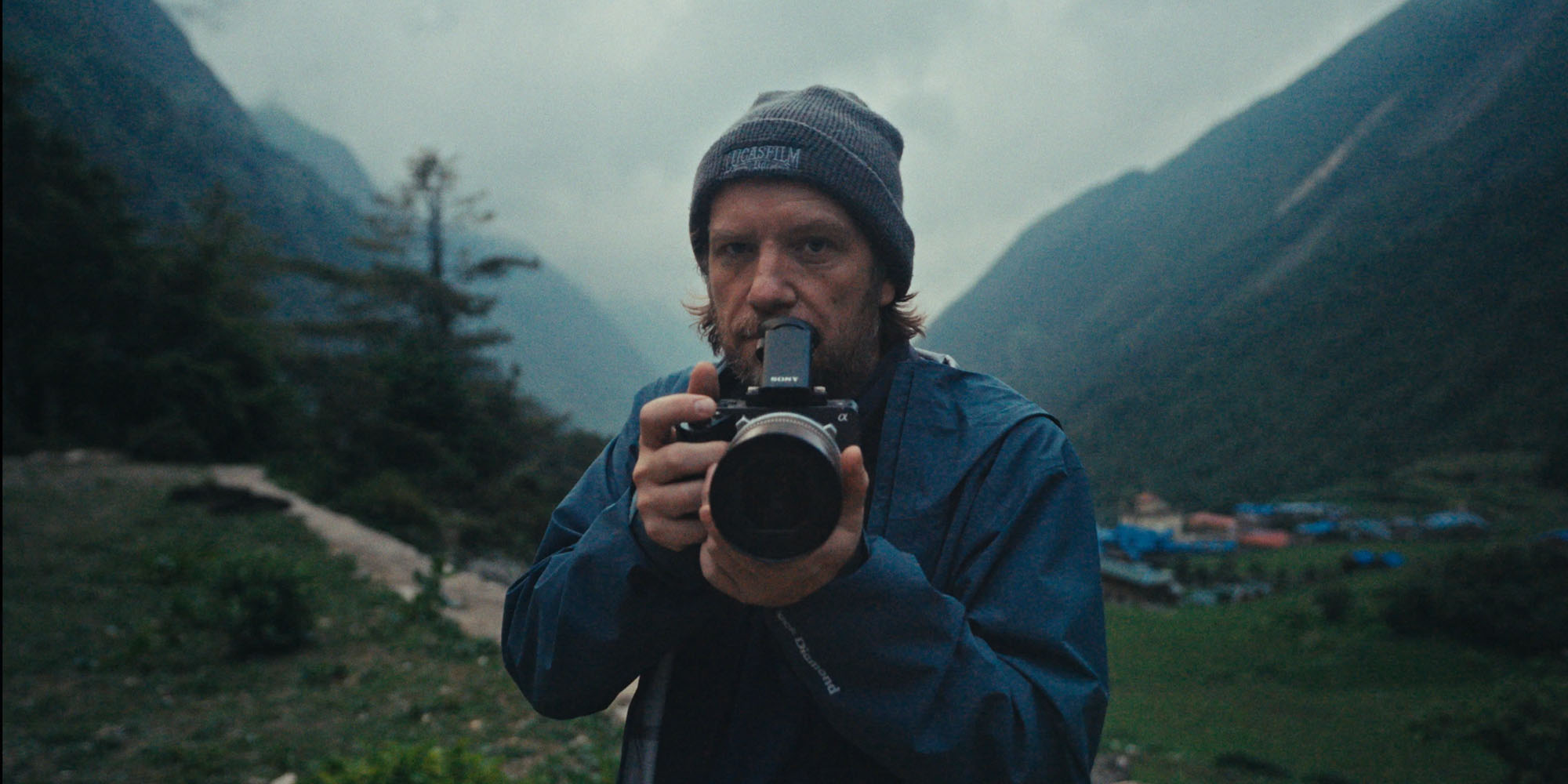
Gareth Edwards’ relationship with Sony’s compact line began in earnest during the production of The Creator (2022). That film was notable for its distinct, low-profile aesthetic, achieved by shooting across 80 locations in Southeast Asia with the Sony FX3. Edwards, along with cinematographers Greig Fraser and Oren Soffer, proved that a massive crew wasn’t a prerequisite for big-budget visual storytelling.
When Sony approached Edwards to test the FX5, he returned to the terrain that defined his recent career. Over the course of a single week, Edwards and a skeleton crew traversed Cambodia, Thailand, and Nepal. The environmental conditions were brutal, fluctuating between 35°C in the tropical lowlands and -5°C in the high-altitude Himalayan villages.
The logistical footprint was kept intentionally small. All essential gear fit into just three bags: one for the camera body, one for a compact dolly and slider, and a third for essential accessories. There were no V-mount batteries, no external monitors, and no heavy video transmitters. By stripping the setup to its bare essentials, Edwards proved that the FX5 could function as a truly self-contained production ecosystem.
Supporting Data: The iPhone as the Command Center
One of the most radical departures in Edwards’ test was his decision to use an iPhone as his primary wireless viewfinder. By utilizing Sony’s Monitor & Control 3.0 app, Edwards was able to feed the camera’s output directly to his smartphone via Wi-Fi.
"The iPhone is so bright and the battery is so good, it’s better than any five-inch field monitor you could get," Edwards explains. The use of MagSafe magnets allowed him to swap the monitor between the gimbal and his own wrist, effectively turning his body into a mobile viewing station.
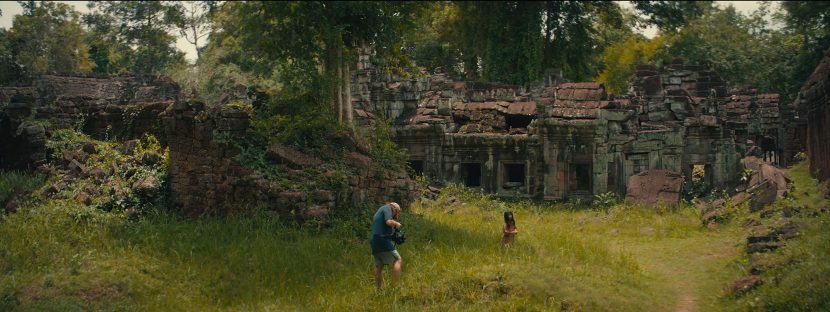
This configuration eliminated the need for an external video transmitter, which, in a traditional setup, would add significant weight and power draw. Furthermore, the FX5’s ability to be powered directly from the handle of the gimbal meant that the entire rig could be held in one arm. According to Edwards, the camera’s power efficiency and intelligent design allowed him to maintain a "tiny" profile while capturing imagery that was, in his words, "crisp" and "painterly."
Official Responses and Engineering Philosophy
Sony’s design team prioritized "hide in plain sight" operability. The FX5’s flat-top body is purpose-built for handheld and gimbal work, featuring an active cooling system that ensures stability during extended sessions.
The inclusion of AI-assisted autofocus is another major milestone. The system uses human pose estimation to lock onto subjects—even in low-light, high-contrast scenarios—by tracking eyes, heads, and bodies simultaneously. This, combined with the new Auto Tracing White Balance, ensures that even in rapidly changing light, the footage remains consistent.
Regarding the workflow, the introduction of X-OCN C1 and C2 variants is a direct response to user feedback. These data-efficient formats retain the benefits of a 16-bit RAW workflow while significantly reducing storage and transfer bottlenecks. As Sony noted, the goal is to make the "data-heavy" nature of modern cinema accessible to the independent operator.
Implications: The Democratization of Cinematic Scale
The most profound implication of the FX5 is the psychological freedom it grants the director. By removing the "clutter" of traditional film production—the monitors, the cables, the massive crews—filmmakers are given access to human moments that would otherwise be staged or inhibited by the presence of a camera.
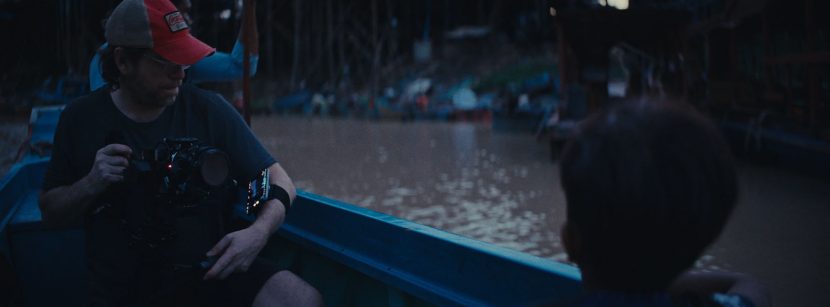
Edwards recounted an experience in a Himalayan monastery, where he and his tiny rig were able to walk into a private Buddhist ceremony unnoticed. Because he did not "look" like he was making a movie, he was able to capture raw, unscripted human behavior. This is the core philosophy of the FX5: it is not just a tool for capturing light, but a tool for capturing life as it happens, without the intrusion of a traditional production footprint.
"I really don’t want to look like I’m making a movie," Edwards reflects. "I want to look like I’m just passing through."
As for the future, Sony has already confirmed that a major firmware update is slated for August 2027, which will introduce high-frame-rate recording at up to 240 fps in X-OCN, a dedicated vertical-shooting interface, and advanced frame-grab capabilities.
With a price point of A$7,849 for the body, the FX5 positions itself as a disruptive force. It challenges the industry to reconsider what constitutes a "cinema camera." For Gareth Edwards, the camera is a "TARDIS"—small on the outside, yet containing the massive, cinematic potential of a million-dollar production within its compact chassis. The era of the "guerrilla" blockbuster has officially arrived, and it fits in a backpack.