A Voyage of Memory: Inside John Travolta’s Directorial Triumph, Propeller One-Way Night Coach

The 2026 Cannes Film Festival was, by all accounts, a whirlwind of high-stakes premieres and industry maneuvering. Yet, amidst the frenetic energy of the Croisette, one project managed to cut through the noise with startling, quiet clarity. Propeller One-Way Night Coach, the feature directorial debut of Hollywood icon John Travolta, emerged not as a blockbuster spectacle, but as a poignant, deeply personal excavation of memory. Following a career-spanning highlights reel that reminded the audience of Travolta’s massive cultural footprint—from the neon-drenched dance floors of Saturday Night Fever to the sharp-tongued underworld of Pulp Fiction—Thierry Frémaux bestowed an honorary Palme d’Or upon the star. It was a moment of profound vulnerability that set the stage for a film that feels less like a commercial product and more like a captured dream.
The Genesis of a Personal Odyssey
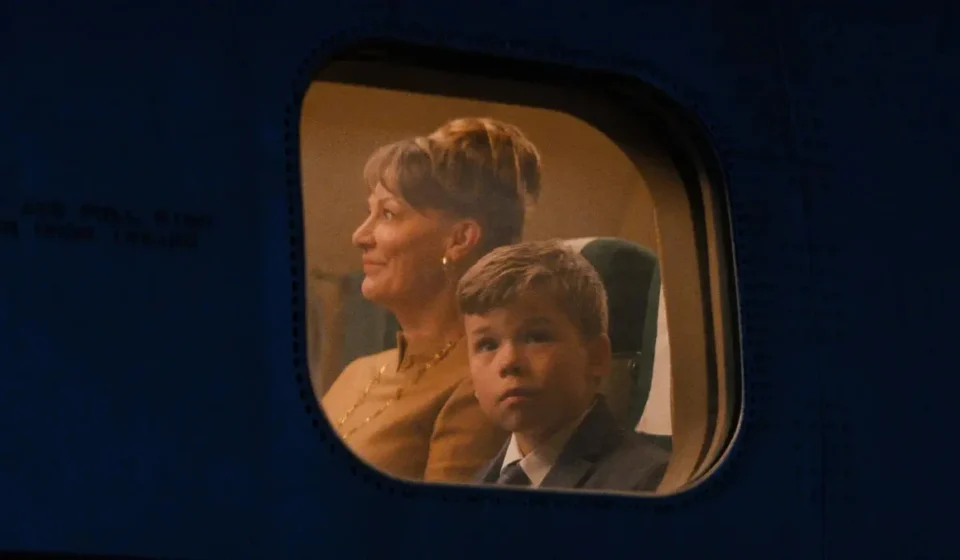
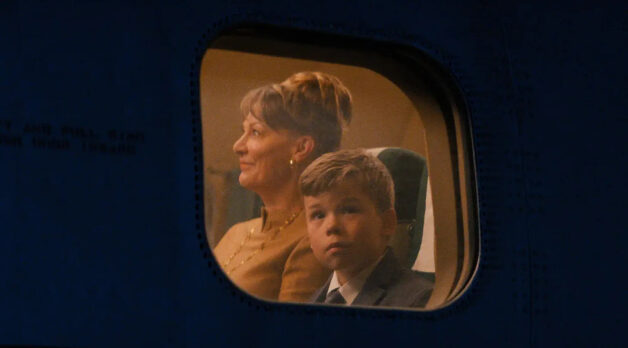
At its core, Propeller One-Way Night Coach is an adaptation of Travolta’s 1997 novella of the same name. The film follows a young boy named Jeff (played with remarkable sensitivity by Clark Shotwell) as he navigates his first airplane flight in 1962. It is a work of total recall, a cinematic tapestry woven from the threads of Travolta’s own childhood—his mother’s theatrical flair, his sister’s influence, and the mid-century aesthetic that defined his formative years.
The film is not merely a period piece; it is a sensory immersion. Travolta meticulously recreated the specific colors, textures, and even the ambient smells of 1960s air travel. The project, shot over a lean 15-day schedule—five days each in New York, Kansas, and Los Angeles—stands as a testament to the power of a singular, uncompromised vision. Since its debut, the 60-minute film has found a massive audience on Apple TV, where it has held the top spot as the most-streamed film globally for over a week.
A Chronology of Artistic Realization
The journey to the screen began long before the cameras rolled in 2026. Having penned the novella in 1993 for his family, Travolta initially printed only 70 copies. The response was so overwhelmingly positive that he felt compelled to share the story with a wider audience, leading to its publication in 1997.
For decades, the project sat in development limbo. Travolta, protective of the intimate nature of the source material, refused to hand the reins to a studio that might dilute his vision. "It was so personal, it was so intimate, that I just couldn’t afford for them to get it wrong," Travolta reflects. "I said, if you don’t do it now, you’re never going to do it. So just freaking finance it, produce it, get your vision, get exactly what you want on screen."
The final push came when the actor turned 70. With the support of Apple’s Eddie Cue, the production moved with a speed that mirrored the film’s own stream-of-consciousness narrative. Cannes’ decision to include the film—a first for a selection made five months in advance—validated Travolta’s gamble. The result is a film that functions like a finely tuned instrument, where the music of Jobim, Sérgio Mendes, and Frank Sinatra perfectly mirrors the visual cadence of the 1960s.
The Architecture of Memory: Supporting Data and Craft
When asked about the technical challenges of translating prose to the screen, Travolta explains that the novella essentially "directed itself." By lifting dialogue directly from the book, he maintained a purity of perspective that allowed the visuals to bloom organically.
The Role of Voiceover
The film relies heavily on voiceover narration, which serves as an internal monologue for the young Jeff. Travolta notes that he approached the narration as an adult recounting the "fleeting thoughts of a child." The goal was to maintain a childlike cadence—innocent, observational, and devoid of adult cynicism. Whether the boy is observing the "oozing cheese" of a chicken cordon bleu or attempting to comprehend the quiet pain of a neighbor who survived a concentration camp, the perspective remains grounded in the child’s unique ability to process tragedy and beauty with equal, transient weight.
The Influence of Auteurism
Travolta’s directing style is an eclectic homage to the titans he has worked with throughout his career. From Quentin Tarantino, he learned the value of efficiency—knowing when to cut away and trusting the audience’s intelligence. From Mike Nichols and Brian De Palma, he absorbed the fundamental lesson that 90% of a director’s success lies in the casting. "If you’ve correctly cast, they already own that character," Travolta asserts. "Now you can just suggest little things that might make that character even more alive."
Implications for Modern Cinema
The success of Propeller One-Way Night Coach carries significant implications for the industry. At a time when studio budgets continue to balloon and narratives are often over-engineered, Travolta’s film proves that a lean, 60-minute runtime can be more impactful than a bloated three-hour epic.
Thierry Frémaux himself noted the significance of the film’s success, suggesting that it serves as a powerful reminder that high-quality, impactful art can be created with modest financial resources. By prioritizing "kismetic" moments—where music, timing, and performance align perfectly—Travolta has bypassed the traditional tropes of dramatic conflict. There is no villain to defeat or massive obstacle to overcome; instead, there is the "drama of the journey," the sensation of being transported to a different era where dreams felt possible and the future was framed by the sleek lines of a jet engine.
Reflections on a Changing World
Despite the film’s nostalgic warmth, it does not shy away from the underlying tensions of the 1960s. The Cuban Missile Crisis, the looming threat of atomic war, and personal histories of trauma all exist in the periphery of the story. Yet, the film captures a specific kind of "resilience of character" that defined the era.
"Equally bad things were happening in the world, but we had a little more resilience to what was happening," Travolta notes. This resilience is the emotional anchor of the movie. The protagonist doesn’t ignore the darkness; he acknowledges it, feels empathy, and then finds a way to move on—a process that is, in itself, a testament to the hopefulness of the time.
Conclusion: A Legacy Refined
As Propeller One-Way Night Coach continues to resonate with global audiences, it solidifies John Travolta’s standing not just as an actor, but as a storyteller with a keen, painterly eye for detail. By embracing the "voyeuristic" nature of his own childhood—the habit of paying attention to the colors of a plane interior or the way light dances on a mother’s face—he has crafted a film that feels like a shared memory.
The project is, above all, a celebration of the "mid-century everything"—the architecture, the design, the clothing, and the spirit of a world that, while flawed, felt like it was on the verge of something spectacular. In a cinematic landscape often dominated by cynical takes or derivative sequels, Travolta’s debut is a breath of fresh air: a sincere, uncynical oasis that asks us simply to look, to listen, and to remember what it was like to see the world for the first time.