Blood, Ballads, and Betrayal: Inside the Electrifying Reunion of AMC’s The Vampire Lestat

[Editor’s note: The following report contains major spoilers for "The Vampire Lestat," Episode 6.]
For the past several months, AMC’s The Vampire Lestat—the bold, rock-infused expansion of Rolin Jones’ Interview with the Vampire universe—has operated as a masterclass in gothic maximalism. Starring Sam Reid as the titular anti-hero and Jacob Anderson as his long-suffering, immortal companion Louis de Pointe du Lac, the series has pushed the boundaries of the Anne Rice canon. From the release of an original, yearning-drenched album of ballads to high-fashion blood-splattered collaborations and an extravagant, star-studded watch party at New York’s iconic Beacon Theatre, the show has become a cultural phenomenon. Yet, for all its sonic ambition and aesthetic flair, the season has notably lacked one critical ingredient: the electric, volatile chemistry between its two central protagonists.
That changed on Sunday night. The penultimate episode, a high-octane narrative collision, finally delivered the cathartic reunion fans have been clamoring for. As the series hurtles toward its finale, this "pleasurably chaotic" third season has reached a fever pitch, blending supernatural stakes with the intimate, agonizing history of the world’s most famous vampires.
A Halloween Night of Reckoning
The sixth episode of the season unfolds over a whirlwind Halloween night in Montreal, a setting that serves as the backdrop for a series of high-stakes encounters. The episode sees Lestat and Louis navigating a gauntlet of ghosts from their past, as well as new figures who are poised to reshape the trajectory of the series.

As Lestat prepares to stage a performance for an unprecedented assembly of the undead, the narrative tension focuses squarely on the two leads. Their reunion is not one of gentle reconciliation, but one of raw, unfiltered friction. The episode manages to weave together betrayal, scandal, and supernatural spectacle, culminating in a final, gasp-worthy sequence where the two vampires literally lose their heads. This cliffhanger has left audiences reeling, setting an impossible standard for the upcoming season finale.
The Homecoming: Reid and Anderson on Their Dynamic
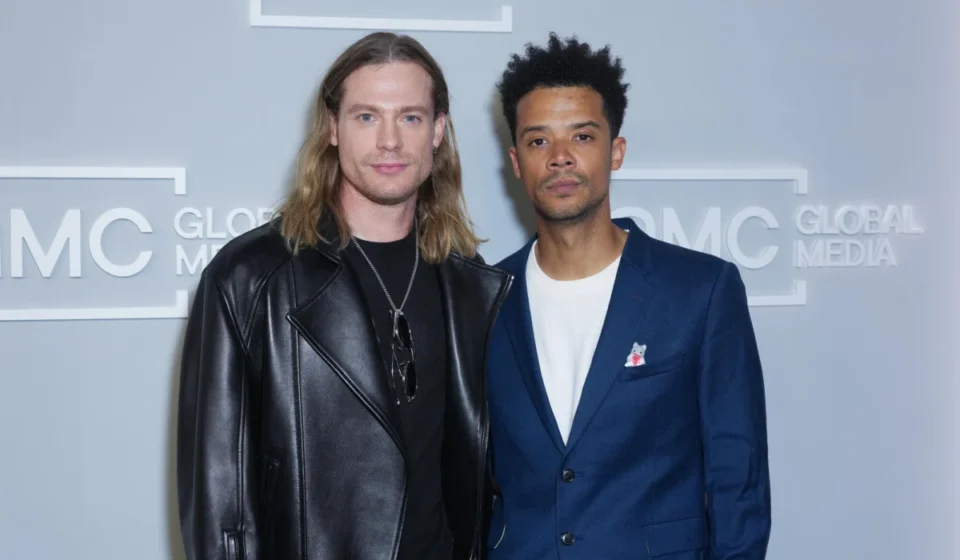
For Sam Reid and Jacob Anderson, who have spent a significant portion of this season filming in separate "reverberation spaces," the episode felt like a long-awaited homecoming. In an exclusive joint interview, the actors discussed how their time apart has informed their approach to the roles, ultimately sharpening the emotional payoff of their characters’ inevitable collision.
"This is what the show always was, from the beginning, for us," Reid explained via video call. "We started together, we started with all of these insane scenes that go off in these crazy directions, and we set the tone of how we were going to work." Reid emphasized that the chaotic nature of the series requires a mutual trust between the two leads, noting that they often encourage one another to "lean in" when the script demands something particularly "mad."
Anderson, reflecting on the necessity of the distance between their characters, suggested that the narrative choices made by showrunner Rolin Jones and co-writer Hannah Moscovitch were essential to maintaining the show’s integrity. "It’s always lovely to return to that—what the show is for us and how we work in it," Anderson said, comparing their collaborative process to the relationship between Lestat and Louis, which remains the beating heart of the franchise regardless of their physical proximity.

Navigating the "Impossible" Source Material
The series has not been without its risks. Adapting Anne Rice’s dense, lore-heavy Vampire Chronicles is an endeavor fraught with peril. With the cancellation of the companion series The Talamasca at AMC, the pressure on The Vampire Lestat to deliver has never been higher.
The current season draws heavily from the second book in the Chronicles, featuring complex revelations such as the incestuous dynamic between Lestat and his mother, Gabriella (Jennifer Ehle). While some viewers may have been apprehensive about the lack of screen time shared by the leads, Reid argues that the audience’s desire for proximity is exactly what the writers are weaponizing.
"I think the wonderful thing in the way that Rolin and Hannah create this show is that they are aware of the fan expectation," Reid noted. "But I don’t think people really know what they want until they see it." He explained that the uncertainty of whether the two would ever be back in each other’s arms created a sustained tension that a simple, linear romance could never achieve. "You want to be kept on the edge of your seat," he added.
Implications for the Future of the Immortal Universe
The implications of the Season 3 trajectory extend far beyond the current conflict. With the series consistently pulling from across the entire Vampire Chronicles bibliography—including Queen of the Damned, The Tale of the Body Thief, and Merrick—the show has established a "remix" culture that keeps even the most devoted readers guessing.

The stars remain tight-lipped about the specific length of the series, but their enthusiasm suggests a long-term commitment. Both Reid and Anderson acknowledged that they have discussed the future of the show "at length," including the potential for a fourth season.
When asked about the looming introduction of the Queen, Akasha, played by newcomer Sheila Atim, Reid was effusive in his praise. He addressed the 2002 film Queen of the Damned—which served as his own gateway into the books—with a mix of nostalgia and professional focus. "I have a nostalgic love of that film," he admitted. "I love Aaliyah. I think she was amazing. But Sheila Atim is incredible, and she’s very much the Akasha of our show."
Behind the Scenes: The Creative Vision
The success of the show, according to its leads, lies in the creative team’s ability to ground the supernatural in deeply human, albeit often grotesque, metaphors. Reid highlighted the incestuous dynamic between Lestat and Gabriella as an example of how the writers take subtext from the novels and push it to its logical, often uncomfortable, conclusion.
"They take us to some crazy, crazy, and sometimes terrifying places," Reid said, recounting instances where he questioned if a scene was "too full on." He noted that showrunner Rolin Jones consistently reminds him: "Don’t worry about making people angry now. You’ll look back at this in 10 years and be proud."

This philosophy of fearless adaptation has clearly resonated. Anderson echoed this sentiment, praising the meticulous nature of the scriptwriting. "People that really know the books… can see how something is taken from one era or from one character and put into a new era or into a different character," he said. He assured viewers that these seemingly disparate threads are part of a cohesive design that will eventually coalesce into a grand, unified vision.
Conclusion: A Season for the Ages
As the finale approaches on July 19, the stakes for Lestat and Louis have never been higher. Having faced down the vindictive ghost of Claudia, the wrath of a jilted Armand, and the public exposure of their most guarded secrets, the pair finds themselves in a position that is as precarious as it is inevitable.
Whether the show will continue to push these characters into the abyss remains to be seen, but one thing is certain: the "Interview" universe has successfully carved out its own unique space in the television landscape. By balancing the demands of a built-in fanbase with the creative freedom to deconstruct and rebuild iconic source material, the team behind The Vampire Lestat has ensured that, like their protagonists, the series is built to last through the ages.
As the credits roll on the penultimate chapter, fans are left with the chilling, intoxicating promise that while their heads may be rolling, the story is far from over.