The Digital Bridge: Why Cooke’s /i Technology is Transforming the VFX Pipeline

In the high-stakes environment of modern feature film production, the disconnect between the camera department and the visual effects (VFX) facility has long been a source of inefficiency. For decades, the creative choices made by a Director of Photography (DP)—the precise focus pulls, the subtle aperture shifts, and the inherent optical characteristics of glass—were effectively lost once the raw footage reached the post-production house.
In a recent fxpodcast, Jordan Thistlewood, Chief Digital Officer at Cooke Optics, sat down to discuss how the company’s /i Technology is finally closing this gap. By turning lens metadata from an optional, often-ignored sidecar file into a foundational element of the digital negative, Cooke is fundamentally changing how VFX teams reconstruct the physical world in the digital realm.
The Evolution of /i Technology: A Two-Decade Journey
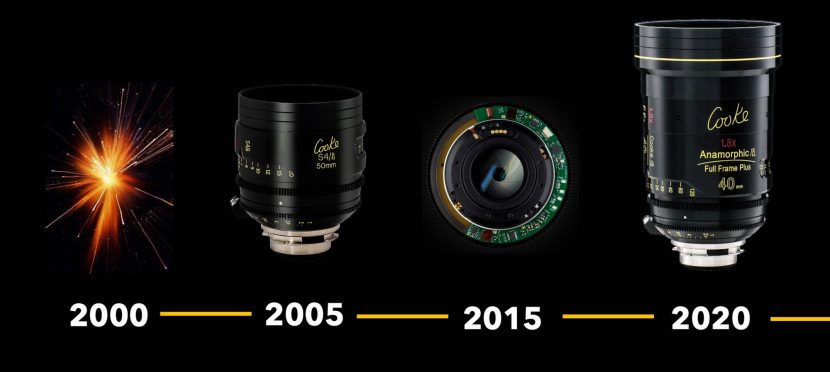
Cooke’s /i Technology was not an overnight innovation; it has been in development for over twenty years. At its inception, the goal was straightforward: to enable a lens to communicate directly with the camera and, by extension, the entire filmmaking pipeline.
Initially, the industry struggled with the logistics of metadata. In the early 2000s, lens data was often captured separately, requiring manual synchronization that was prone to drift, error, or total loss during the transition from set to post. As Thistlewood explains, the transition from "sidecar files" to embedded, frame-accurate metadata has been the single most important shift in the technology’s history.
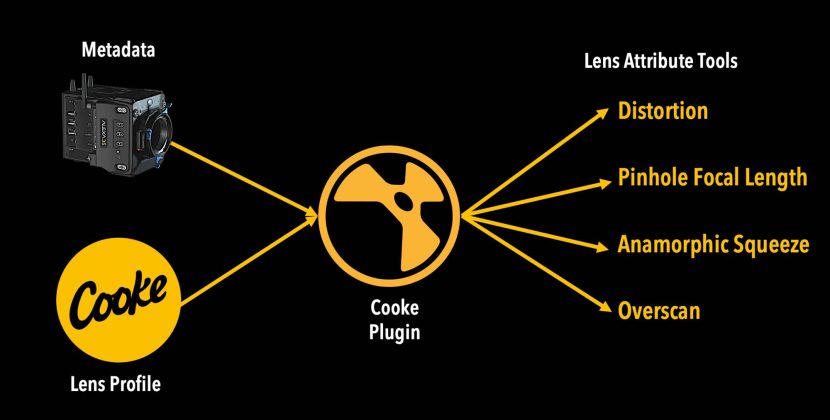
Today, industry-standard camera systems from ARRI, RED, Sony, and Blackmagic are capable of recording /i data directly into the camera’s raw files via the lens mount. This integration ensures that the metadata is "baked in," traveling with the image through every stage of the pipeline—from on-set dailies to final VFX pulls—without requiring constant manual oversight.
Understanding the Data: What is Being Captured?
To the uninitiated, lens metadata might sound like an abstract collection of numbers. However, for a VFX supervisor, this data represents the "DNA" of the shot. The /i system captures:
- Focus Distance: Essential for matching depth-of-field and focus pulling.
- Iris and T-Stop: Crucial for understanding light transmission and the physical characteristics of the bokeh.
- Zoom Position: Vital for dynamic lens changes.
- Entrance Pupil & Shading Data: Necessary for accurate 3D tracking and CG integration.
- Hyperfocal Distance: A key metric for maintaining visual continuity in deep-focus shots.
As Thistlewood points out, the "love letter" analogy is apt. When a DP makes a creative choice on set—such as a rack focus that guides the audience’s eye—they are performing a delicate choreography. Without metadata, VFX artists are forced to reconstruct these physical nuances through painstaking "plate analysis" and manual estimation. With /i data, the computer knows exactly what the glass was doing at the moment the shutter fired.
The Technical Imperative: From Guesswork to Precision
One of the most profound arguments for the universal adoption of lens metadata is the debunking of the "binary focus" myth. In digital compositing, focus is often treated as a simple blur filter. However, in reality, focus is a complex, non-linear phenomenon shaped by lens design, format, and aperture.
The Problem with "Eyeballing"
When VFX artists attempt to match a background plate without metadata, they often rely on witness cameras and secondary documentation. This is not only time-consuming but inherently inaccurate. As productions become more complex—particularly those involving virtual production and high-end CGI—the margin for error shrinks.
"Lenses are living, breathing objects," Thistlewood notes. A lens’s optical behavior shifts dynamically as it is used. A focal length engraved on a barrel is an approximation for infinity; at close focus, that behavior changes entirely. By providing a "curve" of data rather than a fixed value, Cooke enables VFX artists to match their CG assets to the physical lens’s reality with sub-pixel accuracy.
Success Stories: Project Hail Mary
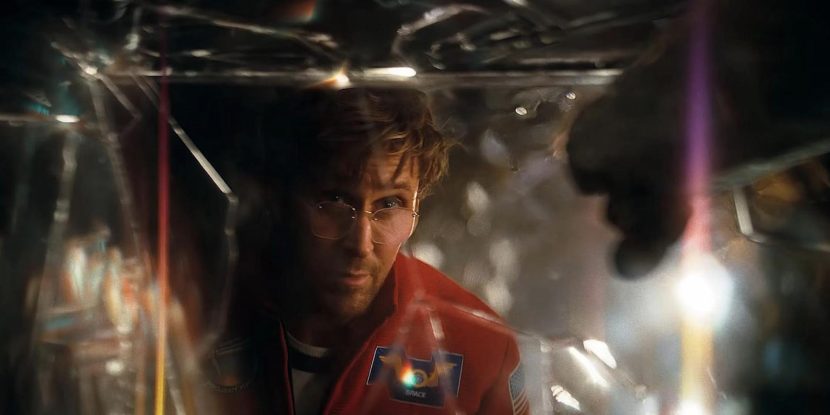
The utility of this data is not merely theoretical. Productions like Project Hail Mary have utilized focus distance metadata to drive depth-of-field effects in post-production. By allowing the VFX software to "inherit" the optical behavior of the live-action photography, the final composite feels integrated and organic, rather than like a digital layer pasted on top of a photographic base.
Bridging the Gap: Overcoming Pipeline Challenges
Despite the technical maturity of the technology, cultural and procedural hurdles remain. The primary challenge today is not the collection of data, but its preservation.
The Transcoding Bottleneck
A common point of failure occurs during the transcoding process. A production may capture perfect metadata on set, only to have it stripped out during the editorial turnover or the generation of EXR files. Thistlewood acknowledges that while tools are improving, the industry still requires a mindset shift.
Facilities such as Company 3 and other major color and finishing houses are increasingly recognizing that metadata preservation must be a standard deliverable. The workflow, while technically simple, requires a commitment to "do no harm." The rule for modern production is simple: Do not throw the data away.
The "Trust" Factor
External systems—such as Preston motors or other lens-control devices—can act as a bridge for legacy lenses that lack internal electronics. However, the goal remains the same: push that data back into the camera file. Information written on a clipboard is a liability; data embedded in the metadata stream is an asset. The difference is "trust." When data is attached to the frame, it remains valid regardless of who is handling the footage months later.
Implications for the Future of Filmmaking
The industry is currently at a tipping point. The hardware is ready, the software is becoming increasingly aware, and the demand for high-end visual fidelity is at an all-time high.
The Case for Adoption
For production managers, the argument is purely economic. The cost of preserving metadata is negligible compared to the thousands of dollars saved in reduced manual tracking, lens solving, and focus reconstruction. By automating these tasks, VFX facilities can redirect their budgets away from "technical fixing" and toward "creative artistry."
Cultural Shift
The final hurdle is cultural. Metadata should no longer be treated as a "technical fetish" for data-obsessed engineers. It is a vital component of the cinematographer’s craft. When Cooke presents this technology at conferences like FMX, they are not just speaking to camera technicians; they are speaking to the post-production community, urging them to demand better information.
Conclusion: The New Standard
As Jordan Thistlewood emphasizes, the goal is to make lens metadata a standard language of modern filmmaking. It is time for VFX supervisors and post-production leads to integrate metadata into their turnover requirements and Quality Control (QC) checklists.
The digital bridge between the camera lens and the compositing suite is already built; it is now up to the industry to walk across it. By embracing the precision of /i Technology, we move toward a future where the seamless integration of live-action and digital effects is not just an aspiration, but a baseline expectation.
The tools are ready. The data is available. Now, it is up to the filmmakers to ensure that the "love letter" written by the camera department arrives safely at its destination in post-production.