A New Vision in Japanese Realism: Yaza Takenoshin’s ‘Hinotama: Ball of Fire’ Debuts at Tokyo International Film Festival

The 37th Tokyo International Film Festival (TIFF) has long served as a prestigious gateway for the next generation of East Asian filmmakers. This year, the spotlight of the "Nippon Cinema Now" section—a curated space dedicated to showcasing the vanguard of contemporary Japanese cinema—has fallen squarely on Hinotama: Ball of Fire. The film marks the ambitious debut feature of Yaza Takenoshin, a director whose path to the silver screen is as unconventional as his visual style is disciplined. Having graduated from Harvard University only this past summer, Yaza has transitioned from the ivory towers of the Ivy League to the rigorous demands of independent filmmaking, delivering a work that suggests a maturity far beyond his years.
Hinotama: Ball of Fire is not merely a domestic drama; it is a clinical, yet deeply empathetic, dissection of a family’s slow-motion collapse. Through the eyes of a young boy named Takeshi, the film explores the erosion of the traditional Japanese nuclear family, the loss of childhood innocence, and the desperate search for wonder in a world defined by mechanical repetition.
I. Main Facts: The Emergence of a New Auteur
At its core, Hinotama: Ball of Fire is a character study centered on Takeshi, portrayed with haunting restraint by Riku Onishi. The narrative follows Takeshi as he bears silent witness to the disintegration of his parents’ marriage. Unlike the explosive shouting matches often found in Western domestic dramas, Yaza opts for a "death by a thousand cuts" approach. The warning signs are understated: a sharp word at the dinner table, a lingering silence in the hallway, and the subtle, bristling frustration of his mother, played by Mari Kusu.
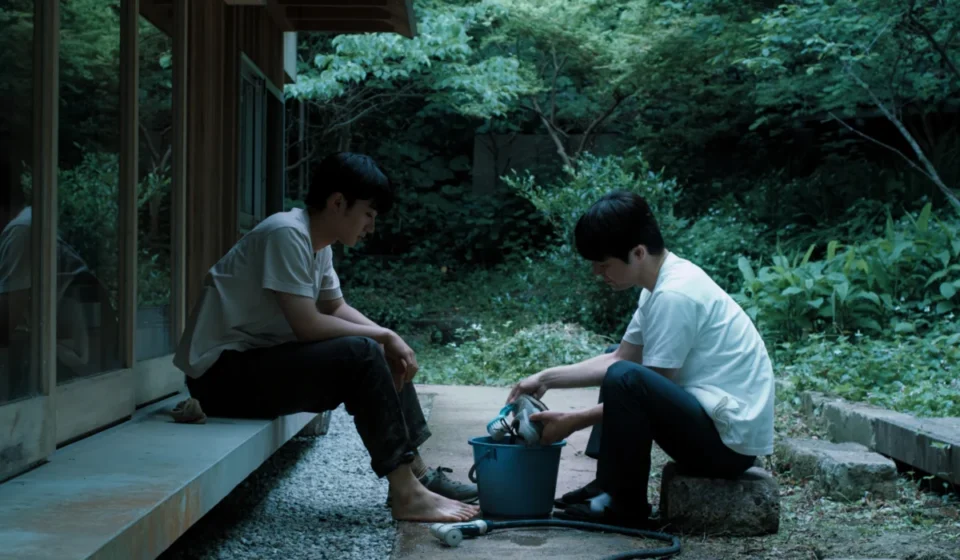
The film’s technical pedigree is equally noteworthy. In a move that signaled his serious intent, Yaza reached out to Yoshio Kitagawa, the acclaimed cinematographer known for his work with Academy Award-winner Ryusuke Hamaguchi (Drive My Car). Kitagawa, impressed by the young director’s vision, agreed to lens the project. The result is a film that balances aesthetic precision with emotional resonance, utilizing a visual language that emphasizes symmetry, geometric lines, and the suffocating order of suburban life.
The film’s title refers to a local legend shared with Takeshi by his friend Akari (Himena Irei). The "ball of fire" (Hinotama) serves as a metaphysical MacGuffin—a symbol of the magic and mystery that the adult world has systematically scrubbed away. As Takeshi’s domestic life becomes increasingly "caged" by routine and resentment, his fascination with this mythical fire becomes a survival mechanism, a way to reclaim a sense of wonder in a landscape of grey mundanity.
II. Chronology: From Academic Inquiry to Cinematic Achievement
The journey of Hinotama: Ball of Fire begins with Yaza Takenoshin’s academic background. While studying at Harvard, Yaza immersed himself in the history of cinema and the nuances of storytelling. This intellectual foundation is evident in the film’s structure, which moves with the rhythmic precision of clockwork.
The Early Moments: The Rhythm of Routine
The film opens with a sequence that establishes its primary motif: the automation of life. Yaza matches the repetitive calling out of numbers during a school test to the rhythmic "beep" of a grocery store checkout counter where Takeshi’s mother is shopping. This synchronicity suggests a world where human experience has been reduced to a series of data points and transactions. For the first third of the film, the pacing is deliberate, allowing the audience to feel the weight of the everyday "mundanities" that define the characters’ lives.
The Turning Point: The Bursting Dam
The chronological progression of the film tracks the "inevitable process" of marital decay. As Takeshi’s father (a man defined by petty pride and a demand for unearned respect) begins a psychological "propagandist campaign" to win over the children, the tension reaches a breaking point. The film’s stillness is famously shattered when Takeshi, unable to articulate his internal turmoil, jumps into a muddy puddle, destroying a pair of pristine sneakers. This act of defiance is the first crack in the film’s orderly facade, signaling a shift from observation to confrontation.
The Jump Forward: Three Months Later
In a bold narrative choice, Yaza utilizes a sudden time jump of three months. This ellipsis destabilizes the viewer, mirroring the displacement felt by Takeshi and his younger brother, Kento (Koe Odani). The final act of the film shifts away from the domestic realism of the beginning, moving toward a more allegorical and path-filled conclusion where the children are forced to "grow up fast" to navigate the wreckage left by their parents.
III. Supporting Data: Stylistic Analysis and Technical Execution
To understand the impact of Hinotama, one must analyze the specific "Hamaguchi-esque" influences that Yaza and Kitagawa have woven into the film’s DNA.
The Visual Language of the "Cage"
Yoshio Kitagawa’s cinematography is perhaps the film’s most striking element. By embracing symmetry and centering subjects within the frame, Kitagawa creates "orderly compositions" that slowly begin to feel like a prison. The clean, geometric lines of Takeshi’s modern home are not signs of comfort, but of a rigid social structure that offers no room for emotional deviation. This visual strategy effectively mirrors the "subtle sense of automation" that plagues the father, a man who views his family through the lens of a factory line—expecting output (respect, gratitude) without providing the necessary input of affection.
Performance and Subdued Realism
Yaza’s directorial style favors "subdued performances." Riku Onishi’s portrayal of Takeshi is a masterclass in internalizing conflict. Much of his performance involves "gazing into space," a choice that could easily become inert in the hands of a lesser director. However, within the context of Yaza’s long takes and still camera, these moments of silence become heavy with unspoken grief. Similarly, Koe Odani as the younger brother Kento provides a heartbreaking counterpoint, representing the collateral damage of a family’s pride-driven collapse.
Data Points on Production
- Director: Yaza Takenoshin (Debut Feature)
- Cinematographer: Yoshio Kitagawa
- Key Cast: Riku Onishi, Himena Irei, Mari Kusu, Koe Odani.
- Festival Placement: Tokyo International Film Festival 2024, Nippon Cinema Now Selection.
- Thematic Focus: Intergenerational trauma, the "salaryman" malaise, and the loss of childhood mythology.
IV. Official Responses: Director’s Vision and Critical Reception
In press statements and festival Q&A sessions, Yaza Takenoshin has been vocal about his admiration for the modern masters of Japanese cinema, specifically Ryusuke Hamaguchi. Yaza noted that his goal was to create a film that was "neat and steady" but never "emotionless." He sought to capture the "patient observation of characters" as they navigate fracturing relationships, a hallmark of the new Japanese "quietist" movement.
Critical Feedback
Early reviews from the Tokyo Film Festival have been largely positive, though not without caveats. Critics have praised the film’s "pristine" aesthetic and the startling effectiveness of its long takes. The moment involving the muddy sneakers has been cited as a standout sequence for its ability to generate high emotional impact through minimal movement.
However, some critics have pointed out that the "muted approach" can occasionally become "overbearing." Specifically, a scene involving children standing in an orderly line to watch Kento walk to a new house has been described as "unnatural" and "deliberately uncomfortable" to the point of artifice. Furthermore, the film’s shift into an "allegorical tone" in its final moments has divided some viewers, with some arguing it detracts from the grounded realism of the first two acts, while others see it as a necessary evolution of Takeshi’s psychological state.
Despite these minor critiques, the consensus remains that Hinotama is an "incredibly promising first feature" that establishes Yaza as a director with a distinct, sophisticated voice.
V. Implications: The Future of the Japanese Domestic Drama
The debut of Hinotama: Ball of Fire carries significant implications for the landscape of Japanese independent cinema.
1. The Globalized Japanese Director
Yaza Takenoshin represents a new breed of Japanese filmmaker: the "globalized auteur." His education at Harvard suggests a background informed by international perspectives on narrative and philosophy, yet his work remains deeply rooted in the specific social anxieties of contemporary Japan. This blend of global intellectualism and local storytelling may be the key to Japanese cinema’s continued relevance on the international festival circuit.
2. A Shift in Family Dynamics on Screen
For decades, the "family drama" (Home-drama) has been a staple of Japanese cinema, from Yasujirō Ozu’s gentle resignation to Hirokazu Kore-eda’s found-family optimism. Yaza’s Hinotama suggests a darker, more clinical turn. By framing the family unit as a "factory line" and a "cage," Yaza is critiquing the traditional expectations of Japanese domesticity. The film implies that the "automation" of modern life has rendered the traditional family structure obsolete or, at the very least, suffocating for the younger generation.
3. The "Hamaguchi Effect"
The collaboration with Yoshio Kitagawa highlights the burgeoning influence of Ryusuke Hamaguchi on the next generation. We are seeing the emergence of a "Hamaguchi School" of filmmaking—characterized by long takes, literary dialogue, and a focus on the subterranean tensions of everyday life. Yaza’s ability to recruit such a high-caliber cinematographer for a student-led project speaks to a shift in how mentorship and collaboration are functioning within the Japanese industry.
Conclusion: A Burning Prospect
While Hinotama: Ball of Fire ends on a note of ambiguity, its impact at the Tokyo International Film Festival is clear. Yaza Takenoshin has bypassed the typical "growing pains" of a first-time director, delivering a work of high technical proficiency and thematic depth. The film serves as a poignant reminder that while the "ball of fire" of childhood wonder may eventually flicker out under the weight of adult reality, the fire of creative vision is just beginning to burn for this young director. As the film moves from the festival circuit to broader distribution, it will undoubtedly spark further conversation about the state of the modern family and the future of Japanese visual storytelling.