The Weight of Wealth and the Grit of Exploitation: A Deep Dive into Shalini Adnani’s ‘Our Share of Sand’

In the landscape of contemporary world cinema, few themes are as evocative as the intersection of ancestral legacy and modern-day exploitation. Shalini Adnani’s debut feature, Our Share of Sand, emerges as a haunting, keenly observed class drama that strips away the romanticized veneer of the Indian "homeland" often found in diaspora narratives. By filtering a brutal industrial reality through the eyes of a twelve-year-old British Asian girl, Adnani constructs a narrative that is as much a psychological thriller as it is a sociopolitical critique.
Set against the backdrop of India’s burgeoning sand-mining crisis, the film explores the "moral compartmentalization" required to maintain generational success. It is a story of silence, surveillance, and the uncomfortable truth that the luxury of the few is often built upon the literal breath of the many.
Main Facts: A Story of Complicity and Conscience
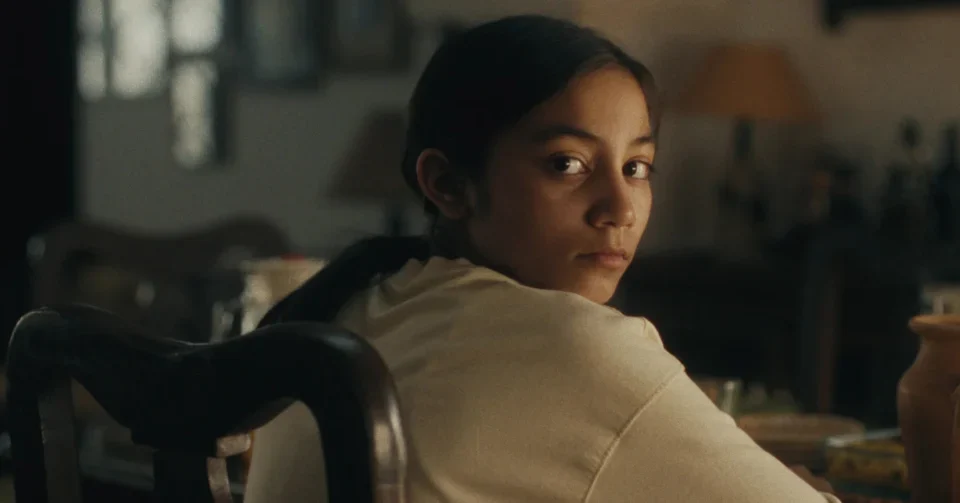
At its core, Our Share of Sand follows Maya (newcomer Maya Mehta), a 12-year-old girl born and raised in the United Kingdom, who travels to rural India to reunite with her industrialist father, Rohan (played by the formidable Mohammad Zeeshan Ayyub). Rohan is a man of significant influence, operating a cement production chain that fuels India’s rapid urban development. However, his success is tethered to the hazardous and often unregulated industry of sand mining.
The film’s central conflict is ignited when Maya witnesses a "routine" industrial accident. The victim is Kiran (Krish Raj More), a boy roughly Maya’s age who works as a diver, plunging into river depths to retrieve sand for her father’s business. As Maya’s peripheral vision begins to clear, she is forced to confront the staggering inequity that funds her own comfortable life.
Directed by Shalini Adnani—a Chilean-born, London-based filmmaker of Indian descent—the film draws heavily on her personal experiences as a "young outsider" visiting India. This perspective allows the film to bypass the "gawking" gaze of a tourist, instead focusing on the specific complicity of the South Asian diaspora. It asks a haunting question: To what extent does the wealth that allows a family to emigrate and succeed abroad depend on the exploitation of those left behind?
Chronology: From Mythic Beginnings to Modern Malice
The Prologue: The Genesis of a Lie
The film opens with a poetic, almost timeless prologue. In the soft light of a bygone era, day laborers are seen sifting through sandy riverbanks. Their faces are obscured, rendering them as ghosts of history rather than individuals. They discover an enormous diamond, a find that could change their lives forever. A hushed, urgent debate ensues: Should they report the find to their boss, or claim it for themselves? The scene cuts before a resolution is reached, leaving a lingering doubt that serves as the film’s moral foundation.
The Present: The "Bootstraps" Myth
The narrative shifts to the present day, where the same diamond is now a centerpiece of family lore. Maya’s paternal aunt, Arti (Jyoti Dogra), shows the gem to Maya, regaling her with the story of how her grandfather discovered the diamond. According to family mythology, this stroke of luck and hard work allowed them to rise from the ashes of the post-colonial Partition to become industrial titans. However, the ambiguity of the prologue haunts this scene. Did the grandfather find the diamond, or did he steal it from the workers whose faces were hidden?
The Encounter: Maya and Kiran
As Maya settles into her father’s compound, she finds herself drawn to Kiran. Their friendship is a study in silent barriers. Maya speaks little Hindi or Marathi; Kiran speaks no English. Yet, they find a rhythmic understanding in their shared youth. This innocence is shattered when Rohan discovers them together and harshly orders Kiran back to work. The revelation that her friend is actually her father’s employee—a cog in the industrial machine—marks the beginning of Maya’s disillusionment.
The Accident and the Aftermath
The tension reaches a breaking point during a night shift. Under Rohan’s "regulation-skirting" methods, an accident occurs that leaves Kiran permanently injured. Maya is a witness to the event, as is her mother, Priti (Ellora Torchia). The remainder of the film chronicles the psychological fallout of this event. Maya is caught between her burgeoning sense of justice and the crushing pressure of family loyalty, while the adults around her move to suppress the truth and manage the "liability."
Supporting Data: The Industrial and Social Context
To understand the weight of Our Share of Sand, one must look at the real-world "Sand Mafia" and the caste dynamics that the film subtly references.
The Sand Mining Crisis
India is currently facing a massive sand-mining crisis. Sand is the primary ingredient in concrete, and as India’s cities expand, the demand has skyrocketed. This has led to the rise of illegal mining operations that bypass environmental and safety regulations. Divers, often children or young men from marginalized communities, work without oxygen tanks, diving into deep waters to hand-fill buckets with sand. The mortality and injury rates in this "shadow industry" are notoriously high, yet rarely reported.
The Persistence of Caste and Class
The film’s setting, on the outskirts of Mumbai, serves as a microcosm of Indian society. While the film never explicitly names "caste," it is the "silent killer" in the room. The division between Rohan’s family and his workers is not just financial; it is structural. The workers’ fury is tempered by the knowledge that they have no legal or social recourse against a man of Rohan’s standing. Adnani uses this to highlight how modern industry often repackages ancient hierarchies into "corporate interests."
Visual Language
Cinematographer Adric Watson employs "tight and dirty" frames to emphasize Maya’s confined perspective. The use of security camera footage within the family compound adds a layer of "fascistic surveillance," suggesting that the family’s wealth is maintained not just through labor, but through constant monitoring and control.
Official Responses and Creative Intent
While Our Share of Sand is a fictional narrative, the director’s commentary and the film’s reception at international festivals provide insight into its "official" mission.
Shalini Adnani has stated in various interviews that her goal was to explore the "intergenerational trauma of being the exploiter." In many diaspora stories, the focus is on the immigrant’s struggle in a new land. Adnani flips this script, focusing on the "luxury of emigrating." She posits that the ability to leave a developing nation and start anew in the West is often a privilege funded by the very systems of inequity the diaspora later claims to abhor.
Performative responses to the film have highlighted Maya Mehta’s debut. Critics have noted that her performance avoids the tropes of the "precocious child," instead offering a portrait of a girl who is "perturbed by her place in the world." Mohammad Zeeshan Ayyub’s portrayal of Rohan has also been praised for its nuance; he is not a mustache-twirling villain, but a man who believes his actions are necessary for his family’s survival and the nation’s progress—a far more terrifying reality.
Implications: The Moral Cost of Progress
The implications of Our Share of Sand extend far beyond the screen, challenging both Indian and global audiences to reconsider the foundations of modern success.
For the Diaspora
The film serves as a mirror for the South Asian diaspora, particularly those in the UK and North America. It suggests that the "model minority" myth often overlooks the capital—both financial and social—that was extracted from the motherland. It asks the diaspora to acknowledge their "ancestral debt" and the complicity that comes with maintaining ties to industrial power back home.
For Modern India
In the context of India’s contemporary political milieu, the film is a quiet but firm critique of the "New India" narrative. While the country prides itself on rapid development and technological advancement, Our Share of Sand reminds viewers that the foundations of this progress are often laid by those who are denied its benefits. The use of surveillance and the suppression of worker dissent in the film mirror real-world concerns regarding the erosion of labor rights in favor of industrial growth.
A Naturalistic Fairytale
Ultimately, Adnani has crafted what can be described as a "twisted, naturalistic fairytale." In traditional fairytales, the forest is a place of magic; here, the river and the sand are life-giving forces turned into weapons of structural violence. The film concludes not with a neat resolution, but with a lingering sense of dread. Maya’s "peripheral vision" has been permanently altered, and through her, so has the audience’s.
Our Share of Sand is a vital addition to the canon of films exploring the human cost of the global supply chain. It asserts that as long as the "bootstraps" myth remains unchallenged, the cycle of inequality will continue to grind the most vulnerable into the very sand that builds our world.