A Century of Vision: The 31st Busan International Film Festival Unveils a Landmark Japanese Animation Retrospective

The 31st Busan International Film Festival (BIFF) has announced a monumental addition to its upcoming slate: a 13-film “Special Program in Focus” dedicated to the evolution of Japanese animation. Spanning an entire century, the program serves as both a history lesson and a glimpse into the future of the medium, bringing together seminal masterpieces that defined the aesthetic of the 20th century alongside bold, avant-garde works from today’s most exciting emerging filmmakers.
The announcement is headlined by the long-awaited return of animation titan Rintaro, who will make his first visit to Korea in 17 years. He will be joined by a cohort of four rising directors—Kadowaki Kohei, Katanosaka Ryo, Natsume Shingo, and Shinomiya Yoshitoshi—who represent the cutting edge of contemporary Japanese storytelling.
Running from October 6 to 15, the festival aims to recontextualize the global impact of Japanese animation by moving beyond the usual titans—namely Hayao Miyazaki and Isao Takahata—to explore the foundational works that influenced those very legends.
A Chronology of Artistic Evolution
The BIFF curation team has meticulously structured the 13-film lineup to guide audiences through the medium’s technical and thematic maturation.
The Foundations (1950s–1970s)
The program begins in 1958 with Yabushita Taiji’s The White Snake Enchantress. As the first Japanese animated feature produced in full color by Toei Animation, it is a piece of cultural history. Its emotional impact was profound; a young Hayao Miyazaki famously documented that watching the film left him weeping until dawn, a testament to the power of early animation to stir the human soul.
Moving into the 1970s, the program highlights the experimental shift toward adult-oriented narratives. Yamamoto Eiichi’s Belladonna of Sadness (1973), produced by Mushi Production, remains one of the most visually striking pieces of animation ever created. Using static watercolor paintings and a haunting score, the film depicts a woman’s pact with the devil. Following a 2016 4K restoration, its status as a cult classic has been solidified globally, and its inclusion in Busan marks a rare opportunity to see it in a theatrical setting.
The Experimental Era (1980s–1990s)
The 1980s saw Japanese animation move toward philosophical introspection. Tezuka Osamu’s Phoenix 2772 (1980) is celebrated for its daring 12-minute dialogue-free opening, while Oshii Mamoru’s Angel’s Egg (1985) utilizes biblical symbolism and minimal speech to create an atmospheric, dreamlike experience. The latter is widely considered the spiritual precursor to Oshii’s later masterpiece, Ghost in the Shell.
The retrospective also marks a homecoming for Katsuhiro Otomo’s Memories (1995). Exactly 30 years after it debuted at the first edition of the Busan International Film Festival, the film returns in a 2025 remastered format, allowing a new generation to witness the technical prowess of the omnibus.
The Modern Frontier (2000s–Present)
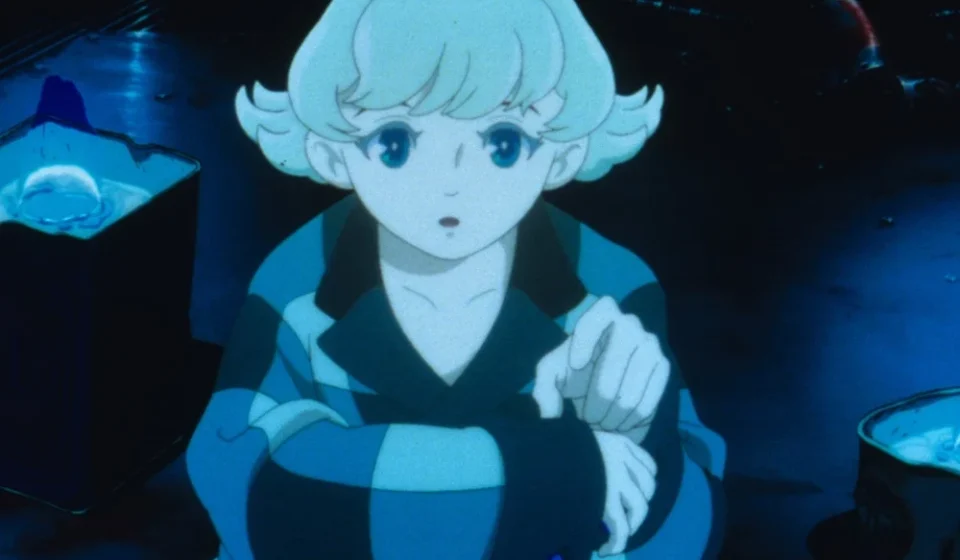
The turn of the millennium brought a surge in innovation. Rintaro’s Metropolis (2001), based on a manga by Tezuka Osamu, stands as one of the most expensive and ambitious projects in Japanese history. It is joined by Yuasa Masaaki’s breakout feature, Mind Game (2004), a chaotic, energetic adaptation that redefined the possibilities of surreal animation.
The short film Kakurenbo (2004) completes the classic retrospective, showcasing director Morita Shuhei’s early genius in blending 3D CG with traditional cel-style rendering—a stylistic choice that was decades ahead of its time.
Supporting Data: The New Generation
While the classics provide the weight, the four new titles represent the vitality of the current scene. Each of these films will see their directors present at the festival, facilitating a direct dialogue between the masters of the past and the visionaries of the future.
- Natsume Shingo’s Ghost – End of Night: Produced by Madhouse, this project arrives in Busan well ahead of its 2027 Japanese theatrical release, cementing BIFF’s status as a premier destination for global premieres.
- Katanosaka Ryo’s Shiranui: A 36-minute tour-de-force from CoMix Wave Films. The film is a testament to artisanal dedication, with Katanosaka hand-drawing nearly 65% of the 325 rough cuts himself.
- Kadowaki Kohei’s We Are Aliens: A rotoscoped feature that has already garnered significant attention at the Cannes Film Festival’s Directors’ Fortnight and the Annecy International Animation Film Festival.
- Shinomiya Yoshitoshi’s A New Dawn: Perhaps the most decorated of the new batch, this 76-minute feature was the first Japanese animated film by a debut director to compete at the Berlin International Film Festival. It is notable for its unique green palette and the comprehensive artistic control exercised by Shinomiya, who handled everything from screenplay to art direction.
Official Perspectives: Bridging the Divide
Festival Director Jung Hanseok emphasized that the selection criteria were intentionally rigorous. "Animation has recently become one of the most dynamic forms in global cinema, bridging East and West," Jung stated. "We wanted to take a closer look at the world of Japanese animation, long one of the great traditions and powerhouses of the medium."
The curatorial team made a deliberate choice to exclude the works of Miyazaki and Takahata, not out of lack of respect, but out of a desire to highlight the "hidden architects" of the medium. By focusing on the films that influenced the masters, BIFF provides a more nuanced understanding of the Japanese animation lineage.
"Some films can only be fully experienced in a theater," Jung added. "I hope audiences in Busan will not miss this rare opportunity to experience these works on the big screen. I am also deeply honored to welcome Rintaro, a living legend of Japanese animation, to BIFF."
Implications: The Future of BIFF and Japanese Cinema
The inclusion of this massive retrospective at the 31st BIFF serves several strategic purposes. First, it reasserts the festival’s role as an academic and cultural institution, not just a red-carpet event. By screening remastered classics alongside experimental new works, the festival is curating a living history of the medium.
Second, the presence of these directors suggests a strengthening of ties between the Japanese animation industry and the Korean market. With titles like Shiranui and Ghost – End of Night receiving high-profile exposure in Busan, the festival is positioning itself as a vital launchpad for Asian animation in the global marketplace.
Finally, the program highlights the "European connection." The inclusion of Paul Grimault’s The King and the Mockingbird—a film that profoundly influenced Japanese titans like Takahata and Miyazaki, as well as Korean masters like Bong Joon-ho—serves as a reminder that animation is a universal language. By bridging these cultural gaps, the 31st Busan International Film Festival is not merely screening films; it is mapping the cross-pollination of ideas that continues to define the medium.
As the industry prepares for the October 6–15 event, the anticipation surrounding these 13 titles suggests that the intersection of Japanese animation and Korean cinephilia has never been more vibrant. For scholars, fans, and industry professionals alike, the 31st BIFF promises a journey through a century of light, shadow, and artistic transformation.