A Theatrical Triumph in the Making: Stefan Gregory to Score Simon Stone’s ‘Elsinore’

In an industry where the synergy between a director’s vision and a composer’s sonic landscape often defines the emotional resonance of a project, the announcement of a new collaboration between director Simon Stone and composer Stefan Gregory is significant. On August 26, 2026, it was confirmed that Gregory—the acclaimed composer behind The Rooster and Cottontail—will provide the musical score for Stone’s highly anticipated biographical drama, Elsinore.
The film, which chronicles the final, defiant chapter of actor Ian Charleson’s life, promises to be one of the most poignant cinematic experiences of the year. With a powerhouse cast led by Andrew Scott and a narrative steeped in the gravitas of both the stage and the human spirit, Elsinore is positioned as a major contender in the upcoming awards season.
Main Facts: The Intersection of Stage, Screen, and Struggle
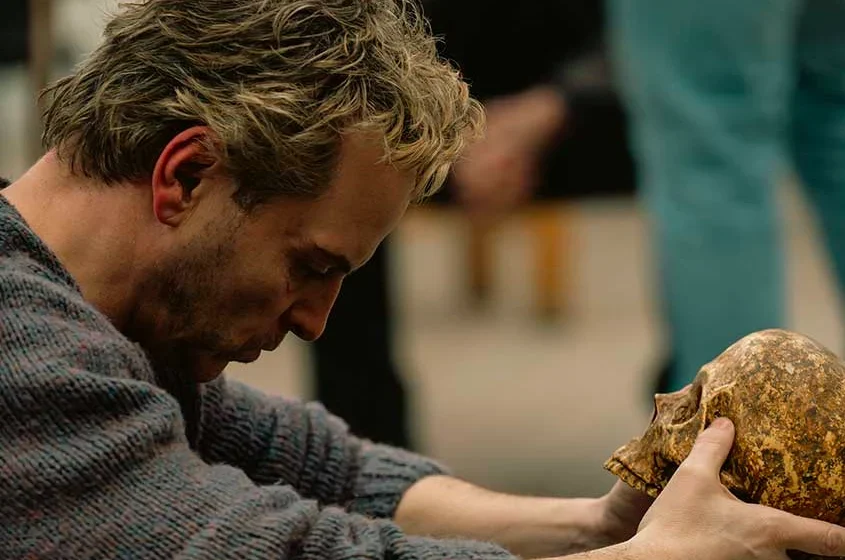
At its core, Elsinore tells the story of Ian Charleson, a titan of the British stage whose life was cut short by the AIDS epidemic at the height of his creative powers. The film focuses on a specific, heroic interval: Charleson’s decision to undertake the title role in Hamlet at the National Theatre while battling the terminal effects of AIDS. His performance in that production remains legendary, widely regarded as one of the most haunting and technically brilliant portrayals of the Dane in modern history.
Andrew Scott, known for his transformative performances in Fleabag and All of Us Strangers, takes on the mantle of Charleson. He is joined by a formidable ensemble cast including Olivia Colman, Billie Piper, and Johnny Flynn. The screenplay is penned by Stephen Beresford, whose previous work on Pride and Tolkien demonstrates a keen ability to handle historical narratives with both sensitivity and structural rigor.
Stefan Gregory, who previously collaborated with Stone on the 2020 film The Dig, has been tapped to underscore the internal and external conflicts of this narrative. Gregory’s style—often minimalist yet deeply atmospheric—is expected to mirror the stark, high-stakes nature of Charleson’s final performances.
Chronology: A History of Collaboration and Creation
The creative partnership between Simon Stone and Stefan Gregory is not a new development. Their relationship has evolved through several high-profile projects, creating a shared shorthand that allows for a deeper integration of music and movement.
- 2020: The release of The Dig marked a pivotal point in their partnership. Gregory’s score for the film was praised for its delicate handling of historical melancholy and the passage of time, themes that appear to be thematic precursors to the emotional weight of Elsinore.
- 2024–2025: Development on Elsinore moved forward under a consortium of production powerhouses, including Studiocanal, LD Entertainment, Lucky Red, and Magnolia Mae Films. The casting of Andrew Scott solidified the film’s status as a "must-see" project.
- August 2026: Official announcement of Gregory’s involvement as the film’s composer.
- September 2026: Elsinore is scheduled to make its world premiere at the prestigious Telluride Film Festival, a platform known for launching Oscar-bound films.
- November 20, 2026: The film is slated for a limited release in U.S. theaters via Focus Features, followed by a wider rollout in the weeks thereafter.
Supporting Data: The Production Pedigree
The scale of Elsinore is reflected in its production team. The film is being shepherded by a roster of producers with extensive experience in prestige drama and international co-productions:
- Andrea Occhipinti: Known for The White Ribbon and Parallel Tales.
- Gabrielle Tana: A veteran of Philomena and The Duchess.
- Pete Shilaimon & Mickey Liddell: Producers behind Megan Leavey, Jackie, and The Grey.
- Stefano Massenz & Carolyn Marks Blackwood: Their collective experience with films like The Invisible Woman and The White Crow suggests a production standard rooted in high-end, period-authentic storytelling.
Andrew Scott’s involvement is not merely as a lead actor; he is also serving as a producer. This "hands-on" approach from the star of the film often indicates a project of deep personal passion, reinforcing the narrative that Elsinore is intended to be a definitive look at Ian Charleson’s legacy.
Official Perspectives and Creative Direction
While specific details regarding the soundscape of Elsinore remain under wraps, the industry consensus suggests that Gregory’s score will likely lean into the duality of the film: the intimacy of the dying man and the public grandeur of the stage.
In past interviews, Simon Stone has described his directing process as one of "uncovering the vulnerability beneath the performance." Stefan Gregory’s work on The Dig supported this philosophy, utilizing sparse piano motifs and string arrangements to emphasize silence as much as sound. Critics have noted that in a film about Hamlet—a play defined by its soliloquies and internal monologues—the score must act as a bridge between the character’s psyche and the audience’s empathy.
"The challenge," one industry analyst noted, "is not to drown out the performance of a man like Andrew Scott, but to surround it with a texture that reflects the fragility of his physical state against the monumental strength of his artistic will."
Implications: The Impact on the Awards Circuit
The release strategy for Elsinore—a premiere at Telluride followed by a November rollout—is the classic blueprint for an Academy Award-contending film. Focus Features has a long history of successfully navigating this "prestige window," ensuring that the film enters the conversation just as critics begin to finalize their "Best of the Year" lists.
Artistic Significance
The subject matter—the intersection of the AIDS crisis and the theater world—is inherently resonant. Elsinore does not simply aim to be a biopic; it aims to be an exploration of how art functions as a survival mechanism. By casting Andrew Scott, the production has secured an actor who has spent his career exploring the complexities of human grief and mania, traits essential to portraying the final months of Ian Charleson.
The Role of the Score
Stefan Gregory’s contribution will be under intense scrutiny. A successful score for Elsinore will need to avoid the pitfalls of "melodramatic cues." Given Gregory’s background, observers expect a score that is both austere and psychologically astute. If successful, this could be the project that cements Gregory as one of the premier composers for modern biographical drama.
Cultural Legacy
Finally, the film serves as a long-overdue tribute to Ian Charleson. While his name is revered in theatrical circles, the broader public knowledge of his specific battle and his final, triumphant performance at the National Theatre remains relatively niche. Elsinore has the potential to introduce a new generation to Charleson’s talent and the historical context of the theater community during the 1980s.
Conclusion
As the countdown to the Telluride Film Festival begins, anticipation for Elsinore continues to mount. The convergence of Simon Stone’s disciplined, emotive direction, Stefan Gregory’s nuanced musical sensibilities, and Andrew Scott’s transformative acting creates a recipe for a film that is as much an event as it is a piece of art.
Whether Elsinore achieves the critical heights of its predecessors remains to be seen, but the intent is clear: this is a film designed to be remembered. By choosing to honor the life of Ian Charleson through the prism of his most challenging role, the production team has set the stage for what may be the defining biographical drama of 2026. As the autumn release date approaches, the industry watches with baited breath, waiting to see if the music, the performance, and the history will coalesce into the masterpiece that early reports suggest it could be.