The Radical Persistence of Valerie Solanas: Mary Harron on the 4K Restoration of I Shot Andy Warhol

Before she mastered the chilling, calculated satire of corporate American excess in American Psycho (2000), filmmaker Mary Harron turned her lens toward a different, more volatile form of New York pathology. In 1996, Harron released I Shot Andy Warhol, a film that navigated the friction between the avant-garde glamour of The Factory and the desperate, burning rage of Valerie Solanas.
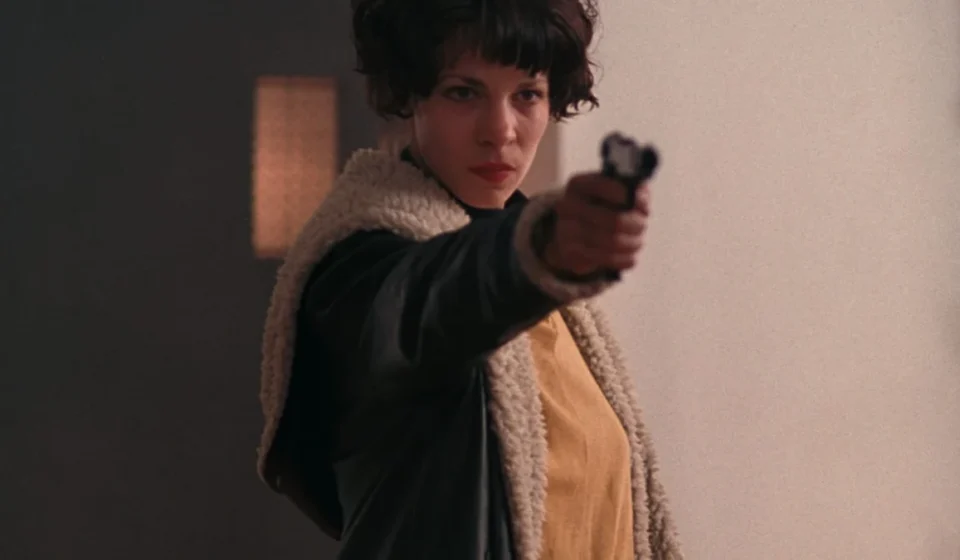
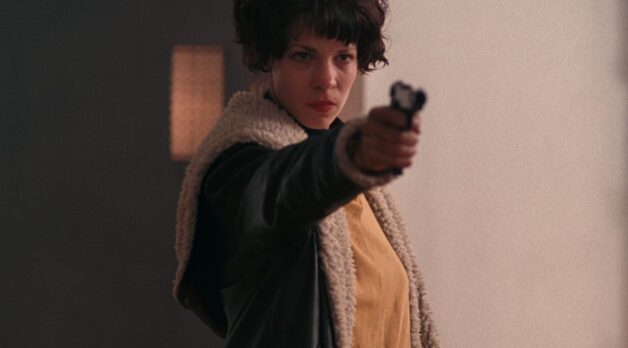
Nearly thirty years later, as the film returns to screens in a crisp 4K restoration, its exploration of gender, obsession, and the brutal machinery of fame feels more urgent than ever. Through the eyes of Lili Taylor—who delivers a career-defining, deadpan performance as the disenfranchised playwright and activist—the film captures the spirit of a 1960s underground that was as exclusionary as it was revolutionary.
The Genesis of an Iconoclast
The story of Valerie Solanas is one of the most haunting footnotes in 20th-century cultural history. A radical feminist, Solanas nearly ended the life of pop art icon Andy Warhol in 1968. Yet, as Harron notes, the film was never intended to be a traditional biopic. Instead, it serves as a "living document" of a specific moment in time—a chaotic, grimy, yet mesmerizing New York City where the lines between art, sanity, and violence were perpetually blurred.
Harron’s directorial debut was born out of her own fascination with the Velvet Underground and the Factory’s gravitational pull. At the time of its release, the SCUM Manifesto—Solanas’s scorching, ironical, and deeply disturbing treatise—was largely treated as an outlier, a "weirdo" text relegated to the fringes of political discourse. Harron recalls stumbling upon the manifesto while working as a researcher for a documentary on Warhol. "I remember sitting on the subway after I’d bought it, reading the first line: ‘Life in this society being, at best, an utter bore…’ I thought, Oh my God, this is so elegant, like Evelyn Waugh."
A Chronology of Obsession and Erasure
To understand the film, one must understand the environment that produced it. The mid-90s indie film scene, characterized by the emergence of figures like Christine Vachon and Tom Kalin, provided the perfect incubator for Harron’s project.
- 1968: Valerie Solanas shoots Andy Warhol at The Factory, an act of desperate rebellion against a system she felt had exploited her.
- Early 1990s: Mary Harron, then a BBC director working on comedic parodies and documentaries, begins the arduous five-year process of securing funding for a film about Solanas.
- 1996: I Shot Andy Warhol premieres to critical acclaim, noted for its authentic, naturalistic portrayal of 1960s New York.
- 2026: A new 4K restoration is released, supervised by cinematographer Ellen Kuras, bringing the film’s "gritty and beautiful" aesthetic to a new generation.
Visualizing the Grime and the Glamour
A pivotal element of the restoration process has been the rediscovery of Ellen Kuras’s cinematography. Watching the film without sound, as Harron did during the restoration process, highlights the masterful use of color and naturalistic lighting that separated the film from its contemporaries.
"The Factory is this kind of dream world, but it’s all realistic," Harron explains. By eschewing the hyper-stylization of typical period pieces, Harron and Kuras relied on documentary photography—specifically the work of Diane Arbus and images sourced from the Magnum archives—to ground the film in a tactile, lived-in reality. This was a deliberate pushback against the "too beautiful" aesthetic that often plagues historical dramas.
The Factory’s Gendered Economy
One of the most compelling aspects of the film is its interrogation of the Factory as a "gendered economy." Warhol, for all his revolutionary contributions to gay visibility in the mainstream, operated with a corporate ruthlessness that echoed the worst of the Hollywood studio system.
Harron points out that Warhol had an extraordinary eye for talent—discovering figures like Candy Darling, Jackie Curtis, and Ondine—but he was also prone to discarding those who became "too difficult" to manage. Solanas, driven by her own sense of despair and outsider status, was inevitably crushed by this dynamic. The film avoids casting heroes or villains, instead allowing the audience’s sympathies to "ping-pong" between the fragile, enigmatic Warhol (played with startling vulnerability by Jared Harris) and the relentless, uncompromising Solanas.
Implications for Modern Discourse
As the film enters the current cultural landscape, it faces a world radically different from the one in which it was made. The "backlash" of the 1990s, where the label "feminist" was a source of trepidation, has given way to a volatile, hyper-connected era.
"Valerie might have thrived today," Harron muses. The current digital landscape offers creators the ability to manufacture fame and find audiences in ways that were impossible in the 1960s. However, this accessibility comes with its own pitfalls. The ease with which narratives are now co-opted—sometimes stripped of their irony or context—has created a climate that is, as Harron suggests, "beyond parody."
The "Satire" Debate
A central question remains: Is the SCUM Manifesto a work of satire, or a genuine call to arms? Harron resists the urge to provide a definitive answer. She views the work as a complex, "brilliant and fantastically well-written" text that is simultaneously "disturbing and awful." By keeping the question open, the film forces the viewer to engage with the text’s inherent contradictions rather than dismissing it as a mere historical oddity.
Furthermore, the contemporary discourse surrounding the manifesto—including arguments that it holds trans-affirming potential—is something Harron respects, even if she finds it historically complex. "People get what they need from a text like that," she notes. Her goal was never to impose 21st-century morality on 1968, but to capture the authentic, raw fury of a woman who felt entirely disregarded by her society.
Conclusion: A Legacy of Outsiders
Mary Harron’s body of work, from I Shot Andy Warhol to American Psycho, is defined by an empathy for the "outsider"—those whom culture cannot easily metabolize. The film’s enduring power lies in its refusal to sanitize the life of Valerie Solanas.
By presenting her not as a monster, but as a deeply human figure struggling for agency in a world that demanded her silence, Harron created a film that remains as provocative today as it was thirty years ago. As the restoration brings the film back into the light, it stands as a testament to the fact that while figures like Solanas may be discarded by the establishment, their voices—and the questions they force us to ask—are far harder to silence.