The Sky Above the Plaza: How Flaco the Owl Redefined New York’s Urban Wilderness

In the winter of 2020, as the COVID-19 pandemic cast a long, isolating shadow over New York City, a quiet transformation began to stir in the canopy of Central Park. For many residents, the city had become a claustrophobic cage of interior rooms and empty streets. But for those who ventured into the North Woods, a new focal point emerged: Barry, a barred owl whose presence turned casual walkers into amateur naturalists. That encounter, for many, was a "spark bird" moment—the ignition of a lifelong fascination with the hidden, wild pulse of the metropolis.
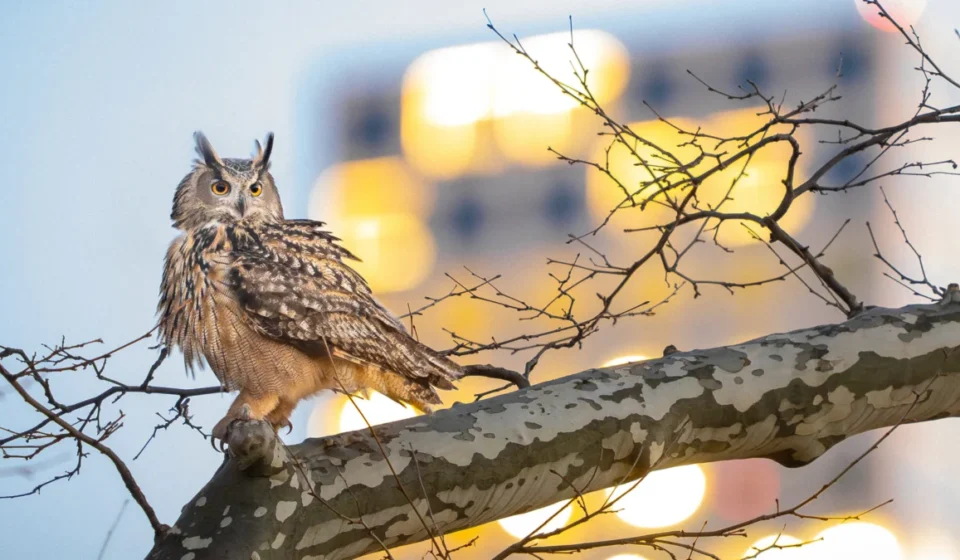
Three years later, that fascination reached a fever pitch with the arrival of Flaco, a Eurasian eagle-owl whose daring escape from the Central Park Zoo on February 2, 2023, captivated the world. Now, filmmaker Penny Lane chronicles this phenomenon in her poignant new documentary, Wild Inside. The film serves as both a eulogy for a local icon and a profound meditation on what it means to be truly "free" in a concrete jungle.
The Chronology of an Escape: From Captivity to the Fifth Avenue Skyline
Flaco’s story began with an act of vandalism that inadvertently triggered a social movement. When his enclosure at the Central Park Zoo was compromised, the bird—a creature bred in captivity with no experience hunting or navigating the vertical labyrinth of Manhattan—took flight.

The initial days were defined by widespread anxiety. As the zoo launched what many observers deemed inept and distressing attempts to recapture the owl, the public watched with bated breath. Would he survive the night? Could he find food in a city that is notoriously hostile to wild animals?
To the astonishment of experts and laypeople alike, Flaco thrived. He moved from the confines of the zoo to the branches of the park, eventually expanding his territory to the buildings along Fifth Avenue. He learned to hunt, navigating the treacherous terrain of skyscrapers, traffic, and urban toxins. For over a year, he existed as an apex predator in the heart of the world’s most famous city, becoming a symbol of resilience that resonated far beyond the birding community.
Supporting Data: The Ecological Cost of Urban Living
While Flaco’s year of freedom was celebrated as a triumph, Wild Inside does not shy away from the harsh biological realities of urban wildlife. The film draws a direct parallel between Flaco’s trajectory and the tragic 2021 death of Barry, the barred owl who preceded him.

Barry’s death was a wake-up call for the city’s wildlife advocates. While her passing was immediately caused by a collision with a maintenance vehicle, subsequent testing revealed high levels of rodenticide in her system. This served as a grim reminder that the urban ecosystem is saturated with toxins used to control the city’s rat population—poisons that inevitably work their way up the food chain to owls, hawks, and falcons.
Flaco’s life, while longer and more celebrated, was shadowed by the same looming threats. The film utilizes a wealth of crowd-sourced footage to document his hunting patterns, highlighting the constant tension between his newfound autonomy and the environmental hazards inherent in a city landscape. His story forces a necessary, uncomfortable conversation about how New York City manages its pests and how those policies impact the vulnerable raptors that call the city home.
Official Responses and the Ethics of Confinement
The escape of Flaco forced the Central Park Zoo and wildlife officials into a defensive position. The film features interviews with various stakeholders, including the caretakers who raised him and the rehabilitators who spend their lives cleaning up the mess when wild animals encounter human infrastructure.

Penny Lane, known for her sharp, empathetic documentary style, uses these interviews to probe the ethics of captivity. She asks the questions that the public often avoids: Is it fair to keep a bird of prey in a cage for the sake of public education? When a creature chooses to flee—as Flaco did—is it an act of liberation or a death sentence?
The documentary avoids providing easy answers. Instead, it captures the cognitive dissonance of the birding community. Many who cheered for Flaco’s hunting successes were the same people who spent sleepless nights worrying about his safety. This tension is central to the film’s narrative power; it reflects a broader societal shift in how we view our relationship with the non-human residents of our shared environments.
Implications: A New Way of Seeing the City
The legacy of Flaco is not merely that he survived, but that he forced millions of New Yorkers to look up. As one acquaintance once asked, in a moment of genuine confusion, "Do they ship them in?" upon seeing the diverse avian life in Central Park. The implication is that we have become so disconnected from our environment that we assume nature is something curated or imported.

Wild Inside argues that the wildlife is already here; we simply lack the "literacy" to see it. By following the path of a captive-born owl who learned to be wild, the film suggests that we, too, can learn to navigate the city with a more attentive, empathetic eye.
The film is deeply personal for Lane, who inserts herself into the narrative, much like she did in her acclaimed Confessions of a Good Samaritan. By engaging directly with the experts and the critics, she highlights that the story of Flaco is not just about a bird—it is about the human capacity for wonder and the responsibility that comes with observing the wild.
Conclusion: The Choice to Be Wild
In the final assessment, Flaco’s life remains a paradox. He was a creature of human design who ultimately rejected his design. He chose to hunt, he chose to fly, and he chose to live in the open, where he could be seen and admired by the very people who had once kept him behind glass.

As we look back at his year of freedom, Wild Inside encourages us to view his story as a beginning rather than an end. The film suggests that the "wild" is not a place we visit on vacation, but a force that exists within the cracks of the sidewalk and the leaves of the park.
For those who mourn Flaco, the film is a cathartic experience—a chance to witness the majesty of his flight one more time. For those who are just learning about his impact, it is an invitation to start paying attention. As the documentary makes clear, once you start looking, you will never be able to see New York City—or the world—the same way again.
Screening Information:
Wild Inside will be released by HBO Documentary Films and Sandbox Films at the IFC Center in New York City on Friday, July 31. The film will subsequently expand to over 40 theaters nationwide. Special screenings are scheduled for August 4 in honor of International Owl Awareness Day.